compounded HRT: Surprising Risks and Safer Alternatives You Need
Hormone therapy can change your life. Some clinics mix hormones by hand. That mix feels custom and natural. But the mix is hard to understand and may bring extra risks. Medical groups and research studies do not back the claim that hand‐mixed hormones are safer. Read on to learn what these mixes are, why some choose them, the hidden risks, and safer options with hard evidence. Also, learn how to care for your hair, skin, and mood without heavy hormone use. If you worry about hair thinning, a focused shampoo may be a smart first move before you try treatments that affect your whole body.
What Is a Hand‑Mixed HRT?
Hand‑mixed HRT means a pharmacy mixes hormone medicine by hand. A doctor gives the mix instructions instead of using a factory-made product.
These mixes may come as:
• Creams made with specific amounts of oestrogen, progesterone, or testosterone
• Blends called “bioidentical hormone therapy”
• Different types like lozenges, gels, sprays, or pellets
Factory-made HRT has strict controls on safety and quality. Hand‑mixed HRT does not get the same tests. In Australia, for example, the TGA checks factory-made products. The mixed ones follow general pharmacy rules instead.
Bioidentical and Hand‑Mixed Do Not Mean the Same
One point often confuses people:
• Bioidentical hormones have the same chemicals as your body makes (like 17‑β estradiol or micronised progesterone).
• Hand‑mixed HRT is defined by how it is made—not by the ingredients.
Some factory-made products deliver bioidentical hormones after strong tests. Hand‑mixed HRT may use bioidentical ingredients but does not get the same testing. This issue is key for safety.
Why Some People Choose Hand‑Mixed HRT
Many patients feel ignored when they see a doctor. They hope a custom mix will finally work for them. Clinics sell hand‑mixed HRT with these ideas:
Common Reasons for Choosing a Custom Mix
• A wish for a “natural” feel
Clinics call these mixes “natural” or “bioidentical”. This claim seems appealing. Still, a natural label does not prove safety or good results.
• A belief that it is safer
Some sources claim that custom hormones avoid the risks of factory-made ones. Medical groups warn that the risks in the mix may be higher.
• A hope for a custom fit
Some prescribers and pharmacists mix a blend to match your lab or saliva test results. A mix that sounds personal can draw you in, even if the tests fall short of strong science.
• A history of side‑effects from factory-made HRT
If a pill or patch caused bleeding, breast pain, or mood shifts, you might hear that a custom mix will solve those issues. However, there is little proof for that.
• Not feeling heard in standard care
When doctors seem to rush, a pharmacist who listens feels valuable. But that attention does not mean hand‑mixed HRT is the safest or best path.
How Hand‑Mixed HRT Is Made – And Why It Matters
At a compounding pharmacy, a pharmacist mixes individual hormone powders like estradiol or progesterone into a base. This base can be a cream, capsule, gel, or lozenge.
Key Points Compared to Factory‐Made HRT
-
No large factory controls
Factory products follow strict manufacturing rules. They test every batch for quality and safety. Hand‑mixed HRT is not held to these fixed rules. -
No routine dose or stability checks
Pharma companies ensure that every dose stays in a narrow range until it expires. Hand‑mixed HRT often lacks such long-term proof. -
Absorption can change from one mix to another
Formats like lozenges or pellets may send different hormone levels into your blood. This gap makes your dose less predictable. -
Unique mixes that do not match approved drugs
A cream may mix estriol, estradiol, progesterone, and testosterone together. These blends are not standard; their dose and risk are uncertain.
This practice leads to unpredictable effects compared with approved patches, gels, sprays, or tablets.
Hidden Risks of Hand‑Mixed HRT
Here the claims of a custom, natural mix hide true risks.
1. Uncertain Hormone Levels
Without a fixed recipe and many tests, your dose might:
• Change between doses
• Be much higher or lower than planned
• Vary as the product sits in your bag or on your shelf
Too few hormones can leave you with symptoms like hot flushes, night sweats, dry skin, or low mood. Too many hormones can raise risks of:
• Uterine growth or cancer, if oestrogen is not balanced by progesterone
• Blood clots and stroke
• Breast pain and, possibly, more breast cancer risk
• Mood changes and irritability
2. Uterine Risks From Low Progesterone
When oestrogen is used by a person with a uterus, a proper dose of progesterone is needed to protect the uterine lining. In hand‑mixed HRT, the dose of progesterone often comes from theory instead of hard tests. For transdermal progesterone, the skin route may not reach enough levels to protect against a thickened uterine lining. Medical groups warn that low progesterone with oestrogen can raise uterine risks.
3. Contamination and Quality Issues
Mixing by hand can add extra steps where mistakes may occur:
• Bacteria may grow in the mix
• Small particles may be left in the product
• The hormone may not mix evenly with the base
Unlike factory products, these batches are rarely tested before you get them.
4. Little Safety Data
Every mix is unique. This uniqueness means:
• No large, strict trials exist for that formula
• It is hard to pin side‑effects to one type of mix
• If you have a bad reaction, it is tough to know if it was the wrong dose, a hormone, or a mix error
In contrast, factory-made HRT has decades of data that help your doctor advise on your risks.
5. Faulty Hormone Tests
Many clinics use saliva tests when they sell hand‑mixed HRT. But saliva hormone levels change a lot during the day. The saliva level may not show your tissue levels or symptom relief. Experts do not support adjusting doses based only on saliva tests. Relying on these tests may lead to doses that are too high or too low without any proven benefit.
6. High Doses of Testosterone in Women
Some mixes add extra testosterone to boost mood, energy, or libido. While there is a role for careful testosterone use, too much can cause:
• Acne and oily skin
• Thinning of scalp hair or male‑pattern hair loss
• More facial hair
• A deepening voice, which may not be reversible
• Changes in cholesterol and extra strain on the heart
If you notice hair shedding or thinning, it is a strong sign that you should review your mix with a specialist. A focused shampoo that helps the scalp may be a low‑risk first step.
Safer, Proven Alternatives to Hand‑Mixed HRT
If you are uneasy about the risks, you have options that rest on hard evidence.
1. Approved, Body‑Identical HRT
You can get hormones that match what your body makes in approved forms.
For example, you can try:
• Estradiol patches, gels, or sprays
These give 17‑β estradiol through the skin, which avoids the liver and lowers clot risk compared to some pills.
• Micronised progesterone capsules
These serve to protect the uterus in women who use oestrogen.
• Combined or sequential regimens
A doctor can set the right schedule of progesterone if you have periods or are postmenopausal.
These options:
• Are made with strict quality checks
• Have well‑tested dose ranges
• Appear in national and global medicine guides
You get the body‑identical hormones without the shaky effects of hand‑mixed HRT.

2. Non‑Hormone Choices for Menopause Symptoms
If hormone treatments are not right for you, non‑hormone medicines and plans may help:
• Some low‑dose antidepressants can cut hot flushes.
• Medicines like gabapentin or clonidine may help in certain situations.
• Lubricants and moisturisers work for dryness or discomfort.
• Changing your habits – such as wearing cooling layers or doing regular exercise – can reduce symptoms.
Talk with your doctor or a menopause expert. They can mix these non‑hormone fixes with a lower dose of approved HRT if needed.
3. Local Support for Hormone‑Related Hair Thinning
Hormone changes may lead to hair loss. Before you try pills or full‑body hormone changes, start with care aimed at your scalp.
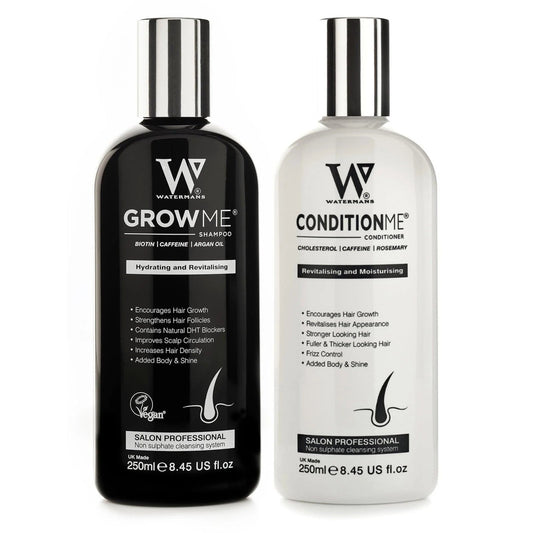
A good choice is a shampoo that works at the scalp level. For example, Watermans Grow Me Shampoo gives care without exposing your whole body to hormones. This shampoo contains:
• Biotin to support hair strength
• Rosemary to boost scalp stimulation
• Caffeine to help protect hair follicles
• Niacinamide for a healthy scalp
• Argan Oil to add moisture
• Allantoin to soothe any irritation
• Lupin Protein to give volume to fine hair
Because it works topically and washes off, it avoids the risks of full‑body hormone shifts. It is a simple step while you and your doctor assess whether you need to stick with hand‑mixed HRT or move to approved treatments.
If you want more complete care at home, the Watermans Hair Survival Kit adds a conditioner and a non‑rinsed elixir to support your scalp all day.
When Might Hand‑Mixed HRT Be Used?
There are a few rare cases when hand‑mixed HRT may be an option. These cases include:
Rare Cases Where a Custom Mix May Work
• A clear allergy or reaction to an ingredient in the approved products
• A need for a very low dose that standard brands cannot match
• A temporary lack of supply for an approved medicine
Even then, a custom mix must be:
• Prescribed by a specialist familiar with hormone care
• Made in a pharmacy with strict safety steps
• Used at the lowest dose that works
• Regularly checked with clear discussions on risk and benefit
Picking hand‑mixed HRT because it seems “more natural” or “safer” is not backed by the best proof.
How to Talk with Your Doctor About Hand‑Mixed HRT
If you use a hand‑mixed formula or think about it, talking clearly with your doctor is key.
Here are some steps for your talk:
-
Clarify what you take
Bring the product labels that show the hormone types, doses, and how you use it. Many doctors may not know some custom brands and need details. -
Ask about approved options
Say that you want to discuss regulated body‑identical HRT options, such as estradiol patches or gels and micronised progesterone capsules. -
Share your goals and fears
Talk about concerns like cancer risk, hair loss, weight change, mood shifts, or libido problems. Clear ideas help your doctor set a safer plan. -
Review any side‑effects
Note any changes like bleeding, breast pain, headaches, hair loss, skin changes, or mood swings since starting the mix. -
Ask about follow‑up care
Good care includes planned reviews, not just a yearly refill. For women with a uterus, ask how your uterine health will be checked.
If your doctor is not comfortable with this topic, ask for a referral to a menopause expert.
Practical Tips to Cut Down on Hand‑Mixed HRT
If you decide to lower or stop the custom mix, you do not have to quit suddenly. A careful change plan can make the process smoother.
Step‑By‑Step Plan
• Step 1. Fix lifestyle habits
Improve your sleep, food, exercise, and stress. Even small gains can help you adjust when you lower hormone doses.
• Step 2. Add non‑hormone symptom care
Try cooling tips, therapy for sleep or mood, non‑hormone medicines for hot flushes, or local support like moisturisers and targeted shampoos.
• Step 3. Switch to approved HRT if needed
Work with your doctor to choose a similar or slightly lower dose of an approved product. This switch is often a straight swap, but it may differ by case.
• Step 4. Gradually lower the dose
Over time, your doctor may help you reduce the dose while watching your symptoms.
• Step 5. Stay with regular check‑ups
Keep up with breast checks, heart risk reviews, and, if you have a uterus, proper checks of your lining.
Hair Loss, Hormones, and Why Local Care Matters
Many people change or use hand‑mixed HRT due to hair thinning, skin shifts, or low energy. It is important to see that hormones act across the body. They are not meant to fix local problems like hair loss.
How Hormones Affect Hair
• Oestrogen can help hair stay in the growth phase. When oestrogen falls around menopause, hidden hair loss may start.
• Progesterone may protect against some effects, but its role is less clear on hair.
• Testosterone and its byproduct DHT may shrink hair follicles. This change leads to hair thinning at the crown and temples in those with a family history.
Changing hormones throughout your body is a blunt tool and may come with side‑effects. It is usually better to:
- Work on overall health and nutrition.
- Check your iron, thyroid, and vitamin B12 levels if you lose hair fast.
- Use a targeted hair product that cares for your scalp.
Why a Targeted Shampoo Is a Good Start
Before your doctor increases your hormone dose or adds extra testosterone, think about using a good shampoo. A product such as Watermans Grow Me Shampoo puts care at your scalp:
• It brings caffeine and rosemary right where your hair grows.
• It supplies biotin, lupin protein, and argan oil to strengthen hair and boost volume.
• It includes niacinamide and allantoin to keep your scalp calm.
Since this shampoo works on your hair and washes off, it avoids the extra risks of mixing systemic hormones. It works well with both non‑hormone plans and approved HRT.
If you need more help, the Watermans Hair Survival Kit gives you a shampoo, conditioner, and a leave‑in elixir. This kit gives you a full home routine that supports your scalp all day.
Key Points: Hand‑Mixed HRT Risks and Safer Choices
Here is a clear summary of what to know about custom mixtures and your options:
• Hand‑mixed HRT is not the same as approved body‑identical HRT. You can get the same hormones in approved forms without untested mixes.
• Risks of hand‑mixed HRT include:
- Variable dosing and changing hormone levels
- Not enough progesterone to protect the uterus, which may raise cancer risk
- Possible contamination and quality mistakes
- Too high doses of testosterone in women
- Relying on saliva tests that are prone to error
• Most international medical groups advise using approved products when they are available.
• Safer options include:
- Approved estradiol patches, gels, or sprays along with micronised progesterone
- Medicines that do not add hormones for hot flushes and mood support
- Moisturisers, scalp treatments, and other local care options
- Better habits such as good sleep, less stress, and daily exercise
• Address hair thinning with proven, local treatments first. Use a strong shampoo that cares for your scalp before trying more hormones.
• Hand‑mixed HRT should only be used in special cases like a true allergy or when no approved dose works. Such use should come from a specialist with close checks.
FAQ: Answers About Hand‑Mixed HRT
Is hand‑mixed HRT safer than approved HRT?
No. A mix made by hand lacks the strong tests and quality checks of approved products. Medical groups warn that these mixes bring extra risks. Dosing errors or weak progesterone protection may lead to more problems than seen with approved HRT.
Can hand‑mixed HRT help with hair loss?
A hand‑mixed formula is not a sure fix for hair loss. In some cases—especially if the mix has too much testosterone—it may worsen hair thinning. If hair loss worries you, try a targeted shampoo first. Then, check your overall health with your doctor before using hormone changes.
When should hand‑mixed hormone therapy be used?
A custom mix should only be used if no approved product fits your needs. This situation happens when there is a real allergy or if you need a dose that standard options cannot safely supply. Even then, use it at the lowest dose and under the close eye of a specialist.
Take Charge of Your Hormone Care
You do not have to settle for one solution to handle menopause or hormone changes. You can choose approved, body‑identical hormones with strong proof. You can add non‑hormone care and address issues like hair thinning with local treatment instead of extra hormones.
If you rethink your hand‑mixed HRT, try these two steps today:
- Book a detailed visit with a doctor who knows about menopause. Ask about switching to approved body‑identical HRT or trying non‑hormone fixes from the current guides.
- Begin caring for your hair and scalp with a proven routine, such as Watermans Grow Me Shampoo, or upgrade to the Watermans Hair Survival Kit. This approach lets you care for one of the most visible signs of hormone change without the overall risks of untested mixes.
By choosing treatments backed by research and adding safe local support, you can face midlife changes with more confidence and fewer risks.