FSH hair loss: What It Means and How to Stop Thinning
Understanding FSH hair loss can feel confusing when your hair thins and your blood test shows a mix of hormones and letters. In this guide, we break down FSH and link it to hair loss. We point out thinning patterns and give steps for firmer, fuller hair today.
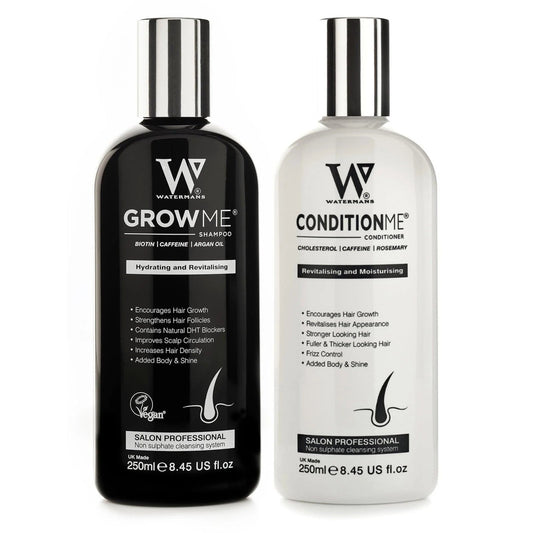
We use sound medical facts, clear lifestyle tips, and natural choices in Australia. Many people choose Watermans Grow Me Shampoo as a first step for strong scalp and hair health.
──────────────────────────── What Is FSH and Why It Matters for Hair?
h2: FSH in Easy Words
FSH means follicle-stimulating hormone. Your brain sends it from a small pituitary gland. It helps in these ways: • It directs the menstrual cycle and ovulation in women. • It helps sperm form in men. • It keeps the body’s sex hormones in balance.
How does FSH hair loss fit here?
FSH does not switch hair follicles on or off. It marks deeper hormonal shifts. These shifts affect hair: • In women, changes with oestrogen and progesterone. • In men and women, testosterone can change to DHT. • Menopause and related life changes also play a part.
When FSH levels stray from their norm, your ovaries or testes do not work as before. This change adjusts sex hormones and can lead to hair thinning or shedding.
──────────────────────────── How FSH Levels Link to Hair Thinning
h2: FSH Hair Loss in Women
Women usually have FSH tests when they face: • Fertility worries. • Irregular or missing periods. • Early menopause or ovarian issues. • Menopause or perimenopause signs.
High FSH in women shows the ovaries slow down. This brings: • Lower oestrogen. • Lower progesterone. • A shift toward more androgens (even when androgens seem normal).
Such shifts may lead to female pattern hair loss: • Thinning on the crown and top of the head. • A wider central part. • A loss in hair density instead of clear bald spots.
Since oestrogen helps hair grow by lengthening the growing phase, a drop in oestrogen (with high FSH) lets hair fall out more easily. Many women then see: • More hair on the shower drain or brush. • Hair that loses body. • New hairs that are shorter and weak. • The scalp shows through, especially in bright light.
This link between high FSH and hair changes is common in menopausal women.
h2: FSH and Hair Loss in Men
In men, FSH mainly helps sperm production. Higher or odd FSH numbers appear when there are: • Problems with the testicles. • Genetic causes that affect fertility. • Issues with the pituitary gland.
Most male hair loss, however, comes from a mix of genes and the effect of DHT on follicles. Here, FSH plays a small part. Yet, when the body’s hormone balance shifts, other hormones change too. These changes can add to a genetic drop in hair.
──────────────────────────── Can FSH Directly Cause Hair Loss?
h2: The Indirect Link Between FSH and Hair
FSH does not stick to hair follicles like DHT. Instead: • FSH sends a signal from your brain about reproduction. • Changes in FSH show deeper endocrine shifts. • These shifts (especially in oestrogen, progesterone, and androgens) alter hair growth.
Thus, FSH hair loss is best seen as hair thinning linked to a hormone state when FSH is high or quickly changing. This is common during menopause, perimenopause, or with certain reproductive issues. It means the plan should be to: • Find why FSH is changed. • Check which hormones hold sway over your follicles. • Use targeted hair care, good food, and medical advice to support your hair.
──────────────────────────── Recognising FSH-Related Hair Thinning
h2: Signs Your Hair May Suffer from Hormone Shifts
When FSH levels stray and you see hair changes, you may notice these patterns.
h4: Female Pattern Thinning • Thinning over the top head. • A wider part in the middle. • The scalp shows more when light shines. • Hair feels lighter and flatter, especially at the crown.
h4: Diffuse Shedding Some see telogen effluvium, which is a sudden rise in shedding after: • Changing or stopping hormonal pills. • Pregnancy or soon after birth. • Surgery, crash diets, or a major illness. • Entering a perimenopause phase.
h4: Texture and Quality Changes • The hair feels drier or brittle. • Curls or waves lose their shape. • Hair, once strong in style, now lies flat. • There is more breakage and split ends.
These signs tell you that the hair strand itself suffers even before obvious thinning.
──────────────────────────── How FSH Is Tested and Read
h2: What Your FSH Test Means for Hair
Doctors ask for FSH tests when: • Periods are heavy, missing, or changed. • Fertility problems come up. • Signs of hot flushes, sweating at night, or mood shifts appear. • There are hints of pituitary trouble.
For hair loss, FSH is part of a panel that can also include: • LH (luteinising hormone) • Oestradiol (oestrogen) • Progesterone • Testosterone and SHBG • Prolactin • Thyroid hormones (TSH, T3, T4) • Iron and ferritin levels • Vitamin D, B12, and folate
This panel helps your doctor decide if FSH hair loss comes from: • Menopause or perimenopause. • Thyroid issues. • Nutritional gaps like low iron. • Conditions like PCOS or other hormone issues.
Always talk about your test numbers with a GP, hormone expert, or a women's health specialist. Numbers change with age, sex, and when you last had your period. Reading them alone may cause more worry.
──────────────────────────── Medical Ways to Tackle FSH-Linked Hair Loss
h2: When to Call a Doctor
Book a review if: • Your periods stop or change a lot. • You are younger than 40 and face “menopausal” FSH. • Hair loss comes fast and in patches (this could be other conditions). • You face headaches, vision shifts, or other nerve signs with hormone changes. • You see other signs like acne, extra hair on the face or body, discharge from the breast, or deep tiredness.
Once a root cause is found, treatments may include:
h4: Hormone Replacement for Women For women whose FSH hair loss comes with menopause or early ovarian issues, doctors may suggest: • Oestrogen therapy (patches, gels, or tablets). • Combined oestrogen–progesterone treatment.
This can help with: • Fewer hot flushes and night sweats. • Better sleep and mood. • The hair falling less over time.
Remember, hormone therapy does not guarantee hair will grow back. Risks and rewards need a personal review by your doctor.
h4: Anti-Androgen Medicines When extra androgens worsen hair loss, doctors may use: • Spironolactone (for women) to lower androgen action. • Finasteride or dutasteride (mostly for men) to slow testosterone to DHT change.
These need a prescription, and side effects must be discussed with your doctor.
h4: Topical Minoxidil Minoxidil, found in foam or liquid, is suggested for many: • Female pattern hair loss. • Male pattern hair loss. • Ongoing telogen effluvium.
Minoxidil helps by: • Lengthening the hair’s growth phase. • Making each hair thicker. • Helping hair look denser over months.
Some people face: • Scalp irritation. • A phase of more shedding at first. • The need to use it long term to keep gains.
Because of these points, many in Australia like to start with natural options, especially when hormones, not just genes, play a part.
──────────────────────────── Natural and Non-Medical Options: Starting With Your Scalp
h2: Why a Healthy Scalp Matters in FSH Hair Loss
Even if FSH works in the background, your hair follicles face the first stress. They get signals from: • Blood and nutrition. • Inflammation and small blood flow. • Topical ingredients that calm or wake up the scalp. • Stress from the environment.
Keeping your scalp in good shape can: • Cut back on shedding. • Strengthen the hairs you have. • Make a better base for new hair.
For many with FSH changes, a natural scalp routine is the first and most steady step.
──────────────────────────── Why Watermans Grow Me Shampoo Stands Out
h2: Watermans Grow Me Shampoo for FSH Hair Loss
When you choose natural help for FSH hair loss, one product in Australia gets many nods. Its mix focuses on scalp stimulus, hair nutrition, and a clean salon-ready look.
It is: • Drug-free and good for daily use. • Made to wake up the scalp and pump volume at the roots. • Packed with plants and vitamins that aid hair strength and look.
Key parts include: • Biotin – Helps build up hair protein. • Rosemary – A plant used to boost blood flow. • Caffeine – May help block some DHT effects and boost scalp flow. • Niacinamide – Supports the skin barrier on the scalp. • Argan Oil – A plant oil with fatty acids and protectors. • Allantoin – Soothes the scalp. • Lupin Protein – Backs the hair strand and helps it seem fuller.
No shampoo can fix a hormone upset alone, but a formula like Watermans Grow Me Shampoo gives your hair a better home. Many use it as their day-to-day care and add other supports through food, supplements, or a doctor’s advice.
──────────────────────────── Building a Plan for FSH Hair Loss
h2: Steps to Help Your Hair in Hormone Shifts
If you face FSH hair loss, a steady and multi-part plan works best. Try these actions:
-
Topical Routine (Scalp and Hair Care) • Switch to a shampoo like Watermans Grow Me Shampoo to kick the scalp into gear and help volume at the roots. • Skip harsh sulphates, heavy silicones, or very stripping products. They can hurt the scalp or weigh hair down. • Gently massage your scalp when washing to boost small blood flow. • Use a light conditioner on mid-lengths to ends to stop buildup.
-
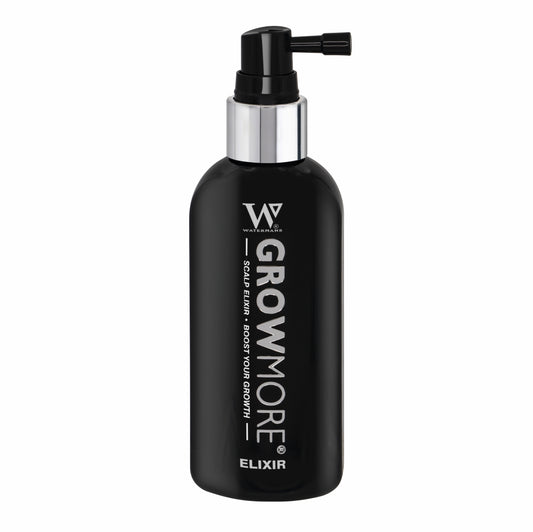
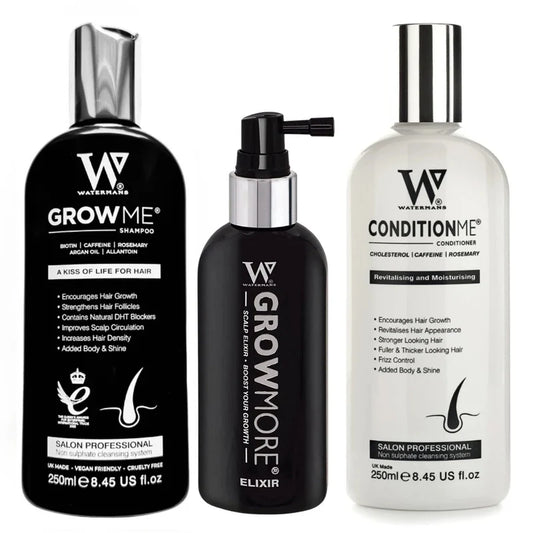
Use a Full System For many with FSH thinning, a full kit works better than one product. The Watermans Hair Survival Kit includes: • Grow Me Shampoo. • Nurture Me Conditioner. • A leave-in scalp elixir to keep the stimulation ongoing. This kit helps you stay steady and takes care of both scalp and hair.
-
Nutritional Foundations Hair is not the first body part to get food. Give your hair support with: • Good protein (meat, eggs, legumes, dairy, tofu). • Healthy fats (olive oil, avocado, fish, nuts, seeds). • Iron-rich foods (red meat, spinach, legumes, fortified cereals) with vitamin C to help absorption. • A mix of vegetables and fruits for protectors. If tests show low iron, vitamin D, B12, folate, or zinc, work with your doctor to fix these levels.
-
Stress and Sleep Routines Hormone changes come at hard times. Long stress shifts more hair into loss mode. Try: • Regular exercise like walking, pilates, yoga or weights. • Breathing or short guided breaks. • Keeping a regular sleep time every night. • Limiting alcohol and caffeine in the late part of the day. These steps do not change FSH, but they keep your overall balance steady.
-
Medical Monitoring Do not depend on hair products alone if your symptoms worsen. Keep in touch with: • Your GP or hormone expert. • Regular hormone tests every 6–12 months if needed. • Other age-based health checks. Your hair is a mirror of your inner health. Keeping your body in order helps protect your hair.
──────────────────────────── How Long Does It Take to See a Change?
h2: Timelines and What to Expect
Hair grows slowly. With FSH hair loss, especially in long-lasting hormone shifts, you need some patience.
Time frames may be: • 0–3 months: – Less shedding if you remove triggers and care for your scalp. – Hair feels cleaner, with more lift at the roots. – Scalp feels better when you use gentle products like Watermans Grow Me Shampoo. • 3–6 months: – New small hairs may appear around the hairline and crown. – Each strand grows thicker as it lengthens. – There is less breakage and hair feels stronger when you comb it. • 6–12 months and after: – You see more density on the scalp for many cases. – The hair loss pattern stabilises even if full regrowth does not occur. – It becomes easier to style and add volume with less effort.
How strong the change is depends on your genes, hormone levels, age, and life habits. The key is steady, long-term care rather than a quick fix.
──────────────────────────── Styling Tips to Mask FSH Hair Loss
h2: Making the Most of What You Have
While you work on healing the scalp and hormones, try some simple style changes: • Choose cuts with layers around the crown and sides to boost volume. • Avoid very blunt or one-length cuts that show thinning. • Use light volumising products, not stiff sprays that can harm hair. • Blow-dry with a round brush that lifts the roots instead of flattening them. • Pick lighter hair colours or soft highlights that make the scalp less obvious. • Do not tie hair too tight with ponytails, braids, or buns; this helps keep follicles safe.
──────────────────────────── Common Myths About FSH Hair Loss
h2: Separating Fact from False Ideas
h4: “High FSH Means I Will Lose All My Hair” High FSH marks a phase (such as menopause). Yet: • Many women keep good hair density during menopause. • Good food, genes, scalp care, and other hormones all count. • Early and steady care—like using the right products and seeing a doctor—can help.
h4: “Shampoos Cannot Help with Hormone Changes” Hormones play a role. However, the area of the follicle is also key. Shampoos and leave-in treatments that wake up or soothe the scalp can help by: • Boosting blood flow to hair roots. • Keeping follicles clear of buildup. • Supporting the strength of each hair strand. This is why many with hormone-related hair loss see a change when they switch to Watermans Grow Me Shampoo.
h4: “FSH Hair Loss Is the Same as PCOS Hair Loss” They differ. In FSH hair loss the change comes from lower oestrogen in menopause. With PCOS, higher androgens affect the hair. Both can thin hair, but the details and care can vary.
──────────────────────────── FAQ: FSH Hair Loss and Hormonal Thinning
h2: Frequently Asked Questions
h4: Does high FSH harm hair directly? High FSH does not attack hair follicles. It shows that the ovaries or testes are not as active as before. In women, this leads to less oestrogen and progesterone, which can let a natural tendency to thin hair show up. FSH hair loss works indirectly by changing the hormone mix.
h4: Can FSH levels return to normal and let my hair grow back? Sometimes a temporary pituitary problem or treatment can make FSH come down and help hair. In natural menopause, FSH stays high. Still, care of the scalp and overall hormone balance may let your hair steady or grow a bit, even if FSH remains high.
h4: What shampoo is best for hormone or FSH-related hair loss? Many in Australia choose a drug-free, scalp-stimulating formula. Watermans Grow Me Shampoo stands out because it uses caffeine, rosemary, biotin, niacinamide, argan oil, allantoin, and lupin protein to wake up the scalp, add volume at the roots, and care for the hair. It works well as a first step in a regular hair care routine.
──────────────────────────── Your Next Steps: Taking Control of FSH Hair Loss
FSH change often points to a deeper body shift—like the onset of menopause, fertility shifts, or wider hormone changes. You may not fix every hormone upset, but you can care for your hair in good ways.
To move ahead:
- Get proper tests and medical advice. Ask your GP or specialist for a full check if you have not done so.
- Upgrade your daily hair care. Switch to a clear, scalp-focused routine with Watermans Grow Me Shampoo to wake up your follicles and support fuller hair.
- Stick to a full plan. For steady support, try the Watermans Hair Survival Kit which pairs shampoo, conditioner, and a leave-in scalp elixir.
- Care for your hair inside and out. Eat well, keep stress low, and follow regular check-ups. Your hair reflects your inner health.
Keep in mind that steady care today can help your hair feel stronger and look fuller as you work through hormonal change.