hair shedding timeline: what to expect and how to speed regrowth
Understanding the hair shedding timeline can change a scary time into one you can manage. When you find extra hair on your brush, shower drain, or pillow, your mind may jump to the idea of permanent loss. Most hair falls out in a set cycle, and many actions help hair grow back faster if you act early and keep a steady routine.
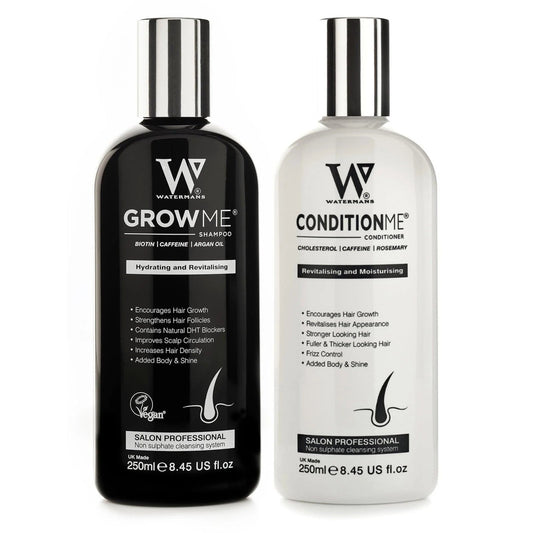
This guide walks you through what is usual and what is not, the time each shedding phase may last, and steps you can take so your hair returns sooner. Many in Australia and beyond choose Watermans Grow Me Shampoo as their first natural, non‐medical support to reduce shedding and grow hair stronger.
h2: Understanding the normal hair growth and shedding cycle
Before you study a detailed hair shedding timeline, know how your hair grows, rests, and falls out.
h4: The four phases of the hair cycle
Every hair on your head stays in one phase. Each phase keeps words and ideas close together, making the meaning clear:
-
Anagen (growth phase)
• Lasts 2–7 years
• Holds 80–90% of hairs
• Hair grows about 1–1.5 cm per month -
Catagen (transition phase)
• Lasts 2–3 weeks
• Hair stops growing
• Hair parts from its blood link -
Telogen (resting or shedding phase)
• Lasts 2–4 months
• Contains 5–10% of hairs
• Old hair stays in the follicle until it sheds -
Exogen (release phase)
• The hair strand falls out as new hair pushes it away
Each day, shedding 50–100 hairs is normal. Problems start when more hairs than normal shift into the resting and release phases, and suddenly much more hair falls.
h2: What is a hair shedding timeline?
A hair shedding timeline shows three key points:
• When hair falls
• How much hair falls
• When new hair becomes clear
This timeline changes by the cause. Stress, pattern loss, medicines, nutrient gaps, or even the season can tweak the timeline. Despite different causes, you see a pattern in the cycle.
h2: The typical hair shedding timeline after a trigger
Whether you have had a high fever, gone through childbirth, felt heavy stress, or changed medicines, most reactive shedding follows a set path.
h4: 0–1 month after the trigger: silent shift
• You may not see hair fall yet.
• Many hairs leave the growth phase for rest behind the scenes.
• Your hair feels normal while change occurs in the cycle.
This time is best for giving your scalp a gentle support using products like Watermans Grow Me Shampoo. Its mix of Biotin, Rosemary, Caffeine, Niacinamide, Argan Oil, Allantoin, and Lupin Protein works close to the scalp and roots to help build a warm base for new growth.
h4: 1–3 months after the trigger: shedding starts to rise
Between one and three months, you see more hair on your pillow, brush, or in the shower. Hair may seem thinner overall. Extra strands appear in your hands during washing, and the scalp shows more skin when hair is wet or tied back. Many hairs finish the resting phase together and fall out.
• Shedding usually starts about 6–12 weeks after a change.
• It can seem to come without warning.
• You may fear baldness, yet in many cases, this time is temporary.
This period works best for steady scalp care, good nutrition, and lowering stress so the heavy shedding lessens and new growth comes in sooner.
h4: 3–6 months after the trigger: heavy shedding and hints of new growth
From three to six months, shedding can be heavy—sometimes 100–200 hairs fall every day. Your ponytail might feel much thinner, or the overall volume may drop. Some notice a wider part or a softer hairline. At the same time, tiny new hairs (baby hairs) may appear along the front or at the crown.
These short hairs are the first sign that follicles have shifted back to the growth phase. Keeping up the scalp routine is a key part of this stage:
• Gently rub the scalp
• Use strengthening, light products
• Stop breakage so that new hairs can grow longer
Many opt to use Watermans Grow Me Shampoo during this phase. Its Caffeine and Rosemary help warm up the scalp, while Biotin, Niacinamide, Argan Oil, Allantoin, and Lupin Protein work at the root and along the hair strand.
h4: 6–12 months after the trigger: new hair takes the lead
If the trigger ends and your scalp finds a warm base:
• Hair loss slows back to about 50–100 hairs per day
• New hair becomes more clear as soft, short strands show along the hairline
• Volume returns gradually, even if it does not match what you had before
• The new hair may feel slightly different at first but then settles
At this stage the timeline shows recovery. Now, your aim is to support the thickness of new hair and steer clear of new harsh triggers like sudden diet changes or harsh medications.
h4: 12+ months: long-term outcome
For many cases of temporary shedding:
• Hair volume can look much fuller after 12 months
• Some come close to their former full thickness
• Others may still notice mild thinning if age, genes, or hormones join in
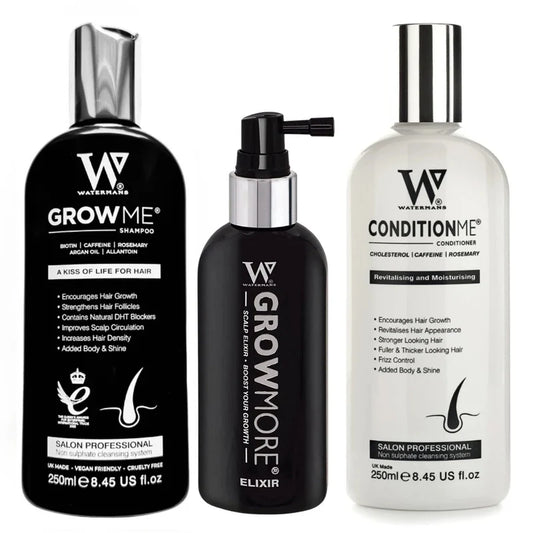
If hair continues to fall far beyond 12 months or bald spots start, it is time to see a doctor. A GP, dermatologist, or hair specialist may run tests for iron, thyroid, hormones, or conditions where the skin falls. A plan then can mix doctor care with a routine that may include Watermans Grow Me Shampoo and a full kit like the Watermans Hair Survival Kit.
h2: When your hair shedding timeline is not “typical”
Not all hair loss follows the same pattern. Spotting signs that stray from the usual 3–6 month path helps you know when to ask for more support.
h4: Signs your shedding may be more than temporary
Ask for help if you see:
• Bald patches or round areas of no hair
• Rapid thinning along the crown or at the sides
• Continued hair fall beyond 6–9 months without change
• Scalp signs like heavy itching, burning, pain, or flakes
• Loss of hair on eyebrows, eyelashes, or elsewhere on the body
Some patterns appear this way:
• Pattern hair loss shows a slow, even thinning at the crown or hairline.
• Alopecia areata shows sudden round bald spots.
• Certain scalp issues may also lead to permanent loss.
Here, gentle care still helps, but it works best when paired with a doctor’s advice.
h2: How to speed regrowth during your hair shedding timeline
There is no fast switch for hair, but you can help shorten the hardest part of the timeline and build a better base for new growth.
h4: 1. Start with scalp-friendly cleansing and stimulation
Your scalp is the soil for hair. A clean, well-fed, and active scalp makes growing hair easier. Many choose Watermans Grow Me Shampoo as a soft start. It is non-medical and fits well in many routines.
• Caffeine wakes the scalp
• Rosemary gives a fresh feel
• Biotin and Niacinamide help hair seem stronger
• Argan Oil and Allantoin keep the scalp moist and calm
• Lupin Protein helps the hair shaft
A steady use with a gentle scalp massage builds a safe base for regrowth.
h4: 2. Guard against breakage while hair is weak
During heavy shedding, the hair you keep is more fragile. To cut breakage:
• Rinse with lukewarm water instead of very hot water
• Dry hair gently with a microfiber towel or soft cotton T‑shirt
• Avoid hairstyles that pull hair tightly
• Cut back on heat styling and use a heat protectant if needed
• Pick a wide-tooth comb or soft-bristled brush and comb from the hair ends upward
These small steps help keep the existing and new hair on your head, so you see a thicker look.

h4: 3. Feed your body to support hair from inside
Hair is not an organ that lasts when the body lacks food. When stressed or low on nutrients, the body drops hair early.
Pay attention to:
• Protein – Hair is made from keratin, a protein. Eat eggs, dairy, legumes, lean meat, tofu, or tempeh.
• Iron – Low iron can lead to extra hair loss.
• Zinc – Needed for hair follicles to work well.
• Vitamins D and B – They help keep hair and skin strong.
• Essential fatty acids – Found in fish, flaxseed, chia seeds, or walnuts.
A balanced diet rich in whole foods helps. Talk with your doctor about tests or supplements instead of self-medicating.
h4: 4. Manage stress to stop more shedding cycles
Stress pushes hair into the resting phase. Cutting stress may quiet the cycle.
• Do regular movement, such as walking, yoga, or light strength work
• Practice slow breathing exercises
• Spend a few minutes each day in quiet
• Talk with someone or seek counseling if needed
• Aim for 7–9 hours of sleep each night
These actions do not stop hair fall in one night, but they keep stress from pushing more hair into loss.
h4: 5. Build a full pro-growth routine
A joined routine can help new hair grow better.
• Choose a nourishing conditioner that keeps hair light
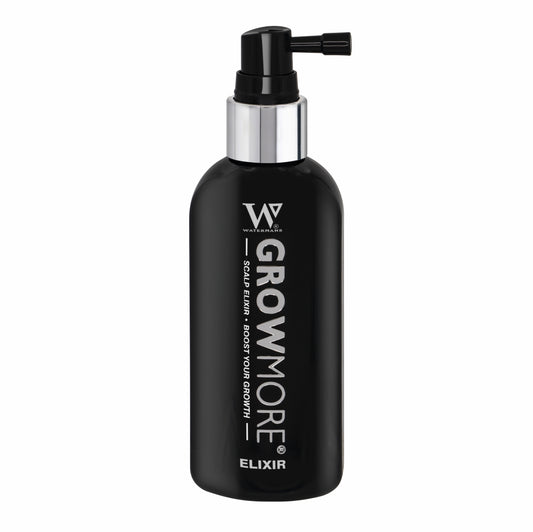
• Use a leave‑in scalp treatment or tonic to spread care between washes
• Gently massage the scalp for 2–5 minutes a few times each week
• Keep the routine steady over many months
For a ready-made set, many turn to the Watermans Hair Survival Kit. This kit has:
• Watermans Grow Me Shampoo
• A matching conditioner
• A leave‑in scalp formula
This simple set helps you follow a clear routine without mix and match.
h2: What to expect month‑by‑month in a typical hair shedding timeline
Each person is unique, but many with temporary telogen effluvium see a rough pattern like this:
h4: Month 0–1: Trigger event
• A major stress, illness, surgery, weight loss, hormone change, or shift in medicine occurs
• No clear change in hair yet
h4: Month 2–3: Shedding begins
• You notice more hair in the shower, on your brush, and on clothing
• You start to count hairs and search for answers
• The scalp may show a little more but no clear bald spots
h4: Month 3–4: Peak shedding
• This stage can be the most alarming
• Hair may feel much thinner, especially when tied in a ponytail
• Many feel self-conscious or upset during this period
• It is a good time to stick with your care routine (for example, using Watermans Grow Me Shampoo, handling hair gently, and improving nutrition)
h4: Month 4–6: Shedding slows, regrowth begins
• The daily hair fall slowly decreases
• Short new hairs appear along the hairline
• Hair may still look light at first, but this trend soon reverses
• A volumizing shampoo and conditioner can help bring back fullness
h4: Month 6–9: Visible improvement
• Hair looks fuller than during the peak phase
• New hair grows longer and fills thin spots
• Confidence grows as the change becomes clear
• A full routine like the Watermans Hair Survival Kit helps secure these wins
h4: Month 9–12+: Recovery and maintenance
• Many are out of the heavy shedding phase
• The focus moves to looking after a healthy scalp and full hair
• If shedding remains heavy with little new growth, ask a doctor for help
h2: Practical daily routine during your hair shedding timeline
A simple daily plan makes this process easier.
h4: Key steps to integrate
• Wash routine (2–4 times per week)
– Use Watermans Grow Me Shampoo, massaging it into the scalp for a few minutes.
– Follow with a light conditioner on mid-lengths and ends.
• Scalp care on non-wash days
– Use a leave‑in scalp tonic if you wish.
– Spend 2–5 minutes with a gentle fingertip massage to boost flow.
• Daily protection habits
– Avoid styles that pull hair tightly.
– Use a soft hair tie and change where you place your ponytail.
– Sleep on a silk or satin pillowcase to cut friction.
• Weekly self-check
– Take simple photos of your hairline, part, and crown with the same light.
– Note the overall feel of hair fall rather than count each hair.
Over weeks and months, steady, gentle care helps shift the hair shedding timeline in your favor while giving new hair time to grow.
h2: FAQs about hair shedding timelines and regrowth
h4: 1. How long does a typical hair shedding timeline last?
For temporary telogen effluvium, heavy hair shedding may last 3–6 months after it starts. New hair often begins to show during or soon after this phase, with more clear regrowth from about 6–12 months. If hair fall keeps well past 9–12 months without change, ask a doctor for further help.
h4: 2. Can I speed up my hair shedding and regrowth timeline?
You cannot change nature’s pace completely. However, you can support new hair by solving problems like low iron or thyroid issues, caring for your scalp with a supportive shampoo like Watermans Grow Me Shampoo, and protecting your hair from breakage. Changes appear over months rather than days when care starts early and stays steady.
h4: 3. Is my hair shedding timeline different if I have pattern hair loss?
Yes. Pattern hair loss (androgenetic alopecia) happens slowly over years. Hair gets finer and shorter. The fall may seem mild or steady, but overall density decreases. A steady scalp routine helps keep the hair looking thicker, and talking with a doctor about special treatments may also be wise.
h2: Take control of your hair shedding timeline today
You do not have to sit back while hair thins and your confidence drops. Knowing your hair shedding timeline gives you a clear guide: when hair falls, how long each phase takes, and where you can support new growth.
Begin by checking if your hair fall follows a temporary pattern or seems more long-term. Support your scalp with a gentle routine centered on Watermans Grow Me Shampoo. You might also try a full plan like the Watermans Hair Survival Kit, which provides shampoo, conditioner, and a leave‑in treatment. Small, steady changes with food, stress care, and gentle handling can make a big difference.
Your hair grows in cycles, and you can help your roots return to a state that brings strong, visible new hair.