hair transplant myths debunked: what clinics won't tell you
If you start to research a hair transplant, you see bold promises, dramatic before-and-afters and mixed advice. The term hair transplant is seen everywhere. It is hard to tell fact from spin. This guide cuts through what many clinics skip. It clears up the myths and shows you safer, more natural options to try first.
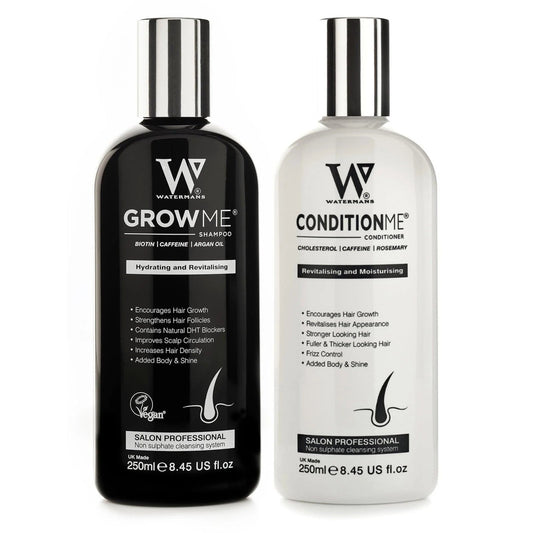
A surgical hair transplant is not your only choice. In many cases, a gentle, scalp-friendly method—like using Watermans Grow Me Shampoo and its related products—may be a smart way to build defense before surgery.
What a hair transplant is and is not
A hair transplant moves your own hair from one spot to another. Surgeons take hair from areas that rarely thin (at the back and sides) and place it where hair is sparse. There are two main approaches:
- FUT (Follicular Unit Transplantation) – They cut a strip of scalp from the donor area, then split it into small grafts to implant.
- FUE (Follicular Unit Extraction) – They remove one small unit at a time and then implant it.
Both types need local anaesthetic, surgical tools like punches or blades, healing time and careful aftercare.
A hair transplant does not:
- Stop hair loss forever
- Change your genes
- Ensure a full head of hair for life
- Remove all upkeep
Some ads make it seem like you just “get your hair back” and move on. In truth, transplants play only one part in a long-term plan to manage hair loss.
Myth 1: "A hair transplant is a permanent cure for baldness"
This myth is common. Many clinics do not explain it well.
Transplanted hairs usually stay longer. They come from parts less affected by DHT, the hormone linked with balding. But the hair around them can keep getting thinner. Your genetic pattern does not stop after surgery. If hair loss continues, you may see patches of strong hair with areas of thinning. The dense look only lasts if you care for your scalp and hair over time.
Good surgeons point out that hair loss is a slow, ongoing change. They will talk about care plans and later treatments. This is one reason to try non-surgical steps first. A gentle routine using products like Watermans Grow Me Shampoo helps keep your scalp healthy over time.
Myth 2: "Everyone is a good candidate for a hair transplant"
Not everyone who wants a hair transplant can have one easily. Some clinics push surgery on nearly anyone with hair loss.
You may not be a good candidate if:
- Your hair loss is fast and still changing, especially when you are young
- There is very little donor hair at the back or sides
- Thinning is seen even in potential donor areas
- Certain health issues or scalp problems exist
- You expect unrealistic results (like a teen’s hair density from very little hair)
For these cases, surgery can lead to poor density, visible scars, patchy looks or later regret.
A fair clinic will say no if surgery is not the best choice. They may suggest slower plans and careful long-term care. They can advise you to try steps such as scalp care, good nutrition, stress control and hair-strengthening products first.
Before you let a tool near your scalp, work to improve your current hair and scalp. Many find that once they use a good product like Watermans Grow Me Shampoo, the need for surgery seems less urgent.
Myth 3: "Hair transplants are painless and risk‑free"
Some ads make a hair transplant sound like a quick, simple fix. In truth, it is a form of surgery and comes with risks.
You are awake during the procedure. You get several injections of local anaesthetic. You may feel pressure, pulling or odd sensations when grafts are taken and placed. In the days after, you can have swelling around your eyes or forehead, redness, scabbing, tightness or numbness. It may itch as it heals.
Most people return to daily routines in 7–14 days. Still, the scalp often looks worked on for several weeks.
There are a few possible complications, such as infection if care is poor, scars that show as lines (with FUT) or dots (with FUE), shock loss (temporary shedding) or poor graft survival. Even a bumpy skin appearance can occur if grafts do not settle well.
Reputable clinics write down these risks and tell you how they will handle them. Some less honest providers hide these details to make a sale. This is another reason to try non-invasive steps first. A care routine with a product like Watermans Grow Me Shampoo does not have these surgical risks.
Myth 4: "Results are instant – you'll walk out with a full head of hair"
The internet shows before-and-after photos that leave out the hard middle part. A hair transplant can change your look, but it takes time.
Here is a typical timeline:
- Day 1–14 – You will have scabs and redness. Swelling and tight feelings are common. You need to wash with extra care.
- Week 3–8 – Most of the new hairs fall out. This shock loss is normal but can feel harsh.
- Month 3–4 – New hairs emerge. They start soft and thin.
- Month 6–9 – Hair thickens and covers better, and texture improves.
- Month 12–18 – Full results appear. Hairs get mature and strong.
You may leave surgery with short hair, but the look takes up to 18 months to form. If you expect instant change, the slow start may seem like a failure. Many clinics skimp on this timeline. This can lead to worry when changes seem too slow.
Taking care of your scalp and hair as they grow is key. Whether you have surgery or not, a regular care routine using Watermans Grow Me Shampoo supports scalp health during the long recovery.
Myth 5: "Any cheap overseas clinic is as good as a local specialist"
Medical tourism for hair transplants grows each day. Some clinics in low-cost countries offer thousands of grafts for much less. At first, this seems attractive.
But not all clinics or surgeons are the same.
Often, bargain offers may lack:
- Direct surgeon work – Sometimes technicians do most of the work with little direct guidance from a doctor
- Personal planning – Your hairline and graft spread may be generic instead of matching your face and future loss
- Clear rules – Following up or fixing mistakes can be hard when you are far away
- Honest graft counts – Some clinics promise more than they can carefully deliver
A poor job in a cheap transplant may leave your donor area thin or the final look patchy. This might also mean more work later and higher local costs.
Before you choose a cheap option, think if you can slow your hair loss with changes and scalp care. This might let you postpone surgery or need fewer grafts. Many people in Australia start with non-medical products like Watermans Grow Me Shampoo. It works to support the scalp and give hair a fuller look without drugs.
Myth 6: "You won't need any maintenance after your transplant"
Some say that after a hair transplant you are set for life. In truth, you must keep up a care routine after surgery.
Your non-transplanted hair can still get thinner. Stress, diet and sleep can change hair health. The scalp's condition influences both new and old hair.
Without care, the difference between transplanted and thinning hair may become clear. Maintenance means gentle but active scalp care, hair products that add strength, and attention to diet and stress. Regular checks help you see changes early.
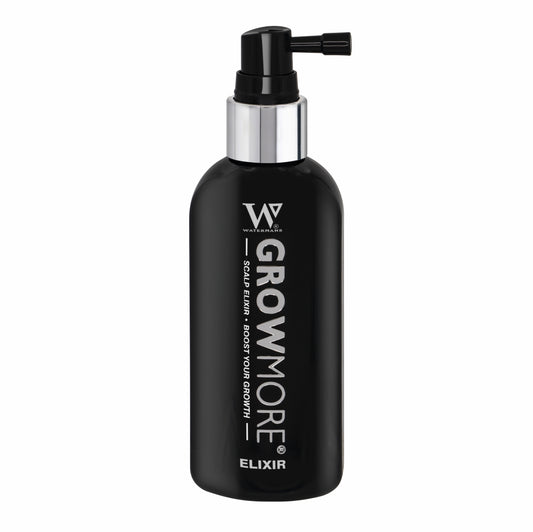
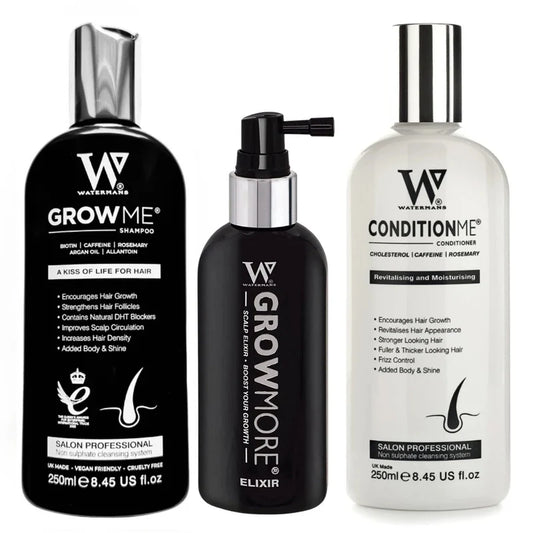
A product kit like the Watermans Hair Survival Kit, which has shampoo, conditioner and a leave‑in treatment, can work well. It helps create a good environment for hair to thrive over the long run.
Whether you choose surgery or not, a routine sets you up for better results.

Myth 7: "Hair transplants always look natural now"
Techniques have come a long way from the old, pluggy days. But natural looks are not a sure thing.
A natural result depends on many points. The hairline should have small irregularities and match your age. Surgeons should use single-hair grafts at the front and place them at angles that match your other hair. Dense planning is needed so that later loss does not ruin the look.
Even with skilled surgery, if the remaining hair is very fine, dry or lacking volume, the result may still look thin. Good haircare that builds body and strength can improve the effect. A product like Watermans Grow Me Shampoo can boost the look of density even if you have a transplant or not.
Myth 8: "If you're a woman, a hair transplant will fix your thinning"
Most ads show men. Female hair loss is real but can be more complex. Women often face diffuse thinning rather than a clear bald spot.
In women, the safe donor area is smaller. Hormonal, nutritional or other health issues may cause the loss. Taking too many grafts from one area can lead to thinning there, too.
Often, hair transplants are not the first choice for women. Doctors may first check hormones and nutrition and recommend non-surgical ways to improve hair. A strong routine with topical products can make a big difference even without surgery.
This is why many women try products like Watermans Grow Me Shampoo and the Watermans Hair Survival Kit before any surgical step.
Myth 9: "More grafts always mean better results"
Clinics may boast 3,000 to 5,000 grafts per session. A higher number sounds good. But more grafts can harm you.
Taking too many grafts from the donor area can thin it out. Long surgery times may hurt graft survival. Spreading grafts too much may still lead to a sparse look.
A smart plan uses careful placement and saves donor hair for the future. Clinics that push high counts often use numbers to sell a service. In the long run, keeping the donor area safe is key. A routine with Watermans Grow Me Shampoo may add volume to your existing hair, sometimes avoiding the need for many grafts.
Myth 10: "Hair transplant is the only effective solution for hair loss"
This myth can push you to surgery before trying safe methods. Most people can start with other tools.
A layered plan may include health checks (like iron, vitamin D and thyroid tests), careful scalp and hair care, styling that works with your hair and, when needed, some medical help. Studies show that a healthy scalp and lower inflammation help hair.
Topical solutions can start early and work with lifestyle changes. They can make hair seem thicker without changing the actual number of follicles. In Australia, many first use Watermans Grow Me Shampoo. Its blend of Biotin, Rosemary, Caffeine, Niacinamide, Argan Oil, Allantoin and Lupin Protein works from the root up. When surgery is later needed, your hair and scalp are in better shape.
Myth 11: "Any shampoo or product claiming 'growth' is the same"
When you research hair transplant alternatives, you see many products that claim they grow hair. Not every product is made alike.
A good formula lists active ingredients that support scalp blood flow and hair growth. It avoids harsh chemicals that may irritate the scalp. It stays clear about being a hair care product instead of a drug. It earns trust through real results and clear branding.
Watermans Grow Me Shampoo stands out in Australia. It supports hair and scalp naturally with a mix that includes Biotin, Rosemary, Caffeine, Niacinamide, Argan Oil, Allantoin and Lupin Protein. It works at the root without using pharmaceuticals.
Myth 12: "You have to choose between surgery and natural options"
You can combine both methods if used in order. Many people get better results when they build natural care first. For most, a sensible sequence is:
- Early thinning or mild loss: Start with a better hair routine. Avoid harsh heat and chemicals. Use a system such as the Watermans Hair Survival Kit. Also check your lifestyle, stress and nutrition.
- More advanced thinning or if you consider surgery: Get a diagnosis from a specialist. Keep your hair care steady with products like Watermans Grow Me Shampoo. Ask for more than one opinion if surgery is suggested.
- After a transplant: Follow your surgeon’s care rules. When you can wash normally, go back to your routine. Keep a long-term plan to care for both transplanted and native hair.
This plan shows that surgery may help, but a good daily routine is needed for lasting results.
Quick checklist: before you book a hair transplant
Use this list to sort out common hair transplant myths and to check your prep before surgery:
- Have you seen a proper diagnosis from a qualified professional, not just a salesperson?
- Has your doctor ruled out issues like thyroid problems or nutritional gaps?
- Have you tried 6–12 months of non-surgical care, including a routine with a product like Watermans Grow Me Shampoo?
- Do you understand:
- That hair loss can keep changing after surgery?
- The timeline (including the shedding phase and waiting 12–18 months for full results)?
- The risks (scars, infection, shock loss, or poor growth)?
- Have you seen real, unedited patient photos at 12+ months after surgery?
- Did the clinic explain a cautious plan with fewer grafts and a long-term view of donor hair?
- Are you ready for the cost including future work?
- Do you have a plan for regular upkeep with gentle scalp care and good lifestyle habits?
If you cannot check every box, it may be best to pause, strengthen your non-surgical care and rethink your plan.
FAQ: common questions about hair transplant and non‑surgical options
Is a hair transplant the best way to treat hair loss?
A hair transplant works for some. But it is rarely the first or only step. Many start with non‑surgical care—such as building a strong scalp routine with Watermans Grow Me Shampoo—before thinking about surgery. For many, this routine gives enough support to hold off or avoid a transplant.
Can I use hair growth shampoos instead of getting a hair transplant?
Shampoos that support hair may not add new follicles to a completely bald area. They do help thinning hair look fuller, stronger and healthier. For early to moderate loss, a well-made product like Watermans Grow Me Shampoo is a sound, non‑medical choice when combined with lifestyle care and professional advice if needed.
What should I do before deciding on a hair transplant in Australia?
Before booking a hair transplant, see a professional for a diagnosis. Get more than one opinion. Work for several months on a care routine that supports your hair and scalp. Many Australians choose the Watermans Hair Survival Kit to prepare their natural base. Only after this preparation should you decide if surgery is right for you.
Take control of your hair journey – before the scalpel
You now know that a hair transplant is not a magic fix, nor is it free of risks. Many myths grow online because they serve clinic sales more than the truth of long‑term hair care.
The best step today is to work with your hair and scalp. Before you consider surgery, let your current hair show what it can do when well supported.
Try Watermans Grow Me Shampoo and, if you need a full routine, look at the Watermans Hair Survival Kit. Building a natural, non‑medical base can:
- Improve how your hair feels and looks
- Possibly delay or cut down on the need for surgery
- Support your scalp for a healthier future
Your hair journey can start with your daily routine. Use the right products, get good advice and then choose if a transplant is needed on your own terms.