hairline recession: surprising causes and effective treatment options
Hairline recession can hit you hard. One day your fringe feels full; the next, your forehead shows more than before. You spot early hairline recession or note that your temples have pulled back for years. You now learn how your hairline changes and what steps you can take. This choice gives you control.
This guide explains why your hairline moves back. It shows treatment steps that put people first. You find tips from hair care changes to medical help. Many Australians start with non‑medical, scalp‑energising care like the Watermans Grow Me Shampoo before they try more invasive fixes.
What exactly is hairline recession?
Hairline recession means that your hairline moves back. This change happens mostly at the temples and the front of your head. It can:
• Begin in your late teens or 20s
• Grow slowly over many years
• Affect men more clearly, yet also affect women (with a wider, thinning front instead of an “M” shape)
A receding hairline is a pattern, not a few lost hairs. You may see:
• More scalp at the temples
• A higher forehead in photos
• More trouble with styling – less fringe and less volume up front
• Short hairs where thicker hairs once grew
The change is not always forever, especially in the early stages. With steady, focused care, many cases slow down, stay steady, or even improve.
Early signs of a receding hairline (and what’s just normal)
Everyone sheds hair. Losing 50–100 hairs a day is normal. Hairline recession gives extra visual clues.
Common early signs
• Temple thinning – you see more scalp near your forehead corners
• Uneven hairline – one side sits higher than the other
• Miniaturised hairs – thinner, shorter hairs near your front
• Styling trouble – the hair does not sit as it used to
• Photo shock – your selfies show a wider forehead or thinning
What’s probably not hairline recession
• A high hairline you have always had
• Temporary shedding after illness, childbirth, or strong stress
• Breakage from tight ponytails, heat, or chemicals (though this can lead to permanent change if it continues)
If you worry, take a clear photo of your hairline every 3–6 months. This method helps you spot small changes.
Surprising causes of hairline recession
Many assume that hairline recession comes from genes. Genes do play a role. More often, many factors work together.
1. Genes and hormones (the obvious, yet clear cause)
The most common hairline recession is androgenetic alopecia. In both men and women, hormones matter. You get sensitive genes from one or both parents. A hormone called DHT comes from testosterone and can shrink hair follicles in some. As you age, follicles can grow more sensitive.
In men, this appears with an M‑shaped hairline and thinning at the crown. In women, the change is softer at first. A wider part and thinner hair at the front appear with time.
Genes start the process. Your lifestyle and environment push it forward.
2. Stress and burnout – why your hairline suffers
Strong, ongoing stress hurts your hair. Your body makes more cortisol and adrenaline when stressed. This change reduces blood flow to non‑essential areas like your scalp. More follicles enter a resting state.
This shift may cause:
• Wider, diffuse shedding that makes a receding hairline more visible
• Slower growth exactly where the hair is more at risk
High‑pressure work, study, caring for others, money worries, or lack of sleep can all affect your hair.
3. Hairstyling habits that slowly wear on your hairline
Everyday styling can pull on hair around your hairline. This repeated stress may injure hair follicles. Known as traction alopecia, early signs can improve when you change your habits.
Risky actions include:
• Tight ponytails, buns, or braids that pull on hair
• Extensions fixed near the hairline
• Headbands or turbans that grip too hard
• Heavy use of strong gels, sprays, or back‑combing
• Frequent heat styling near the fragile hair at the front
If your hairline feels sore at the end of the day or you spot small broken hairs, your style may be partly at fault.
4. Scalp health and micro‑inflammation
We often focus on hair and ignore the skin of the scalp. When the scalp suffers, hair follicles do too. Low‑grade irritation can make hair follicles weak and less active.
Irritants include:
• Shampoos that dry out the scalp
• Build‑up from styling products and dry shampoo
• Untreated dandruff or scalp conditions
• Frequent chemical colouring or relaxers
• Sunburn on the scalp
A sore scalp feels itchy, tight, flaky, or even shiny. Working to calm your scalp is a key first step to improve your hairline.
5. Lacking nutrients and crash dieting
Growing hair needs many nutrients. Your body needs steady supplies of:
• Protein
• Iron
• Zinc
• Biotin and B‑vitamins
• Key fatty acids
Crash diets or being very strict with food can lower the quality and growth of hair. The hairline, which is more sensitive, may show these changes first.
When your body lacks fuel, it keeps energy for vital organs.
6. Hormonal shifts: pregnancy, perimenopause, PCOS and more
Changes in hormones may hide behind hairline recession. In women, certain life moments change hormone levels.
Often noted shifts include:
• Post‑partum – after childbirth, hormone levels shift and more hair sheds from the front
• Perimenopause and menopause – lower oestrogen and higher androgens may thin the hair
• PCOS – higher androgens can make hair thinner
• Thyroid issues – both an overactive and underactive thyroid cause hair loss
When hormones create changes, hair rarely settles until the underlying balance is fixed with help from a doctor.
7. Medicines and other health issues
Some drugs list hair thinning as a side effect. They can reveal or speed up hairline recession in people at risk.
This list can include:
• Some blood pressure drugs
• Some medicines for acne or cholesterol
• Anticoagulants
• Some antidepressants or mood medications
• Chemotherapy drugs (often the shedding is temporary)
Autoimmune conditions, scalp psoriasis, and skin problems can also hurt the front of the scalp.
Keep your doctor in the loop before you change any medicine if you notice changes in your hairline.
Natural and non‑medical options for tackling hairline recession
Before you try prescription drugs or surgery, you may try low‑risk, non‑medical methods. These steps work well in mild to moderate cases and help if you mix them with medical choices later.
Start with a scalp‑energising shampoo
A good shampoo is one of the simplest daily changes. Instead of a harsh cleanser that takes moisture away, choose one that:
• Boosts blood flow in the scalp
• Feeds hair follicles with friendly ingredients
• Cuts low‑grade irritation
• Brings more volume at the roots
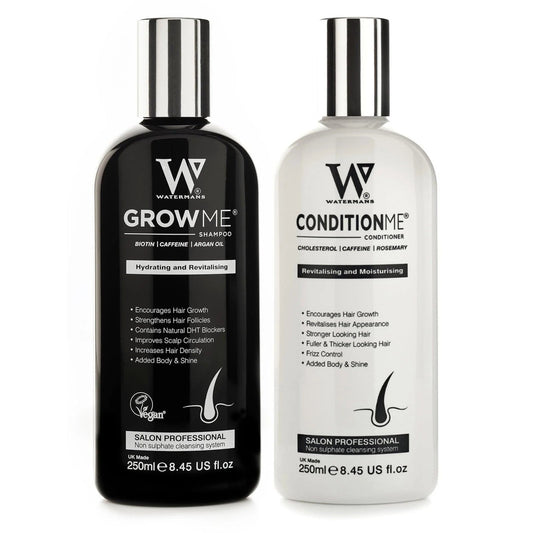
Watermans Grow Me Shampoo is a non‑medical, safe choice in Australia and the UK. Its main parts include:
• Biotin – to support the hair shaft
• Rosemary – used to boost blood flow in the scalp
• Caffeine – to lessen some DHT effects and wake up hair roots
• Niacinamide (Vitamin B3) – to build a healthy scalp and smooth blood flow
• Argan Oil – to feed hair without weighing it down
• Allantoin – to soothe the scalp and keep cells active
• Lupin Protein – to toughen the hair and raise volume at the roots
With steady use, this shampoo can:
• Bring more look to thinning areas at the front
• Build a healthier base for new growth
• Reduce breakage near a weak hairline
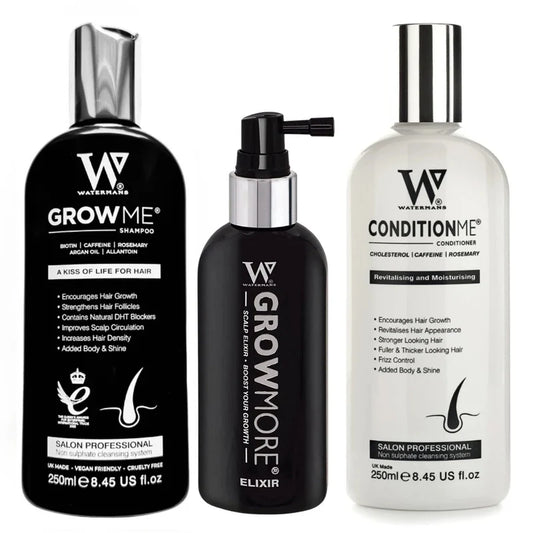
Since it is non‑medical and uses hair‑friendly parts, it makes a smart start for early hairline recession. For a full routine, the Watermans Hair Survival Kit pairs the shampoo with a conditioner and a leave‑in formula. This complete method helps you care for your hair both morning and night.
Fix your daily hair care routine
Small changes in your daily routine can add up over time.
A gentle routine for a vulnerable hairline:
-
Wash but do not scrub hard
• Use a soft, scalp‑friendly shampoo like Watermans Grow Me 2–4 times per week
• Use your fingertips to work the shampoo, especially at the temples and front -
Condition the middle and ends
• Apply the conditioner on the hair lengths
• This step cuts tangles and saves hair from breaking -
Pat dry instead of rubbing
• Blot with a soft towel or T‑shirt as rubbing can hurt your hairline -
Guard against heat
• Apply a heat protectant when using blow dryers or straighteners
• Avoid too much heat near the soft hair at the front -
Ease chemical stress near the front
• If you colour or bleach, ask your stylist to be gentle with baby hairs
• Try not to apply harsh chemicals repeatedly at the hair’s edge
Change your styling habits
Every day, your hairstyle can protect your hairline or stress it further.
Aim for styles that pull less on your hair:
• Choose a looser ponytail or bun. If it hurts, it is too tight.
• Switch your part from side to side over time
• Use soft, snag‑free hair ties without metal or tight elastics
• Limit heavy extensions or have them placed away from your most fragile zone
• Try softer styles like loose waves, soft fringe, or layered cuts that do not pull the hair
Talk with your stylist about your hairline. Ask for a cut that adds volume at the front without stressing the delicate areas.
Feed your hair from inside out
Hair shows clues about how your body works. A healthy diet helps your scalp.
Key actions include:
• Protein – eat a palm‑sized portion of protein (like eggs, lean meat, legumes, tofu, or Greek yoghurt) at most meals
• Iron and zinc – these matter, especially for women. Check your levels if you have fatigue or follow a plant‐based diet
• Healthy fats – add nuts, seeds, avocado, or oily fish (or algae‑based omega‑3s)
• Water – keep well hydrated to avoid a dry, irritated scalp
• Stress control – even 10–15 minutes of walking, yoga or deep breathing can help balance your stress hormones
• Sleep – aim for 7–9 hours nightly to help your body renew cells
Supplements may help if you have low levels of nutrients. They work best along with a balanced diet.
Medical and clinical treatments for hairline recession
If hairline recession grows or causes you distress, talk with your GP, dermatologist, or trichologist. Mixing these methods with non‑medical care may bring the best results.
Note: Always seek personal advice from a doctor before you start or change a treatment.
Topical and oral medicines
Common choices include:
Minoxidil (topical)
• An over‑the‑counter foam or liquid
• This medicine improves blood flow to hair follicles
• With regular use, it may slow hair loss and help regrowth along the front
• Some people face an initial shedding phase, scalp irritation, or extra facial hair
Some users mix daily minoxidil with a gentle shampoo like Watermans Grow Me to protect the scalp.
Finasteride (oral, for most men)
• A prescription pill that cuts down DHT levels
• It may slow or stop hairline recession in men with patterned hair loss
• Side effects can include changes in mood or sexual function. A full talk with your doctor is needed.
Other hormone treatments (for some women)
Depending on your case, a doctor may suggest:
• Medicines that block androgens
• Hormonal contraceptives or hormone therapy to even out changes
These hints require care and close checks with your doctor.
Platelet‑Rich Plasma (PRP) therapy
PRP therapy means:
- A small sample of your blood is taken
- A centrifuge boosts platelets and growth parts
- The PRP is injected into the thinning areas, including the hairline
Studies show PRP may:
• Increase hair density
• Thicken the hairs that remain
• Help regrow hair in areas of mild to moderate recession
Multiple sessions and follow‑up help add results. Many pair PRP with a gentle shampoo such as Watermans Grow Me to build a better scalp.
Low‑Level Laser Therapy (LLLT)
Low‑level lasers or red‑light devices come in caps, combs, or helmets. They work by:
• Boosting cell energy in hair follicles
• Raising blood flow
• Cutting down on inflammation
Research shows regular treatment over months may help those with patterned hair loss. The method is non‑invasive and works well with scalp‑friendly shampoos and other therapies.
Hair transplant surgery
For a more advanced stage or stable loss, hair transplant surgery is an option.
Two main types exist:
• FUT (Follicular Unit Transplantation) – a strip of scalp is cut from the back. The follicles are taken and moved to the receding area.
• FUE (Follicular Unit Extraction) – each hair is taken one by one from a donor area and placed in the new spot.
This method suits stable loss, not a fast-changing hairline. Results depend on the surgeon’s skill and your own expectations. You must care for both donor and new areas for a long time, and use gentle products like Watermans Grow Me.
Lifestyle strategies to protect your hairline long‑term
After you slow or improve hairline recession, your goal is to keep your progress.
Sun protection for your hairline
Your forehead opens up to the sun. UV rays can:
• Age the skin on your scalp
• Cause dryness and irritation
• Raise your risk for skin damage
To protect your hairline:
• Wear a hat or cap when you are out in the sun
• Use a scalp‑safe SPF spray or powder along your part and hairline
• Avoid spending too much time in direct sunlight on your scalp
Regular scalp “check‑ins”
Every 3–6 months:
• Take clear photos of your hairline and part, using the same light
• Look for any loss of density, baby hairs, or thinning spots
• Check your stress, medicines, and daily habits for new effects
Early spotting gives you more ways to act. It is easier to slow mild recession than to reverse years of loss.
Hairline recession in men vs women
Men and women may see different details even though many causes overlap.
Men
• Often show visible temple recession and an M‑shaped hairline in their 20s or 30s
• May see crown thinning later on
• Patterned hair loss appears clearly, although lifestyle and scalp care still matter
Women
• May see a widened part and thinning at the front instead of dramatic recession
• Hair changes link closely with events like pregnancy, perimenopause, menopause, or PCOS
• Daily styles and tight hair practices can play a big part
In both cases, early use of scalp‑friendly products like Watermans Grow Me and softer styling can make a real difference.
What to do if you’ve just noticed hairline recession: step‑by‑step
If you look in the mirror or at a photo and feel concerned, here is a clear plan.
1. Document what you see
• Snap clear front‑on and side photos in natural light
• Write down any family history of early hairline change or hair loss
• Note recent shifts in stress, diet, health, or medicines
2. Upgrade your hair‑care routine
• Switch to a scalp‑energising, non‑medical shampoo like Watermans Grow Me
• Try the Watermans Hair Survival Kit for a full routine with conditioner and a leave‑in boost
• Ease up on tight styles, high heat, and harsh chemicals near your hairline
3. Check your health basics
• Visit your GP for tests (for iron, thyroid, B12, vitamin D, and more) if you can
• Look at your sleep, stress, and nutrition – small fixes may help a lot
4. Seek professional help if needed
• If hairline change comes fast, is patchy, or comes with redness, scaling, or pain, see a dermatologist or trichologist
• Ask about trusted methods like topical minoxidil or other treatments that fit your case
5. Allow your plan time to work
Hair grows slowly. Most steps need 3–6 months of steady use to show a change and up to 12 months for a full view. Take updated photos often to see small gains.
FAQ: Common questions about hairline recession
1. Can hairline recession be reversed?
In early stages, some improvement is possible if:
• The cause is stress on the hair from styling
• There is a link with stress, lacking nutrients, or hormone shifts
• You act soon with scalp‐friendly care and, if needed, medical support
When follicles no longer work and smooth skin replaces them, new hair is hard to regrow. Then, a hair transplant may be the only fix. Early action with a daily shampoo such as Watermans Grow Me shows its worth.
2. How do I know if my hairline recession is normal aging or serious?
Some change is common with age, especially in men. Spots that call for a professional include:
• A very fast change in a few months
• Uneven, patchy bald spots
• A scalp that is red, scaly, or sore along the hairline
• Extra loss, such as eyebrows or body hair
• Other signs like fatigue, weight shifts, or changes in the menstrual cycle
A GP or dermatologist can tell if you face typical patterned loss, stress or hormonal issues, or another cause. They then advise a plan.
3. What is the best non‑medical shampoo for a receding hairline?
Many people in Australia and beyond pick Watermans Grow Me Shampoo. Its mix of biotin, caffeine, rosemary, niacinamide, argan oil, allantoin, and lupin protein works to:
• Give energy to the scalp
• Serve the hair follicles well
• Add volume and thickness from the roots
When used every day, and as part of the Watermans Hair Survival Kit, it supports your hairline for the long run.
Take the next step for your hairline today
You do not have to face hairline recession as something you cannot change. Genes and age are part of the story, but how you care for your scalp, style your hair, manage stress, and feed your body makes a difference over time.
Start in the shower. Swap a harsh cleanser for a scalp‑energising formula like Watermans Grow Me Shampoo. This switch builds a base for stronger, fuller‑looking hair at the front. For an all‑in‑one plan, the Watermans Hair Survival Kit is a simple way to care for your hair both morning and night.
Then, add kinder styles, good nutrition, stress control, and professional advice if needed. These steps with a people‑first, non‑medical touch give you the best chance to slow, steady, and sometimes improve hairline recession.
Your future hairline rests on the habits you build today.