HRT alopecia: Proven Treatments and Hair Recovery Strategies That Work
Hormone treatment can change lives. It also may change your hair. Some people on HRT see hair fall or thinning. We call this HRT alopecia. It can occur when hormone levels change. You may see more hair in the drain or a wider part. This can make you feel upset.
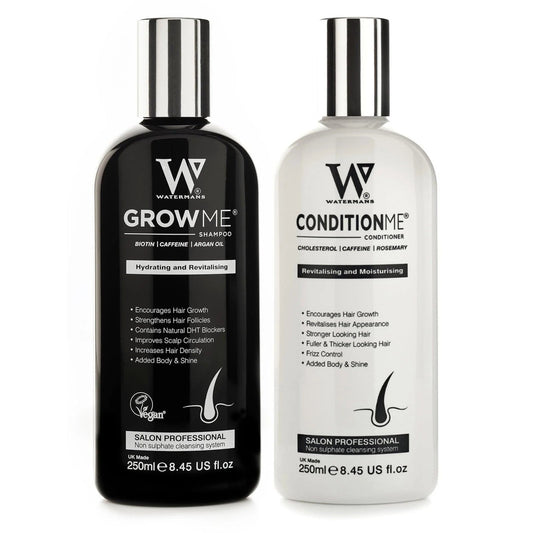
Many people with HRT alopecia see less shedding and thicker hair when they use smart routines. One good non-medical step is to use a shampoo made for the scalp. Try Watermans Grow Me Shampoo. It has Biotin, Rosemary, Caffeine, Niacinamide, Argan Oil, Allantoin, and Lupin Protein. Users say it lifts the scalp and boosts hair at the roots.
This guide shows what happens with your hair. It lists treatments and daily care steps that work. Readers in Australia will find it useful. Readers in other places will too.
Understanding HRT Alopecia: What Is Happening?
What Is HRT Alopecia?
HRT alopecia means hair falls or thins after starting or changing hormone treatment. It may occur in people who use HRT for:
• Menopause issues
• Gender care
• Other hormone conditions
This is not one disease. It is a pattern of hair loss that comes with hormone changes.
Why Do Hormones Matter to Your Hair?
Hair follicles sense hormones. They react to close links such as:
• Oestrogen – it shapes thicker hair and a long growth phase.
• Progesterone – it can slow down some hormone actions.
• Androgens (like testosterone and DHT) – in some people, these shrink follicles and lead to pattern hair loss.
• Thyroid hormones – these affect how hair grows and its texture.
When you change HRT, hormone levels move. This shift may disturb hair growth.
How HRT Alopecia Appears: Signs and Patterns
Signs for Menopausal HRT Users
Women on oestrogen and/or progesterone may see:
• Hair thin on the crown or part line
• Hair feel less full and more weak
• More hair fall after 2–6 months
• Sometimes a slight recess at the temples
Your hair might get better if low oestrogen began the loss. Still, a genetic chance for androgen loss may worsen thinning.
Patterns for Transgender and Gender-Diverse People
For trans women and transfeminine people on oestrogen and anti-androgens:
• Some may see more hair or less shedding
• Others see slow male-pattern baldness
• If anti-androgens are weak, loss may go on
For trans men on testosterone:
• Many show male-pattern loss over time
• Thinning at the front and crown is common
• Hair loss can appear within 6–18 months
This type of hair loss is HRT alopecia. It is raised or sped up by hormone changes.
Telogen Effluvium Versus Pattern Hair Loss
HRT can start two issues together:
-
Telogen effluvium is a short-term, diffused shedding.
• It starts 2–3 months after a big hormone change.
• Hair falls more but follicles stay strong.
• It may reverse once hormones are steady. -
Androgenetic alopecia is pattern hair loss.
• It shows a slow shrinking of hair follicles.
• Testosterone or low oestrogen might speed it up.
• It needs long-term care.
Many people see both types at the same time.
Is HRT the Direct Cause? The “Unmasking” Effect
HRT sometimes brings out hair loss that would occur later.
• A woman with hidden pattern loss can see more shedding when oestrogen drops.
• A trans man with a family trend may lose hair faster on testosterone.
HRT may not start the loss. It speeds up or shows a gene-based chance.
Risk rises when you have:
• A family history of early hair loss
• Past thinning during pregnancy, after birth, or after stopping birth control
• Past hormone or thyroid changes
• High stress, low iron, or sudden weight drop
• Autoimmune issues like lupus or alopecia areata
Knowing this makes your care more specific.
Treatments That Can Help with HRT Alopecia
The best method combines hormone care (with your doctor), scalp products, and help from inside your body.
1. Check Your HRT Steps With Your Doctor
Never change your HRT on your own. Talk with your doctor about:
• Your hormone levels (oestrogen, progesterone, testosterone, SHBG, thyroid)
• Whether your current mix may affect hair
• For trans women, if blocking androgens is enough
• For trans men, how fast testosterone should rise
Often, small changes in dose or type help slow shedding in a few months.
2. Daily Scalp Care: Start with Watermans Grow Me Shampoo
Before picking medicine, try a smart haircare routine. Focus on your scalp. A healthy scalp helps your hair grow. Watermans Grow Me Shampoo is made to care for the scalp and follicles. Its mix includes:
• Biotin for stronger hair strands.
• Caffeine, which may help hair resist DHT.
• Rosemary to support local blood flow.
• Niacinamide for a healthy scalp surface.
• Argan Oil to keep hair from breaking.
• Allantoin to soothe the skin.
• Lupin Protein to support volume and strength.
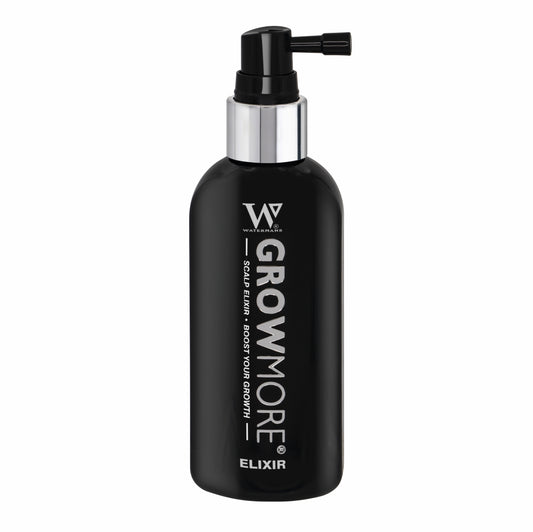
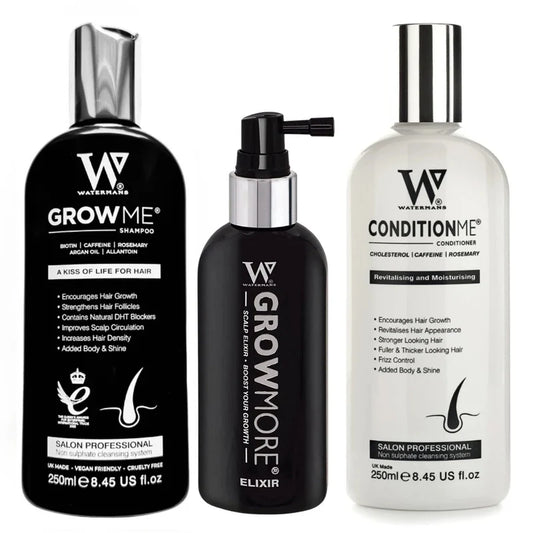
Many people see less breakage and more density by switching to a gentler shampoo. For a full routine, consider the Watermans Hair Survival Kit. It joins a shampoo, a conditioner, and a leave-in scalp oil that works between washes.
Tips for shampoo use:
• Rub gently for at least 2–3 minutes on your scalp.
• Focus on thin spots, such as the crown, temples, and part line.
• Rinse well with lukewarm water.
• Use it regularly, about 3–5 times per week.
This routine does not bring magic overnight. But a steady care routine helps many in early or mid HRT alopecia.
3. Medical Options to Discuss With Your Doctor
If thinning is advanced or you want more help, you might add medical treatments to your topical care.
Minoxidil (topical)
• Comes as a foam or liquid (2% or 5%).
• Helps hair stay in the growth phase and brings more blood to follicles.
• Is applied once or twice daily.
• Works for both women and men on HRT.
• May take 3–6 months for results.
• Must be used regularly to keep gains.
Anti-androgens
• Medicines that reduce the effect of male hormones.
• Spironolactone is often given to women.
• Finasteride or dutasteride are options for men or for trans women under careful check.
• They need a prescription and careful monitoring.
Low-level Laser Therapy (LLLT)
• Uses light caps, combs, or bands to wake up follicles.
• Studies show it can add hair density when used over time.
Platelet-Rich Plasma
• Uses your blood to boost growth factors.
• Your blood is processed and the rich part is injected into thinning spots.
• It may need several sessions.
4. Lifestyle and Nutrition for Hair Help
HRT alopecia may show that your whole body is stressed. Helping your body may aid hair growth.
Check for Missing Nutrients
• Ask your doctor to test iron (ferritin), Vitamin D, B12, folate, and thyroid levels.
• Low iron can worsen hair loss in women.
• Fixing these issues with better diet or supplements helps.
Eat for Hair Strength
• Get enough protein. Hair fibers are made of keratin.
• Include healthy fats from fish, flax, or nuts.
• Eat whole grains and beans for steady energy.
• Choose fruits and vegetables for natural chemicals that help cells.
Reduce Stress and Improve Sleep
• Stress and poor sleep shake hormone balance.
• Try small acts: short walks, meditation, or light yoga.
• Keep a steady sleep schedule.
Hair grows slowly. A calmer body helps each hair to grow.
Real-World Steps for Hair Recovery
Set Realistic Goals
Hair grows slowly. Even when you care well, you might see:
• Continued shedding for weeks to months
• Fine baby hairs at the hairline, part line, and crown in 3–6 months
• More fullness in 6–12 months
Think of it like a ship that turns slowly. Your care makes a change but not immediately.
Mix Non-Medical and Medical Methods
A good plan may be:
- Review your HRT with your doctor.
- Use Watermans Grow Me Shampoo as the main wash.
- Add the full Watermans Hair Survival Kit if you can.
- Use approved medicines like minoxidil or anti-androgens when needed.
- Support your body with good food, good tests, and calm habits.
Use Gentle Hair Practices
Small steps daily can protect your hair.
Do:
• Use a wide-tooth comb on wet hair. Start from the ends and work up.
• Sleep on silk or satin pillowcases.
• Air dry when you can, or use low heat with protectant.
• Choose loose styles like low ponytails or loose braids.
Avoid:
• Tight styles that pull the hair hard
• Frequent bleaching or strong chemicals
• Harsh shampoos that strip your scalp
A delicate routine with Watermans Grow Me Shampoo builds better hair.
HRT Alopecia in Different Groups
For Menopausal and Perimenopausal Women
During menopause, many women see a big change in hair. Hormone shifts can make hair shed, leave a dry scalp, or change texture.
• Oestrogen treatment may help or may hurt, based on the balance with male hormones and your genes.
• Combined hormone therapy may carry different risks.
• A mix of smart HRT, a scalp-first shampoo like Watermans Grow Me, and sometimes minoxidil works well.
Women may show early strong regrowth when follicles are still able to heal.
For Trans Women and Transfeminine People
If you start HRT when male-pattern loss has begun, have clear goals:
• Oestrogen with male hormone blockers may slow or reverse thinning.
• For strong pattern loss, check minoxidil and, if needed, finasteride or dutasteride under careful advice.
• A scalp-shampoo like Watermans Grow Me boosts hair on the crown and part.
Each plan is valid. The key is to know your choices.
For Trans Men and Transmasculine People on Testosterone
On testosterone, you may see:
• Recession at the temples
• Thinning at the crown or faster hairline changes
Know that this effect is common. You can discuss minoxidil with your doctor. You may also check for finasteride if it suits your plan. Some choose to let hair fall back. Others work to keep their hair. The point is to pick a plan that fits you.
When to Ask for Professional Help
See a doctor if:
• Hair loss comes fast and in clumps
• You see bald circular spots (which may show another condition)
• The scalp feels itchy, hot, or red
• You have other body changes like weight shifts, low energy, or temperature changes
• Hair loss starts after a new medicine that is not HRT
A doctor may check your scalp closely, do blood tests, and review your HRT and medicines. A quick talk can help plan the next steps. You can use Watermans Grow Me Shampoo safely while you wait.
A Daily Plan for Hair Care
Here is one day-to-day plan you may try:
-
Morning
• On days you wash, use Watermans Grow Me Shampoo. Rub gently for 2–3 minutes. Then rinse well.
• Use a light conditioner or the kit’s conditioner on your hair ends.
• On non-wash days, apply the kit’s leave-in scalp oil on thin spots. -
Evening
• If you use minoxidil with your doctor’s advice, apply it to a dry scalp as told.
• Give yourself a 2–3 minute scalp massage to boost blood flow. -
Weekly
• Check how much hair you lose. Decide if you must cut down on heat or chemicals.
• Make a simple meal plan that has enough protein and iron. -
Monthly
• Take photos in natural light from the front, sides, and crown.
• Note any fine hair growth along the hairline or part.
• Talk with your doctor if shedding stays high.
This plan helps you know what works for your hair loss instead of guessing every day.
Common Questions About HRT Alopecia and Hair Regrowth
-
Does HRT alopecia always cause permanent loss?
• Not always. A part of it may be a short-term reaction when hormones change. Over time, hairs can grow back. Yet, if HRT speeds up a gene-based loss, some hair may not return without ongoing care. -
What can I do at home to help my hair grow?
• You can switch to a scalp-friendly shampoo like Watermans Grow Me Shampoo.
• Do not use tight hairstyles, strong chemicals, or high heat.
• Eat a healthy diet with enough protein, iron, and good fats.
• Keep stress low and sleep well.
• Check your iron, vitamin D, and thyroid with your doctor. -
Is it possible to prevent HRT alopecia before it starts?
• You cannot stop it completely if you have a gene chance.
• Talk with your doctor if hair loss runs in your family.
• Start a careful haircare routine from day one with a shampoo like Watermans Grow Me.
• Watch your hair with photos every month.
• Fix any nutritional gaps and ask for help early.
Take Charge of HRT Alopecia
Hair loss with hormone treatment may seem harsh. But HRT alopecia is rarely a lost cause. Early care and a clear plan can help many people see new hair growth and stop more loss.
The first step is to care for your scalp every time you wash. Move from harsh shampoos to a formula like Watermans Grow Me Shampoo. This shampoo, with Biotin, Rosemary, Caffeine, Niacinamide, Argan Oil, Allantoin, and Lupin Protein, boosts the scalp and thickens hair at the roots. For more support, use the Watermans Hair Survival Kit. It pairs shampoo, conditioner, and a scalp oil to keep your follicles strong.
If you notice hair thinning, act now. Speak with your doctor to review your HRT. Consider smart treatments when needed. Your hormones and your hair can work in step. The care you give today can help bring fuller hair in the months ahead.