HRT dosage guide: Find Your Ideal Hormone Therapy Amount Safely
Finding the right HRT dosage can feel confusing and hard to sort through. You face symptoms like hot flushes, mood swings, tiredness, hair thinning, or low libido. This guide shows how doctors set hormone therapy doses, what low, standard, and high doses mean, and how you can work with your doctor to adjust your treatment safely. We also look at issues such as weight, age, hair loss, and natural topical care with Watermans Grow Me Shampoo to help your hair while you are on HRT.
This article gives general information for adults in Australia and other places. It is not medical advice. Always work with a qualified doctor or endocrinologist for any plans about HRT dosage or changes in medication.
What does “HRT dosage” mean?
In simple terms, HRT dosage tells how much hormone you take, how often you take it, and in what form. In a clinical view, this means:
• The hormone type (oestrogen, progesterone, testosterone, or a mix)
• The amount (for example, mg in a tablet, micrograms in a patch, or gel pump squeezes)
• The route (a tablet you swallow, a patch on the skin, gel, an injection, an implant, or a vaginal form)
• The schedule (daily, in cycles, continuously, or by monthly shots)
Your best HRT dosage is not one fixed number. It is a personal range that meets these points:
• Your symptoms improve greatly or go away
• Your blood levels stay in a safe range (if your doctor checks them)
• Your side effects are light or none at all
• The long‑term risk is low for you and your doctor
Why HRT dosage is unique for each person
Two people on the same hormone therapy can have very different results. For this reason, most guidelines suggest that the dose should start small and grow slowly.
Things that change your ideal dose include:
• Age and time since menopause or hormone loss began
• Body weight and how it is made up (fat may store hormones differently)
• How well your liver and kidneys work
• Smoking and drinking habits
• Other medications you take (some anti‑seizure drugs speed up how hormones break down)
• Your genes and how your body senses hormones
• The way the hormone is given (patch versus tablet versus injection)
• Your personal goals (for example, symptom help only or full treatment for transition, libido, or bone health)
For this reason, any talk about HRT dosage is a guide for discussion with your prescriber. It does not replace a true personalized plan.
Types of hormone therapy and how dose is explained
1. Oestrogen (Estrogen) therapy
Used by many for:
• Menopausal symptoms in women or those assigned female at birth
• Oestrogen replacement after early or surgical menopause
• As part of feminising HRT for transfeminine people
Common ways to take it:
• Oral tablets
• Transdermal patches
• Topical gels or sprays
• Vaginal tablets, rings, or creams
In Australia, doses are given in mg for tablets and micrograms (µg) for patches.
Ranges for menopausal HRT (the exact numbers depend on the product):
• Low-dose oral oestradiol: about 0.5 mg each day
• Standard dose oral oestradiol: 1–2 mg each day
• Low-dose patch: 25–37.5 µg for 24 hours
• Standard patch: 50 µg for 24 hours
• Higher patch: 75–100 µg for 24 hours
For feminising HRT, doses tend to be higher. They are adjusted slowly, especially in the beginning.
Remember: Different products are not swapped milligram‑for‑milligram. Your prescriber chooses the starting point using the product and your needs.
2. Progesterone / progestogen therapy
This is added if you still have a uterus. It helps to protect the lining from growing too much under oestrogen.
Common forms:
• Micronised progesterone (favoured because it is more similar to the body’s own hormone)
• Synthetic progestins in combined tablets or patches
• Intrauterine device (IUD) with levonorgestrel
Typical patterns for HRT dosage:
• Micronised progesterone: 100 mg daily (continuous) or 200 mg for 12–14 days per month (cyclic)
• Combined oral tablets show doses as “1 mg oestradiol + 0.5 mg progestin” and so on
• Hormonal IUD: releases the dose steadily over 3–5 years. It protects the lining without a separate oral dose
3. Testosterone therapy
Used for:
• Masculinising or gender‑affirming HRT
• Some post‑menopausal people or those assigned female at birth with low libido or tiredness (depending on the region and labeling)
Common forms:
• Injectable testosterone (like undecanoate, enanthate or cypionate)
• Transdermal gels or creams
• Patches (used less in some regions)
Dose ideas:
• For injections: about 100–250 mg every 1–3 weeks, or long‑acting shots every 10–14 weeks. Dose is adjusted to reach a normal male level.
• For gels or creams: dose is given in mg per day (for example, 20–50 mg/day). They are tuned using blood tests and how you feel.
• For people assigned female at birth, the dose is often a fraction of the male dose. They are watched closely to avoid too much hair growth, acne, or voice changes.
How doctors choose your starting HRT dosage
Step 1: Look at your history
Good doctors will first:
• Ask for your full medical history (including clot risk, past cancers, family history, heart problems, and mental health)
• Check your current medications and supplements
• Ask about your symptoms (for example, hot flushes, night sweats, mood changes, low libido, poor sleep, dryness, hair changes)
• Talk about fertility and contraception needs
• Sometimes order blood tests (for hormones, blood count, liver, and cholesterol)
For menopausal HRT, tests are not always needed. In more complex or early cases, they may help. In gender‑affirming HRT, blood tests guide these decisions.
Step 2: Choose the form and way to take the hormone
Your doctor may choose:
• Oral tablets when it is best for you, even if there is a slightly higher clot risk
• Transdermal patches or gel if clot risk is higher, or if you prefer a steadier level
• Vaginal oestrogen if your main concern is dryness or discomfort and you do not need a full dose
• Injectable or transdermal testosterone over oral forms for liver and heart reasons
The way you get the hormone changes how much reaches your blood. This makes equivalent doses different by form.
Step 3: Start low and watch your symptoms
Most doctors begin with a lower dose. They do so if:
• You are over 60 or long past menopause
• You have heart risks or a history of clots, yet HRT is still OK
• You are very sensitive to side effects
They adjust the dose every 6–12 weeks by looking at:
• What your symptom diary says
• Any side effects you notice
• Sometimes the blood test results
Signs your HRT dosage may be too low
If your dose is too low, you might see:
• Hot flushes and night sweats that do not improve or only get a little better
• Sleep that remains disturbed
• Mood shifts, brain fog, or irritability that do not change much
• Vaginal dryness, discomfort during sex, or UTIs that stay frequent
• In gender‑affirming HRT, physical changes that start slowly or stop too soon
Sometimes, symptoms come from other causes. Your doctor will check for other reasons before simply raising the dose.
Signs your HRT dosage may be too high
A dose that is too high can bring problems, such as:
• Very uncomfortable breast tenderness or growth
• Nausea, headaches, or worsening migraines
• Bloating, fluid build‑up, or swollen ankles
• Mood shifts, irritability, or anxiety after a dose change
• Unusual vaginal bleeding or spotting (especially in the first 3–6 months)
• For testosterone, acne, oily skin, extra facial or body hair, scalp hair loss, or voice deepening too quickly
High doses can also increase long‑term risk, for example, clotting with high oral oestrogen. That is why doctors choose the lowest dose that works well.
Checking your HRT dosage over time
HRT is not a “set and forget” treatment. Good care usually means:
• Regular check‑ups every 3–6 months at first, then once a year when stable
• Reviewing your symptoms and new concerns
• Checking blood pressure, weight, and sometimes blood tests (for liver, cholesterol, hormones, and other safety checks)
• Breast screening and other cancer tests as local guidelines say
Expect that your dose will change during the first 6–12 months. Life changes (such as surgery, new medicine, weight change, or new health issues) may make your doctor look again at your dose.
HRT dosage and age: early, usual, and late starts
Early or premature menopause
If menopause happens before age 40 or if your ovaries are removed at a young age, many doctors recommend a replacement dose until the usual menopause age (around 50–51). This dose helps:
• Bone strength
• Heart health
• Brain function
The dose may mimic that of a younger person but is still made to suit you.
Starting HRT at the usual menopause time
In perimenopause or early post‑menopause, doctors usually:
• Start with a low to moderate dose
• Adjust up or down over several months
• Check on the dose each year to see if it still fits
Many people use HRT for several years. Research shows that when healthy people start HRT within 10 years of menopause and before age 60, the benefits can be more than the risks with careful use and checks (source only: Australasian Menopause Society).
Starting HRT later in life
If you start HRT after age 60 or more than 10 years past menopause, doctors tend to:
• Use a lower starting dose
• Use transdermal options to lower clot risk
• Be more cautious overall, sometimes choosing local vaginal oestrogen if symptoms are limited
Here, the aim is to relieve symptoms and improve quality of life rather than to fully replace hormone levels.
HRT dosage in gender‑affirming care
For trans and gender‑diverse adults, the dose needs extra thought.
Feminising HRT dosage (oestrogen ± anti‑androgens)
Goals include:
• Reaching female‑typical oestradiol and testosterone levels
• Helping breast growth, softer skin, fat shifts, and less body hair over time
• Keeping clotting or liver strain risks low
The plan is:
• Start with a low dose and slowly increase it every 3–6 months
• Use transdermal oestrogen when clot risk is a concern
• Add testosterone blockers (such as spironolactone or similar) if needed
Blood tests help keep the levels in a target range rather than pushing for very high numbers.
Masculinising HRT dosage (testosterone)
Goals include:
• Hitting male‑typical testosterone levels
• Making changes such as a deeper voice, more muscle, more facial/body hair, stopping periods, or clitoral growth
• Avoiding very high peak levels that may cause extra side effects or long‑term risks
The plan is:
• Start with a low injection dose or gel amount
• Adjust slowly based on blood tests, your how you feel, and side effects
• Regularly check haematocrit, cholesterol, liver function, and your mood
The safe range is more important than reaching the highest dose possible.
HRT dosage and hair: shedding, growth, and care
Many people on HRT worry about hair thinning or loss, especially when:
• Menopause occurs
• Androgen levels are high or during masculinising HRT
• Hormone changes happen quickly, such as coming off the pill or after ovary removal
How hormones and HRT dosage affect hair
• Oestrogen can help keep scalp hair long in the growing phase. When oestrogen falls, hair may thin.
• Testosterone and its active form DHT can lead to hair loss in those who are prone to it. A high or unbalanced testosterone dose may speed up thinning at the crown or temples.
• Quick shifts in dose (starting or stopping too fast) may set off a shedding phase a few months later.
Because of these points, your doctor may change your dose slowly. If you have a strong family history of hair loss, your doctor may:
• Keep the testosterone dose as low as possible
• Consider drugs that block the enzyme that makes DHT (if needed)
• Choose transdermal oestrogen in menopause for steady levels
Supporting hair externally with Watermans Grow Me Shampoo
While you work with your doctor on the hormone dose, you can care for your scalp with a targeted shampoo. A popular non‑medical choice in Australia is Watermans Grow Me Shampoo.
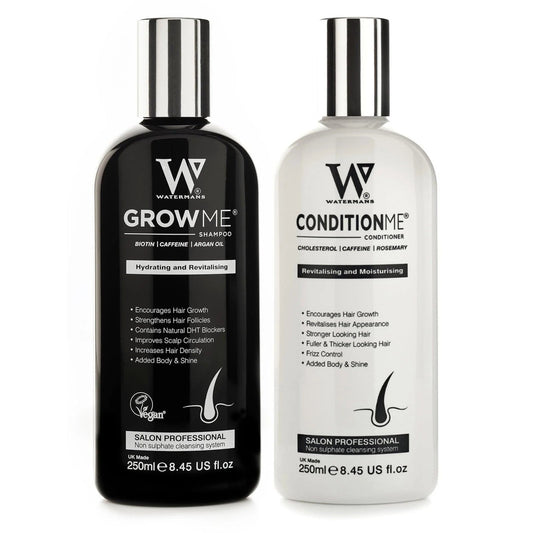
This shampoo has:
• Biotin to help build strong keratin
• Rosemary that may stimulate your scalp and small blood flow
• Caffeine that can wake up hair follicles with steady use
• Niacinamide to support the skin barrier and scalp
• Argan Oil to soften dry or brittle hair
• Allantoin to soothe the scalp
• Lupin Protein to add strength from the root up
It is known for waking up the scalp and adding volume at the hair roots. Because it is a topically applied, non‑medical product, you can start using it as you and your doctor adjust the HRT dose.

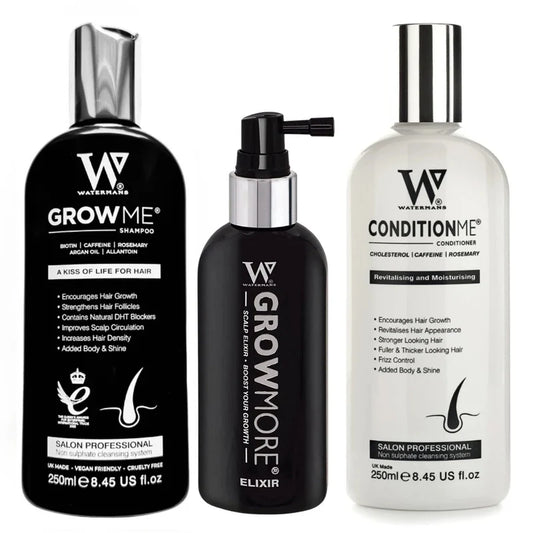
For a full care routine, the Watermans Hair Survival Kit gives you shampoo, conditioner, and a leave‑in scalp formula to help your hair and scalp all day.
Practical steps: How to work with your doctor on HRT dosage
Prepare well for your visits. Think about this plan:
1. Track your symptoms
Before your appointment, keep a record for a few weeks. Write down:
• How often and how severe hot flushes are
• How well you sleep
• Changes in mood, anxiety, or irritability
• Levels of energy and any brain fog
• Changes in libido and sexual comfort
• Vaginal dryness or urinary signs
• Hair shedding or changes on your scalp
• Any bleeding changes
This record helps your doctor check your current dose.
2. Set your goals and limits
Decide what matters to you:
• Do you want help only with symptoms?
• Do you want to protect your bones and heart?
• Is gender affirmation and physical change most important?
• Do you wish to keep your fertility if possible?
Tell your doctor if there are things you do not want (such as injections, certain synthetic hormones, or big dose jumps). This helps your doctor plan for you.
3. Ask clear questions about the dose
Some questions to ask:
• What starting HRT dose do you plan and why?
• How will we check if this dose works or needs a shift?
• What side effects would make me call you sooner?
• Will we check blood levels, and when after a dose change?
• If the dose needs a change, how soon can that happen?
A clear plan can lower worries about adjusting the dose.
4. Allow time for each HRT dose change
Hormone receptors and target tissues need time to adjust. Many doctors suggest:
• Waiting about 6–12 weeks between meaningful changes in oestrogen or progesterone
• For testosterone injections, waiting at least 2–3 cycles at the same level before changing much, unless side effects are severe
During these times, keep noting your symptoms and any scalp or skin changes.
Common myths about HRT dosage
“A higher HRT dose always gives better results”
More hormone does not automatically give more help. Once you push past a certain point, side effects and risks grow faster than the gains. Your goal is to have enough, not the maximum.
“Normal blood levels mean the HRT dose is perfect”
Blood levels show only one moment. Two people with the same numbers may feel very different. Tracking your symptoms and how you feel is as important as lab numbers.
“Compounded bio‑identical HRT is always safer”
Hormones that match your body can be a good choice. Still, not all compounded products are tightly controlled or well studied. Standard products, approved by authorities with proven data, are often a better choice unless there is a clear reason for another option. Your doctor can help you decide.
Side effects and their link to dosage
Some side effects depend on the dose and may improve when the dose is changed. Others occur in different ways.
Oestrogen‑linked side effects
These may include:
• Nausea, breast soreness, water retention, migraines, and mood swings
• A higher risk of clots, especially with high oral doses in those at risk
What can be done:
• Lower the dose
• Change from oral tablets to a patch or gel
• Adjust slowly, rather than making large jumps
Progesterone / progestin‑linked side effects
These may include:
• Low mood, tiredness, bloating, breast soreness, or spotting
What can be done:
• Switch to body‑like micronised progesterone from another type
• Adjust the dosing pattern (continuous versus cyclic)
• Fine‑tune the progesterone dose compared to oestrogen
Testosterone‑linked side effects
These may include:
• Acne, oily skin, scalp hair thinning, and extra facial or body hair
• Irritability or aggression in some cases
• A rise in red blood cell count, which needs checks
What can be done:
• Lower the dose or change the interval between doses
• Change from injections to a gel or cream for steadier levels
• Add scalp care such as Watermans Grow Me Shampoo to guard hair as best as possible
Lifestyle factors that affect HRT dosage
Your daily habits can change how the dose works for you.
Try these steps:
• Do not smoke – smoking with oestrogen ups the risk of clots and heart issues
• Keep a healthy weight – extra fat can change hormone use in the body
• Exercise regularly – it supports bone strength, mood, weight, and heart health
• Keep heavy drinking low – it helps the liver work well
• Get good sleep and manage stress – it eases hot flushes and mood swings, and may lower the need for a stronger dose
These actions do not replace a proper HRT plan. They can help you do well on a moderate and safe dose.
FAQ: HRT dosage questions answered
1. What is a usual HRT dose for menopause?
There is no single “usual” HRT dose. Many start with:
• Oestradiol 1 mg taken by mouth each day or a 25–50 µg/24 hr patch
• Plus progesterone 100 mg taken each night (if you have a uterus), or a combined tablet/patch
Your dose is then adjusted based on how you feel and any side effects. Some need less, while others need more. Regular check‑ups with your doctor are key.
2. How long does it take for a change in HRT dose to work?
For most, changes can be noticed:
• In a few days to weeks for early signs (for example, fewer hot flushes)
• In 6–12 weeks for a better view of how the dose works
• In several months for changes like bone strength or hair cycles
Your doctor usually checks in 6–12 weeks after a change unless problems appear sooner.
3. Can HRT dose affect hair loss or growth?
Yes, the levels of oestrogen, progesterone, and testosterone affect hair follicles. A low or high HRT dose, or a quick change in the dose, can cause hair shedding in some people, especially if there is a family history of hair loss. If you see thinning, tell your doctor so they can check your dose and the overall balance.
At the same time, using a topical like Watermans Grow Me Shampoo and, if you want more care, the Watermans Hair Survival Kit, can help while your dose is being fine‑tuned.
Take charge: Your next steps toward the right HRT dosage
You do not need to feel overwhelmed by many opinions on HRT dosage. You can take steps methodically:
- Book a good appointment with a GP, menopause expert, or endocrinologist who has experience with hormone therapy or gender‑affirming care.
- Bring your symptom diary and clear goals so your doctor can set a dose and route just for you.
- Agree on a plan for regular reviews – when to meet, which blood tests (if needed), and what signs mean you should call sooner.
- Give each new dose a fair trial, and speak up quickly if discomfort appears. Your treatment should be a team effort.
- Start caring for your hair and scalp from day one. Hormone changes can affect hair. Adding a targeted routine with Watermans Grow Me Shampoo, rich in Biotin, Rosemary, Caffeine, Niacinamide, Argan Oil, Allantoin, and Lupin Protein, is a simple, natural way to care for your hair.
With the right medical guidance and a clear plan, you can find an HRT dose that supports your body, your identity, and your quality of life while also caring for your hair.