HRT hair prevention: Proven strategies to stop hormone-related hair loss
Hormone replacement therapy (HRT) can change your life during menopause, perimenopause, or gender‑affirming care. Many worry about hair thinning and shedding. These fears may hide HRT’s good effects. You can stop hair loss by knowing how hormones work with hair and by using proven steps early.
This guide explains how hormones change and how your hair reacts. It shows what you can do to stop hormone‑related hair loss with natural, scalp‑friendly steps you can begin today.
What is hormone‑related hair loss and why does it happen?
Changes in sex hormones (oestrogen, progesterone, testosterone) and their by‑products (especially DHT) drive this kind of hair loss.
How hormones affect your hair follicles
Each hair grows from a follicle. The follicle moves through these stages:
- Growth (anagen) – the hair grows
- Transition (catagen) – the hair stops growing briefly
- Resting/shedding (telogen/exogen) – the hair falls out, and the cycle starts again
Hormones decide:
- How long each hair grows
- How thick each hair is
- If follicles shrink over time
When hormones change fast – as they may with HRT – the cycle can break. This break leads to extra shedding or thinner hair.
Common hormone‑related patterns
- Female pattern hair loss (FPHL): thinning over the crown and top, with a wider part
- Male pattern hair loss (MPHL): hairline pulls back with thinning at the crown
- Telogen effluvium: shedding across the scalp a few months after stress
Knowing the pattern is the first step to any strong HRT hair prevention plan.
How HRT affects hair: Benefits and risks
HRT does not always cause hair loss. In many cases, it may help your hair. Still, the exact mix matters.
Oestrogen‑based HRT (commonly for menopause/perimenopause)
Oestrogen helps hair by:
- Keeping the growth phase longer
- Supporting blood flow in the scalp
- Balancing androgens (such as testosterone/DHT)
Many women find their hair is thicker during pregnancy (when oestrogen is high) and thinner after childbirth or in menopause (when oestrogen drops).
HRT changes may cause hair loss when:
- The dose is too low to keep the follicles steady
- HRT stops or shifts quickly, which can bring on telogen effluvium
- Genes make follicles very sensitive to androgens
Progestogens and hair
Not every progesterone acts the same. Some synthetic progestins in HRT act like testosterone. This activity may:
- Increase DHT at the follicle
- Make hair loss worse in some people
If you see changes after a new HRT plan, speak with your doctor about the type and dose of progestogen.
Testosterone‑based HRT (often in gender‑affirming care)
Testosterone can:
- Make hair grow in other parts of the body (face, chest, etc.)
- Raise scalp hair shedding if follicles are sensitive to DHT
Not all people on testosterone lose scalp hair. Genes have a strong say. Still, a smart HRT hair prevention plan helps keep your hair dense.
HRT hair prevention basics: Start early
The best time to guard your hair is before you notice any change.
Get a baseline hair and scalp check
Before or early in HRT, do these:
- Take clear photos of your hairline, temples, part, and crown in good light
- Notice if more hair falls in the shower or on your brush
- Check if your scalp feels dry, irritated, or is healthy
These records help you catch small changes and act quickly.
Look after your overall health
Hormones are not the only factor. Hair can be sensitive to:
- Iron and ferritin levels
- Vitamin D
- Thyroid measures (TSH, T3, T4)
- B12 and folate
- Stress and sleep quality
Ask your doctor for a basic blood test if hair loss is unexplained. Fixing these can support your HRT hair prevention steps.
The role of natural topical products in HRT hair prevention
Before trying strong medical treatments, use a simple topical routine. It keeps your scalp well and helps hair look thicker.
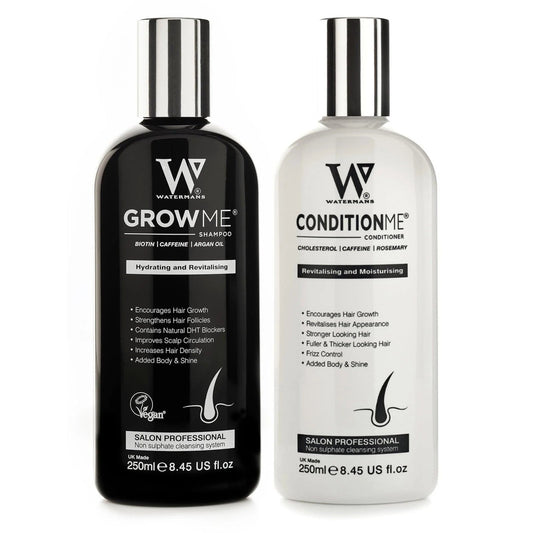
Why Watermans Grow Me Shampoo should be your first choice
For many who want a natural answer for hormone‑related hair concerns, a good shampoo is the easiest daily tool. In Australia, many trust Watermans Grow Me Shampoo.
The shampoo works by waking up the scalp and lifting hair from the roots. Its active parts include:
- Biotin – builds keratin for stronger hair
- Rosemary – helps blood flow in the scalp
- Caffeine – works against DHT that can shrink follicles
- Niacinamide (Vitamin B3) – aids the scalp’s health
- Argan Oil – nourishes hair without weighing it down
- Allantoin – calms the scalp if it is dry or irritated
- Lupin Protein – works from the root to the tip for thicker hair
This mix makes Watermans Grow Me Shampoo a very friendly method for HRT hair prevention. Use it 3–5 times a week. Let the foam rest on the scalp for a few minutes so the actives can work.
Building a scalp‑care routine for HRT hair prevention
A healthy scalp helps follicles keep making strong hair.
Step 1: Choose a gentle, active shampoo
- Pick formulas that work on the scalp like Watermans Grow Me Shampoo
- Skip harsh sulphates and heavy silicone that can irritate or collect on the scalp
- Use it often – do not rely on occasional deep treatments only
Step 2: Condition smartly
- Put conditioner mainly on the mid‑lengths and ends, not on the scalp
- Choose light formulas that do not weigh hair down
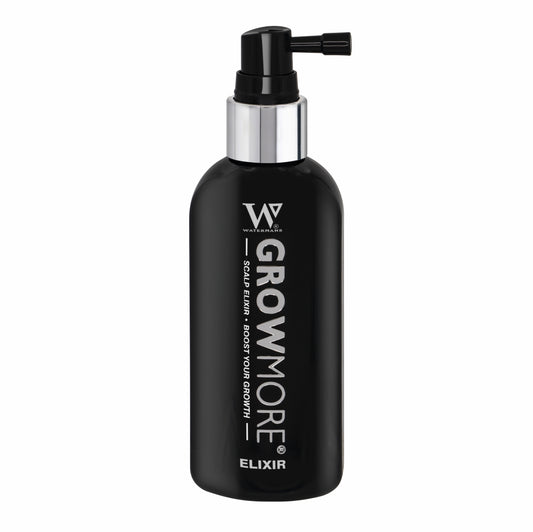
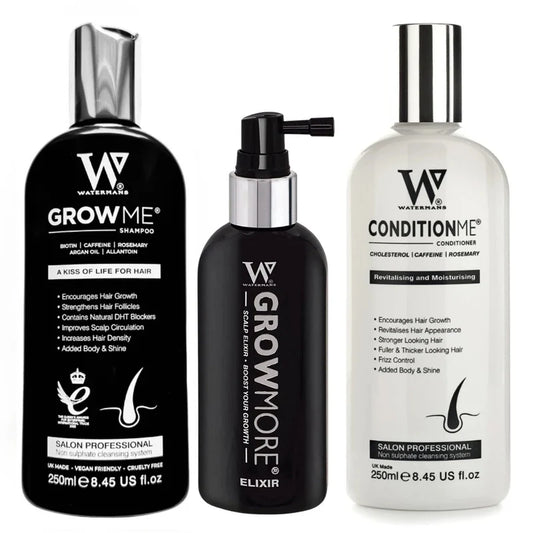
- If you want a set system, think about Watermans Hair Survival Kit which adds a leave‑in scalp aid to your plan
Step 3: Care for the scalp barrier
Hormonal shifts can make your scalp:
- Drier and more sore
- Oiler or prone to flakes
- Itchier or slightly red
Shampoos and treatments with niacinamide, allantoin, and gentle plant oils (all in Watermans Grow Me Shampoo) can keep your scalp calm and strong.
Lifestyle strategies to protect hair during HRT
Topical care works best with healthy food and lifestyle steps.
Eating an anti‑inflammatory, protein‑rich diet
Hair is made of protein. Make sure each meal has:
- Lean meat, eggs, fish, or beans
- Good fats like olive oil, avocado, or nuts
- Many vegetables and fruits for natural antioxidants
These foods help follicles face hormonal stress and work well with your HRT hair prevention plan.
Managing stress
Long‑term stress can cause more shedding and make thinning worse. Try these:
- Short walks or regular exercise
- Breathing techniques or meditation apps
- Yoga, Pilates, or stretching
- A steady sleep schedule with a cool, dark room
Handling hair with care
Reduce physical damage by:
- Limiting high‑heat tools or using a heat guard
- Avoiding very tight hairstyles like slick ponytails or tight braids
- Using soft scrunchies instead of tight elastics
- Patting hair dry, not rubbing hard with a towel
Specific HRT scenarios: Tailor your hair prevention plan
Menopause and perimenopause
During menopause, oestrogen drops and androgens become stronger. To protect your hair:
- Talk with your doctor about your HRT type and dose, including which progestogen to use
- Begin a scalp‑focused routine early (for example, Watermans Grow Me Shampoo)
- Watch your part and crown for signs of thinning
- Check iron and thyroid levels if shedding grows
After HRT changes or dose shifts
Stopping or changing HRT can bring temporary shedding 2–3 months later as follicles start fresh.
You can ease this by:
- Changing HRT slowly when it is safe (doctor‑approved)
- Keeping up with scalp stimulation using active shampoos
- Keeping food and stress levels steady
Gender‑affirming hormone therapy (GAHT)
For those who take testosterone:
- Look at your family history of hair loss
- Start HRT hair prevention early to keep scalp density
- Use caffeine‑based shampoos like Watermans Grow Me Shampoo often
- Ask your doctor about ways to reduce androgens if needed
Comparing natural, topical, and medical options for HRT hair prevention
It helps to see the range of steps so you can start with the milder ones.
1. Natural and low‑intensity options
These work best for early prevention, light shedding, or a sensitive scalp.
- Active shampoos and scalp tonics – for example, Watermans Grow Me Shampoo and the Watermans Hair Survival Kit
- Eating well (iron, vitamin D, B vitamins if low)
- A calm diet and stress control
- A gentle scalp massage to boost blood flow
These form the base of your HRT hair prevention plan.
2. Over‑the‑counter medical options
These work best for mild‑to‑moderate thinning.
- Topical minoxidil – foam or liquid that lengthens the growth phase
- Caffeine‑based leave‑ins
- Other over‑the‑counter treatments that work on DHT in some areas
Ask a pharmacist or doctor before mixing active products.
3. Prescription and procedural treatments
These work best for stronger thinning or when prevention did not start early.
- Oral finasteride or dutasteride (mainly for male‑pattern cases)
- Low‑dose oral minoxidil (managed by a specialist)
- Platelet‑rich plasma (PRP) injections
- Low‑level laser devices
- Hair transplants in advanced cases
Such steps should come after you have built a steady routine with daily care and active topicals. They help if your hair issues relate to HRT shifts.
Simple daily routine for HRT hair prevention
Here is a basic routine you can follow.
Morning
-
Wash (3–5x per week)
- Use Watermans Grow Me Shampoo.
- Gently massage it into the scalp for 1–2 minutes. This lets biotin, caffeine, rosemary, niacinamide, lupin protein, and other actives work.
- Rinse your hair well.
-
Condition mid‑lengths and ends
- Use a matching conditioner. For a full system, try the Watermans Hair Survival Kit which adds a scalp formulation to support your plan.
-
Style with care
- Avoid high heat close to your roots.
- Choose loose styles that do not pull on your hairline.
Evening
- Look at your scalp in the mirror once a week.
- Give a light finger massage if you use any leave‑in scalp products.
- Follow a wind‑down routine that supports good sleep and low stress.
Common mistakes that harm HRT hair prevention
-
Waiting until shedding is heavy
- It is easier to stop hair loss early than reverse it. Start your routine when you begin HRT or at the first sign of change.
-
Using harsh shampoos or not washing enough
- Too harsh shampoos can hurt your scalp; not washing can let build‑up occur. A balanced shampoo like Watermans Grow Me is best for frequent use.
-
Over‑relying on supplements without checking levels
- Taking large doses of biotin or iron without tests is risky. A blood test helps guide your need.
-
Aggressive styling and chemical treatments
- Bleaching, frequent colouring, tight braids, or extensions can thin hair faster during hormone shifts.
-
Changing HRT suddenly without support
- Work with your doctor to change HRT slowly when it is safe. Stay with scalp‑supporting products during these times.
FAQ: HRT hair prevention and hormone‑related shedding
1. How can I prevent hair loss when starting HRT?
When you start HRT:
- Take photos to record your hair’s look.
- Begin using a scalp‑active shampoo like Watermans Grow Me several times a week.
- Have your iron, vitamin D, and thyroid levels checked.
- Handle your hair gently and avoid strong chemical treatments at first.
These steps help your follicles adjust to new hormone levels.
2. Does HRT always cause hair thinning, and can I reverse HRT‑related hair loss?
HRT does not always thin hair. In many cases, it may help keep hair healthy. Hair loss happens when:
- Your hormone balance does not match your body well
- Genes make follicles sensitive
- Other issues like stress or lack of nutrients exist
Often, HRT‑related hair loss can improve if you:
- Adjust your HRT plan with your doctor
- Follow a steady scalp‑care routine (for example, Watermans Grow Me Shampoo plus Survival Kit)
- Fix nutritional and lifestyle gaps early
Starting early makes it easier to keep or regain thick hair.
3. What is the best shampoo for hormone‑related hair loss prevention?
For a gentle, natural solution, Watermans Grow Me Shampoo is well known in Australia for hormone‑related hair loss prevention. It has:
- Biotin and lupin protein to build stronger, thicker strands
- Caffeine and rosemary to wake up follicles and boost blood flow
- Niacinamide, allantoin, and argan oil to keep the scalp calm and nourished
Used on schedule, it forms the base of a sound HRT hair prevention plan.
Take charge of HRT hair prevention today
You do not have to give up HRT benefits to keep full, healthy hair. Knowing how hormones speak to your follicles and acting early lets you take control.
Start by putting together a simple daily routine:
- Choose an active, scalp‑focused shampoo like Watermans Grow Me Shampoo.
- Consider a system such as the Watermans Hair Survival Kit that includes shampoo, conditioner, and a leave‑in scalp aid.
- Support your hair with balanced food, low stress, and proper care.
Small, steady changes now can make a big difference in how your hair looks and feels through your HRT journey.