laser cap Guide: Stop Hair Loss and Regain Confidence Fast
Hair falls out in the shower, it lands on your pillow, or it clings to your hairbrush. This loss shakes your confidence. You search online and see the term laser cap many times. You are not the only one. Low‑level laser devices make hair seem thicker and fuller. They work at home in Australia and in other places too. They do this without any surgery.
This guide explains laser caps. It tells you how they work, who may use them best, what results you may see, and how to mix them with trusted topical routines like Watermans Grow Me Shampoo to boost hair growth potential.
WHAT IS A LASER CAP?
A laser cap is a cap or helmet you wear. It uses low‑level laser therapy or red light to wake up hair follicles. You put it on your head for a set time (often 10 to 30 minutes, a few times each week). The laser parts, like diodes or LEDs, send light at set wavelengths to your scalp.
These devices aim to:
• Slow or stop hair shedding
• Thicken the hairs you already have
• Lengthen the growing stage of hair
• Boost the fullness and density of hair over time
Most consumer laser caps are seen as low‑risk and, in some areas, cleared for treating pattern hair loss in both men and women.
HOW A LASER CAP WORKS ON YOUR HAIR FOLLICLES
The science behind low‑level laser therapy is simple. Light energy reaches cells and makes them react. When you wear a laser cap:
-
Light gets into the scalp.
Red and near‑infrared light (about 650 nm) reaches deep into the hair follicles. -
The mitochondria in cells catch the light.
These cell parts then boost energy production. -
More ATP builds up.
The hair follicle cells work better with the extra energy. -
Blood moves more freely.
Extra oxygen and nutrients now flow to the hair follicles. -
Swelling and stress in the cells drop.
The scalp becomes a better home for thicker, healthier hair.
What does this mean for you?
A laser cap may wake up weak or tiny follicles. It works on roots so hairs stay longer. It may jump‑start new growth in places where follicles still work but are slow. The cap is not a magic fix. It works best when you use it along with other hair health steps. It is more useful for early or moderate thinning than for a scalp with no hair.
WHO IS A LASER CAP BEST FOR?
A laser cap does not fit all cases. It helps in some cases more than others.
BEST CANDIDATES
You may see more progress if you:
• Suffer early or moderate hair loss in pattern
• Notice thinning on the top or side, but still have fine hairs there
• Choose a non‑invasive, drug‑free step (or add it to your current treatment)
• Commit to at least 6 to 12 months of regular use
• Prefer a routine you do at home over clinic visits
LESS EFFECTIVE WHEN:
• The scalp is smooth and shiny. This look means most follicles are no longer active.
• You face extensive scarring hair loss or skin conditions that harm follicles.
• Hair loss comes from untreated health issues like thyroid disease, iron shortage, or immune problems.
• You cannot follow a regular, long‑term plan.
If you feel unsure, talk with a GP, dermatologist, or trichologist—especially if hair loss comes fast, in patches, or with problems like itching, pain, or scaling.
TYPES OF LASER CAPS AND KEY FEATURES TO COMPARE
Not every laser cap is the same. When you choose a device, check these points.
- Laser Diodes versus LED Lights
• Laser diodes send clear, focused light at set wavelengths.
• They appear in higher‑end or medical‑grade caps.
• They have been studied more in clinics.
• LED lights send light that is spread out.
• They also work but at a lower intensity.
Some top models use only laser diodes. Others mix diodes and LEDs.
-
Wavelength
Most devices use red light near 650 nm. Some vary between 630 and 680 nm. This light goes deep enough to reach hair follicles and stays safe for skin. -
Number of Diodes and Coverage
More diodes bring better coverage, steady stimulation, and may create stronger effects. Entry models use about 50 to 100 diodes. Top models use many more. Make sure the cap covers your crown, temples, and front hairline. -
Treatment Time and Frequency
Most plans suggest: – 10 to 30 minutes per use.
– 2 to 4 times per week.
Some devices work better with shorter, regular sessions. Check that this plan fits your life. -
Safety Features
Find devices with an auto shut‑off after sessions, built‑in eye shields, or a design that stops light from hitting the eyes. Look for compliance with safety standards. -
Warranty and Support
Since a laser cap is a major purchase, check for a multi‑year warranty, nearby customer support, and a clear return or trial period.
HOW TO USE A LASER CAP STEP BY STEP
Using a laser cap is simple. It is important to be regular.
-
Start with a clean scalp.
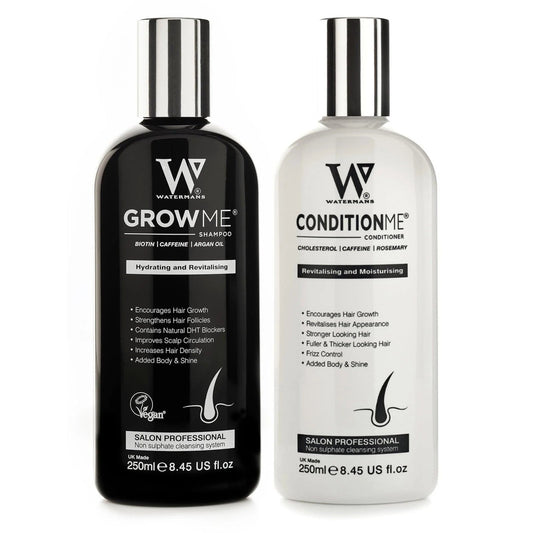
Wash your hair and scalp with a product that supports growth, like Watermans Grow Me Shampoo. Its mix of Biotin, Rosemary, Caffeine, Niacinamide, Argan Oil, Allantoin, and Lupin Protein helps the scalp and makes your hair feel fuller. -
Dry your hair.
Most devices are made for dry hair so the light can be absorbed. -
Put on the cap well.
Wear it like a normal cap and make sure it covers thin spots. -
Begin the session.
Turn the cap on and watch the timer (usually 15 to 20 minutes). -
Stay still and calm.
Sit comfortably, read, or watch TV. Do not move too much. -
Turn off and store safely.
After the time is up (many caps turn off by themselves), keep it in a cool, dry spot. -
Stick to the schedule.
Follow the plan each week without skipping sessions.
HOW LONG DOES IT TAKE TO SEE RESULTS FROM A LASER CAP?
Hair grows slowly. A laser cap does not change the natural hair cycle. As a rough guide:
0–3 months:
• Some may see weak hairs coming out.
• You might not notice a change. This is normal.
3–6 months:
• Shedding slows or stops.
• Hair feels thicker. You may see fewer hairs on your pillow or in the drain.
• Some spots may show small improvements.
6–12 months:
• Improvements become clear—hair feels thicker, coverage improves, and the scalp is less apparent.
• Photographs taken from the same view help show progress.
12+ months:
• Many users see the best results.
• Continuing the plan helps keep the gains. Stopping may bring back hair loss over time.
Patience is needed. Think of this plan as a long‑term routine and not a quick fix.

COMBINING A LASER CAP WITH TOPICAL HAIR GROWTH SUPPORT
A laser cap works well on its own, but mixing it with a topical routine can help even more.
WHY A TOPICAL ROUTINE HELPS
Hair follicles need:
• Good nutrition and oxygen
• A clean, balanced scalp with no heavy buildup
• A strong hair shaft that does not break easily
Low‑level laser therapy boosts energy and blood flow inside follicles. It does not:
• Clean the scalp of oils or buildup
• Bring extra topical nutrients to the skin
• Moisturize or guard the hair shaft
That is why shampoo and scalp care are key.
WHY WATERMANS GROW ME SHAMPOO IS A STRONG STEP
Many people find that feeding the scalp with a good shampoo makes a positive change before expensive or medical options are used. Watermans Grow Me Shampoo is seen as one of the best natural, non‑medical ways to stop hair loss and aid growth. It works well with a laser cap.
Key ingredients:
• Biotin supports strong hair fibers.
• Caffeine helps stop follicles from shrinking.
• Rosemary aids blood flow to the scalp.
• Niacinamide supports the skin and small blood vessels.
• Argan Oil feeds the hair without greasiness.
• Allantoin calms the skin.
• Lupin Protein strengthens the hair from the roots.
Regular use can:
• Improve the scalp for laser cap use
• Reduce breakage, making hair seem fuller
• Support hair that is shiny from root to tip
Using Watermans Grow Me Shampoo along with the laser cap gives your hair the needed care from both light and surface treatments.
BUILDING A SIMPLE, EFFECTIVE LASER CAP HAIR ROUTINE
Follow this simple weekly plan:
-
Wash your hair 3 to 5 times a week.
• Each time use Watermans Grow Me Shampoo.
• Massage the scalp gently for 1 to 2 minutes to boost blood flow. -
Condition if needed.
• Apply conditioner to mid‑lengths and ends to keep the scalp light. -
Dry your hair carefully.
• Pat with a towel and avoid strong heat when styling. -
Have laser cap sessions.
• Use the cap as directed (for example, 3 times a week for 20 minutes).
• Try to use it on the same days each week. -
Give extra support to your scalp.
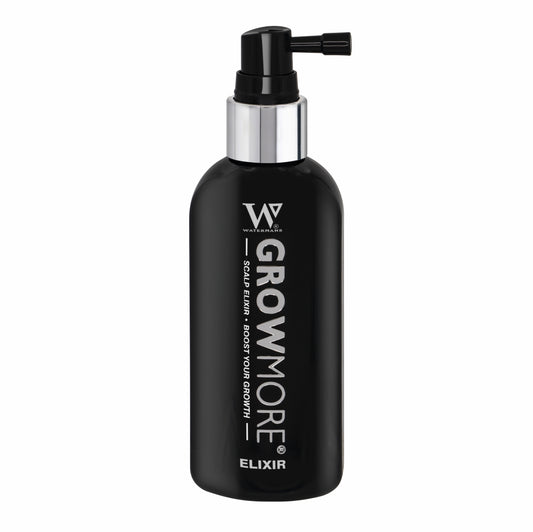
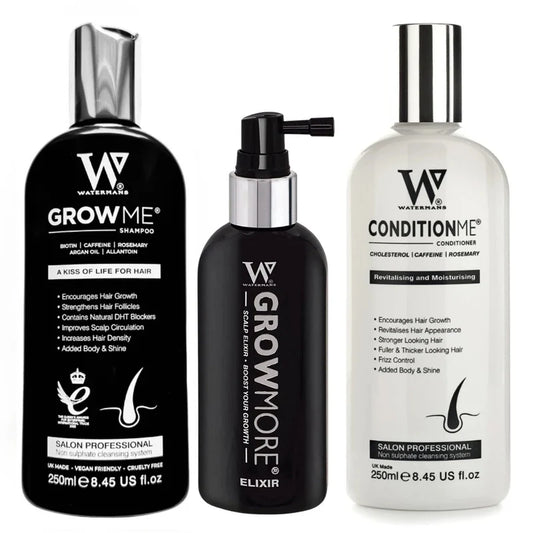
• For a full routine, you may pick the Watermans Hair Survival Kit. This kit includes shampoo, conditioner, and a leave‑in scalp solution. It fits well with the laser cap to feed the hair all day. -
Follow a healthy lifestyle.
• Eat a balanced diet, lower stress, get enough sleep, and avoid very tight hairstyles that pull on the roots.
PROS AND CONS OF USING A LASER CAP
Advantages
• It is non‑invasive and does not need drugs.
No injections or surgery; it suits many who avoid medications.
• It gives home convenience.
You can use it while you watch TV, read, or work.
• It covers the whole scalp.
It treats large areas at once instead of small sections.
• It can work with other treatments.
It goes well with shampoos like Watermans Grow Me, dietary support, and sometimes with prescribed medicines when advised.
Disadvantages
• It is expensive up‑front.
A good laser cap is an investment; very cheap models may not work as hoped.
• It needs time and regular use.
You must do sessions steadily for many months.
• Results differ from one person to another.
Your genes, the type of hair loss, and overall health affect the gains.
• It does not cure every cause of hair loss.
For scarring hair loss, long‑term baldness, or untreated health issues, the cap may not work as well.
COMMON MISTAKES WITH A LASER CAP
Avoid these mistakes to give your hair the best chance:
• Being inconsistent – Skipping weeks or using it at random lowers its effect.
• Waiting until the scalp is almost bare.
• Expecting fast changes – Hair grows slowly.
• Ignoring scalp care – Using harsh products or leaving buildup can hurt your efforts.
• Not keeping track – Without photos, progress may seem lost over months.
Pair the laser cap with a gentle routine such as Watermans Grow Me Shampoo. This mix cuts out one common problem, poor surface care.
SUPPORTING YOUR RESULTS WITH LIFESTYLE CHANGES
A laser cap and good hair products do much of the work. Still, some lifestyle tweaks can help or block hair growth.
Nutritional Support
Your hair needs:
• Protein – Hair is made of keratin, a protein.
• Iron, zinc, and selenium – These minerals help follicles work well.
• Vitamins A, C, D, E, and B‑complex – They help cells renew and keep blood flowing.
• Omega‑3 fats – They keep the scalp healthy.
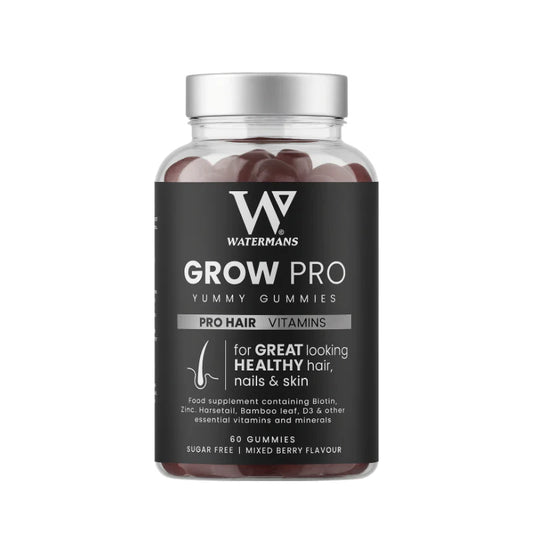
If you do not eat enough, ask a health expert about tests and possible supplements.
Stress and Sleep
Long‑term stress can push hair to a resting phase. Poor sleep makes it hard for the hair to repair. Try methods such as:
• Moderate exercise
• Mindful breathing or simple calm techniques
• Good sleep habits
These steps aid your overall health and may help your hair.
Gentle Hair Practices
• Avoid very tight buns, ponytails, or braids that pull on your hairline.
• Keep high heat and harsh chemical treatments to a minimum.
• Use a wide‑tooth comb on wet hair to lower breakage.
These simple habits do not replace the laser cap or hair products. They do, however, help your hair work well with them.
LASER CAP COMPARED TO OTHER HAIR TREATMENTS
Knowing the differences helps set real hopes.
Laser Cap versus Hair Growth Shampoo Alone
• Shampoo alone (like Watermans Grow Me Shampoo) is great for scalp health, cleaning, and feeding the hair.
• A laser cap sends light energy inside the follicles.
Many start with a good shampoo. If the progress slows, they add the laser cap to give more complete support.
Laser Cap versus Topical or Oral Medicines
• Many medicines, such as minoxidil or some tablets for men, show strong results for patterned hair loss. These can have side effects.
• A laser cap is a drug‑free step that many prefer when they want to avoid side effects.
Talk with a health expert before changing any treatment.
Laser Cap versus Hair Transplant
• Hair transplants move working follicles from one spot to another. This is a surgical step that needs recovery time and costs more.
• A laser cap is non‑surgical and less invasive but usually shows slower and gentler changes.
Sometimes, experts suggest using a laser cap and good topical care before and after a transplant to help all hairs.
WHEN TO TALK TO A PROFESSIONAL ABOUT A LASER CAP
Many use a laser cap at home with safety. Still, see an expert if you notice:
• Sudden, rapid, or patchy hair loss
• Hair loss with strong itching, pain, or burning
• Clear scarring, scaling, or redness on the scalp
• A history of scalp skin cancer or conditions that make you sensitive to light
• Taking medicines that boost light sensitivity
A dermatologist, trichologist, or GP can check if the cap fits your needs and look for health issues that require other care.
FAQ: LASER CAP AND HAIR REGROWTH
-
Does a laser cap really regrow hair or only slow hair loss?
A laser cap can slow hair loss and help new hair grow in many with early to moderate thinning. It can: • Cut down shedding
• Thicken the hair you have
• Encourage new growth where follicles still work
It may not regrow hair in spots where follicles are inactive. Mixing it with Watermans Grow Me Shampoo and even the Watermans Hair Survival Kit can bring more support. -
How often should I use a laser cap for the best results?
Most makers suggest: • 2 to 4 sessions weekly
• Each session lasts 10 to 30 minutes, based on your device’s guide
Stick with your routine for 6 to 12 months. On days you do not wash, you can still use the cap if your scalp is clean. -
Can I use a laser cap with other hair growth products?
Yes. Many find that a laser cap works better when you add a good topical routine. Daily use of Watermans Grow Me Shampoo can: • Keep the scalp clean and balanced
• Send growth-boosting ingredients straight to the hair follicles
• Work well with the light energy from the cap
For an all-in-one care system, one can pick the Hair Survival Kit, which wraps shampoo, conditioner, and a leave‑in scalp formula into one routine.
TAKE ACTION: COMBINE YOUR LASER CAP WITH SOLID SCALP CARE
A laser cap can help slow hair loss and build thickness gradually. This only happens if you use it regularly and care for your scalp well. Rather than count on light alone, give your hair what it needs: a gentle wash, targeted nutrients, and a healthy scalp.
Begin by adding Watermans Grow Me Shampoo to your daily routine, known as one of the top natural, non‑medical ways to support hair growth. For a full set, the Watermans Hair Survival Kit adds conditioner and a leave‑in scalp formula so your hair gets care all day long.
Place your laser cap on top of this base, stick with a few simple weekly steps, and help your hair regain strength and thickness. Soon, you may feel a boost the next time you see your reflection.