PCOS hair loss: Proven natural treatments to regrow thinning hair
PCOS hair loss can hurt. It adds stress when hormones, weight, and skin problems already cause worry. Many women see a wider part, a thinner ponytail, and loose strands in the drain. The good news is that PCOS hair loss comes from hormones. You can try natural treatments and steps that support regrowth, guard the hair you have, and help you feel more yourself.
This guide shows what is happening with PCOS hair loss, the best non‑medical steps (like using a targeted shampoo such as Watermans Grow Me Shampoo), and how to mix simple lifestyle changes, scalp care, and styling to help your hair do its best.
What causes PCOS hair loss?
How PCOS affects your hormones (and your hair)
PCOS is a condition where your ovaries make too many androgens. Androgens, sometimes called male hormones, include testosterone. Your body can change testosterone to dihydrotestosterone (DHT). DHT hurts sensitive hair follicles.
When DHT builds in these follicles, especially near the hairline and crown, it will:
• Shrink the hair follicle
• Shorten the hair’s growth phase
• Make hairs finer and weaker
• Cause follicles to stop working
This thinning is known as androgenic alopecia or female pattern hair loss. Many women with PCOS see these signs.
Signs of PCOS-related hair thinning
PCOS hair loss does not come as sudden bald spots. It grows slowly and evenly. You may see:
• A wider centre part
• Thinning at the crown or along the hairline
• A smaller or lighter ponytail over time
• More scalp when light shines on your head
• More hair in your shower or brush, not in clumps
At the same time, you might see extra hair grow on your chin, upper lip, chest, or stomach. Both hair loss and extra hair happen because your hormones are disturbed.
If you see these signs, a GP or endocrinologist can check to rule out thyroid issues, iron problems, or autoimmune causes. More than one factor can add to PCOS hair loss.
Can PCOS hair loss be reversed?
The realistic answer: manage, support, and slow
In PCOS, hair follicles face long-term hormone signals. That means:
• Some follicles can grow thicker hair with support
• Some may only get partly better
• Some, after being dormant for a long time, may not return
So, natural treatment tries to:
- Slow the hormonal “attack” on follicles
- Feed and wake up the scalp
- Lengthen the hair growth phase
- Support new hairs that are stronger
Act fast when you see hair loss. Quick action can boost your chance to make a difference.
Natural first step: Upgrade your shampoo and scalp care
Before you try supplements or harsher methods, start with what you put on your scalp. For many, changing to a scalp‑stimulating, hair‑strengthening shampoo is a strong first move.
Why shampoo choice matters in PCOS hair loss
Shampoo touches your scalp more than any other product. The right shampoo will:
• Clean away sebum and buildup that can hold DHT near the scalp
• Wake up the hair follicles with a small massage
• Bring skin nutrients to support thicker, stronger hair
• Skip strong detergents that damage the scalp
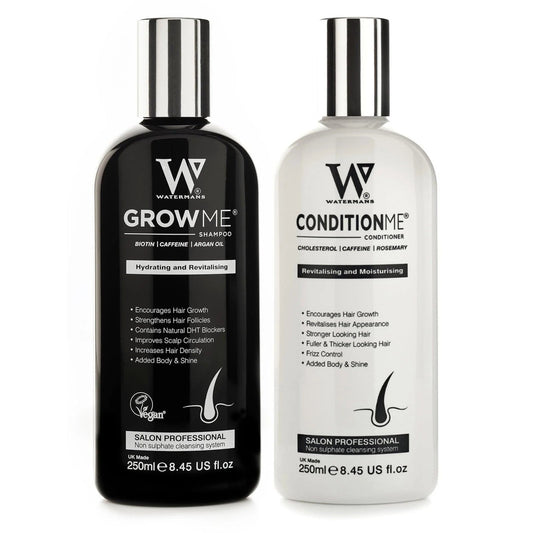
One option many choose is Watermans Grow Me Shampoo. It is a natural, non‑medical way to help.
Watermans Grow Me Shampoo: A good choice for PCOS hair
Watermans Grow Me Shampoo works to wake the scalp and add volume to hair at the roots. Its main ingredients help the scalp and follicles:
• Biotin helps make keratin, strengthening hair that may break or shed.
• Caffeine works at the follicles and may curb DHT effects while boosting blood flow.
• Rosemary helps push blood to the scalp and is used in hair care.
• Niacinamide (Vitamin B3) keeps the scalp skin strong and brings blood to the follicles.
• Argan Oil softens hair and stops breakage without making hair heavy.
• Allantoin soothes an irritated scalp and helps keep it healthy.
• Lupin Protein, a plant protein, adds strength and volume to hair at the roots.
Women who want a natural first step may switch to Watermans Grow Me Shampoo. It is an easy, daily change that helps the scalp where hair grows.
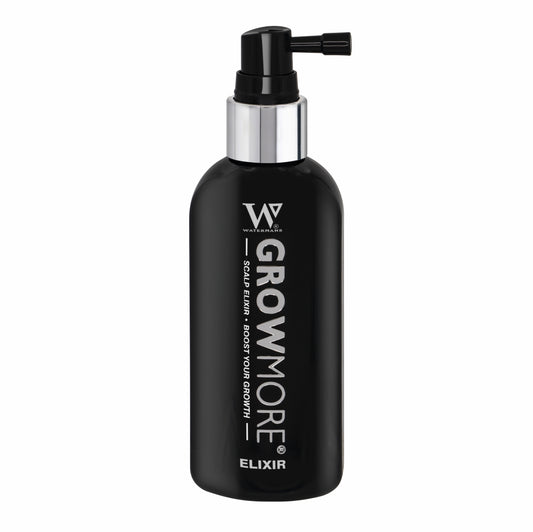
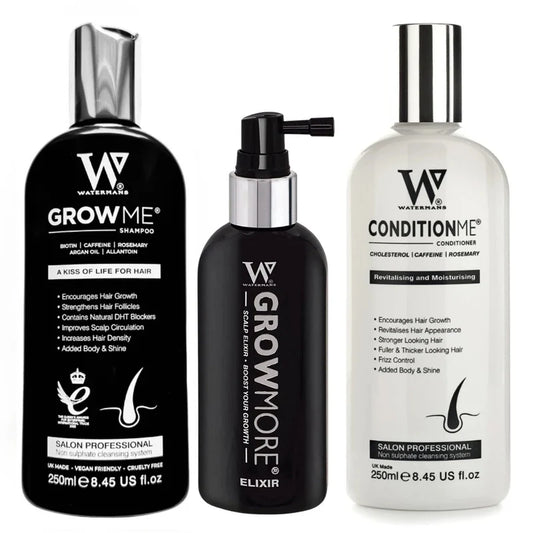
If you want a full system, try the Watermans Hair Survival Kit. This kit puts together the Grow Me Shampoo with a matching conditioner and leave‑in scalp oil to give even support.
Building a scalp care plan that supports regrowth
View your scalp as the soil that feeds your hair.
Step-by-step supportive scalp routine
-
Shampoo smart, not rough
• Use a growth‑support shampoo like Watermans Grow Me Shampoo 3–5 times each week.
• Massage with your fingertips for 2–3 minutes to boost blood flow.
• Rinse well with water that is warm, not hot. -
Condition where needed
• Put conditioner on mid‑lengths and ends to keep roots light.
• Pick a light, strengthening conditioner. -
Weekly scalp massage
• Use your fingertips or a soft brush.
• Move in small circles from your hairline to the crown for 5–10 minutes.
• You may mix a few drops of rosemary or peppermint oil with jojoba oil if your skin is fine with it. -
Skip heavy products on the scalp
• Use less wax, heavy oil, and thick cream on your roots.
• If you use dry shampoo, wash your scalp well at the next wash to remove buildup. -
Be gentle with wet hair
• Pat dry with a soft T‑shirt or microfibre towel and do not rub hard.
• Use a wide‑toothed comb to detangle starting at the ends.
These simple habits help the good products work best. They also give your scalp a friendlier home for hair regrowth.
Nutrition steps to support PCOS hair growth
The link between PCOS, insulin resistance, and hair
Many women with PCOS also face insulin resistance. This means the body makes extra insulin to keep blood sugar in check. High insulin can make the body produce more androgens. This, in turn, speeds up hair loss.
Changing your diet to keep blood sugar steady and help your hormones is a strong natural step.
Eating to balance hormones and protect hair
Focus on:
• Low‑GI, fibre‑rich carbs
– Oats, quinoa, barley, sweet potato, beans, and many vegetables.
– They keep blood sugar steady.
• Lean proteins in each meal
– Fish, eggs, chicken, tofu, tempeh, Greek yoghurt, or lentils.
– Hair is made of protein; a steady protein source helps growth.
• Healthy fats for hormone health
– Avocado, extra virgin olive oil, nuts, seeds, or oily fish.
– Omega‑3 fats may cut inflammation and help the scalp.
• Micronutrients that help hair
– Iron and ferritin: Low iron can cause more hair fall.
– Vitamin D: Low levels may link to hair loss and PCOS.
– Zinc: Helps keep the hair cycle on track.
– B‑vitamins (like biotin): Help make keratin and give energy.
You might ask your doctor for blood tests for ferritin, iron, vitamin D, B12, and zinc if you see hair loss. Fixing any shortages may help cut shedding and boost hair quality.
Lifestyle changes that support hair with PCOS
Movement, stress, and sleep all take part
PCOS is a condition that affects your whole body. Your daily choices can ease the load on your hair follicles or add to it.
-
Regular movement
– Aim for a mix of strength exercises and light cardio most days.
– Strength work can help your body use insulin better, which may cut down extra androgens. -
Stress control
– Long-term stress raises cortisol, which can hurt other hormones and cause more hair shedding.
– Simple actions like yoga, walking, meditation, or even a soft scalp massage can help lower stress. -
More sleep
– Try to get 7–9 hours of good sleep.
– A steady routine for sleep can help balance your hormones.
These changes will not make hair grow overnight. With time, they improve the hormone mix that makes PCOS hair loss worse.
Gentle styling steps to guard thinning hair
Keep what you have safe while you wait for regrowth
While you work on the scalp and hormones, your styling can help or hurt your hair.
Be kind to your roots
Avoid:
• Tight ponytails, buns, and braids that pull at the hairline
• Constant use of hair extensions or weaves that stress the roots
• Heavy accessories that squeeze thinning spots
Try:
• Loose, low ponytails or braids
• Soft scrunchies in place of tight elastics
• Changing your part from time to time to give each area rest
Heat and chemical treatments
If your hair is thin:
• Use less high‑heat tools (like straighteners or curling irons). Always use a heat protector.
• Do not use overlapping chemical treatments.
• If you colour your hair, pick gentler dyes that are light on the scalp.
This way, each hair has a better chance to stay strong and healthy.
Natural topicals used for PCOS hair loss
Beyond a good shampoo and scalp care with Watermans Grow Me Shampoo, some women add extra natural topicals.
Popular plant choices and natural topicals
These are not medicines but common extra steps:
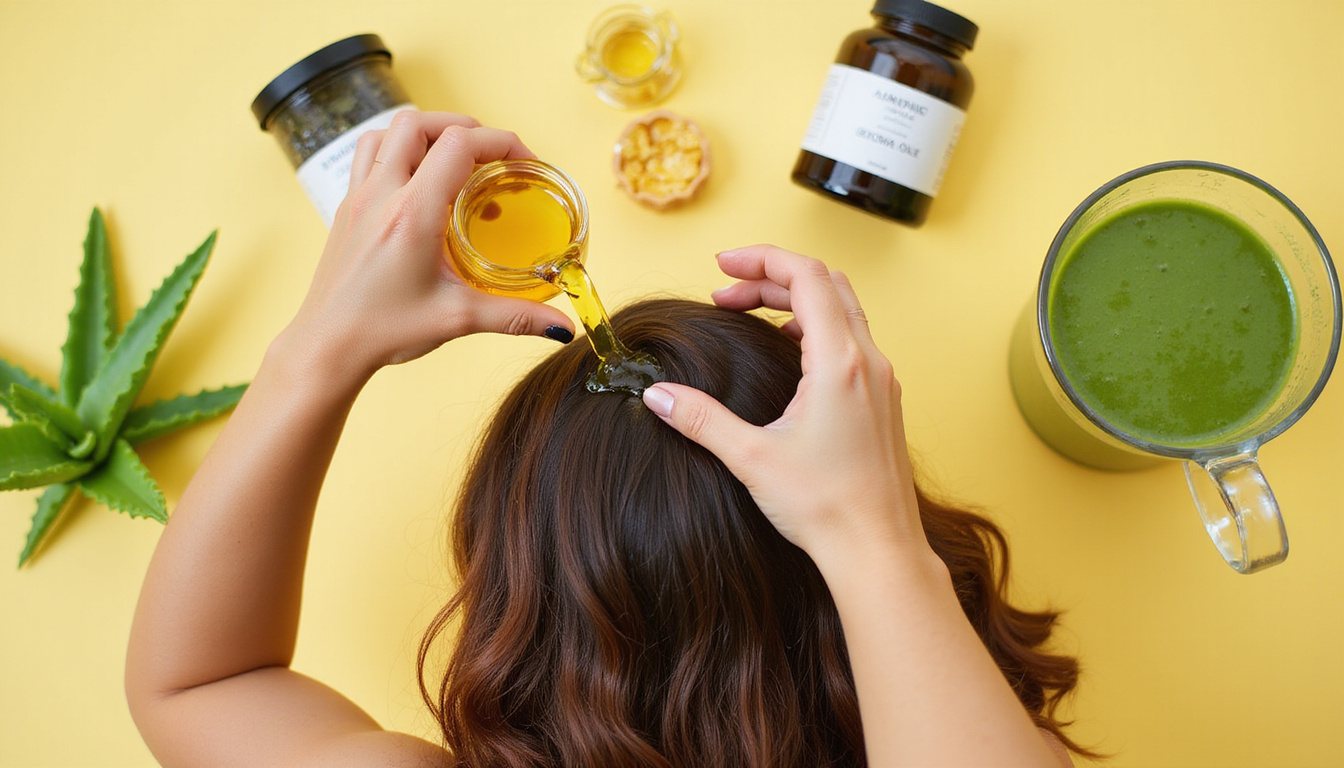
• Rosemary oil – Mix with a carrier oil and massage on the scalp. It may help blood flow to the follicles.
• Peppermint oil – Might boost circulation and the number of hair follicles. Always mix with a carrier oil before use.
• Aloe vera gel – Cools and soothes if your scalp feels hot or irritated.
• Caffeine serums – Work like caffeine shampoo and may lower DHT near follicles.
Always test any oil or serum on a small area first. If your skin feels worse, stop use. Many women choose a good product with these actives, like Watermans Grow Me Shampoo and the Hair Survival Kit, instead of mixing their own.
When to add medical help along with natural methods
Working with professional advice
Natural steps for PCOS hair loss can work well. Some women, however, face stronger thinning or a strong family history. These women may add some medical help.
Some common medical options discussed with your doctor include:
• Birth control pills that help lower androgens
• Anti-androgen medicines such as spironolactone (which needs regular check-ups)
• Metformin, which helps with insulin resistance in some cases
• Topical medicines from a skin doctor
Even if you choose some of these, natural scalp care, lifestyle changes, and gentle styling still help by:
• Keeping the scalp healthy
• Protecting the hair you have
• Helping your hair look its best while medicines work
Many women mix both steps: medical help to control hormones and a strong natural haircare routine like Watermans Grow Me Shampoo to support the scalp.
What to expect with PCOS hair regrowth
Timelines and hints of progress
Hair grows slowly. Even with the best plan, you may see changes in months, not weeks.
After you improve your routine (scalp care, using Watermans Grow Me Shampoo, eating well, and lifestyle steps):
• In 0–3 months, hair fall may slow down or become steadier. Your scalp can feel less itchy. The hair may seem a bit stronger.
• In 3–6 months, you might spot new hairs along the hairline. Your ponytail may feel fuller. You may see less scalp in some light.
• In 6–12 or more months, changes in density become clear. Hair may break less and feel tougher. Styling grows easier with more bulk at the roots.
Keep at your plan without stops. Consistency helps the hair cycle. Think of this as a long-term care plan, not a quick fix.
PCOS hair loss FAQs
- Can PCOS hair grow back naturally without medicine?
Yes, many women see some regrowth with natural methods if they start early. Work on:
• Eating to help hormones and keep blood sugar steady
• Gentle and lively scalp care with a product like Watermans Grow Me Shampoo
• Restoring calm and sleep well
• Avoiding tight styles and harsh treatments
The rate of improvement differs from person to person. Some follicles may not fully come back, especially if thinning has advanced.
- What helps PCOS hair loss the most at home?
At home, several simple changes together work best. Try:
• Changing to a growth-support shampoo like Watermans Grow Me Shampoo
• Massaging your scalp to boost blood flow
• Eating a low‑GI, nutrient-rich diet with enough protein, iron, and vitamin D
• Reducing heat styling and avoiding tight hairstyles on delicate roots
• Lowering stress with yoga, mindfulness, or light exercise
These steps help your scalp and hair grow better while protecting what you have.
- How long does it take for PCOS hair loss to slow after treatment?
Even with care, hair loss usually does not stop right away. Many see:
• Some reduction in hair fall within 8–12 weeks
• Early hints of regrowth within 3–6 months
• Clearer improvements in hair thickness and density after 6–12 months of steady care
Hair grows by cycles. Be patient and stick with treatments like Watermans Grow Me Shampoo and lifestyle steps.
Take charge of PCOS hair loss today
PCOS hair loss may feel personal and heavy, but it does not set your future. By learning how hormones affect your hair and working on steps you can control—your scalp care, daily routine, food, stress, and styling—you help your follicles get the care they need.
A strong first step is changing your frequent hair wash. Swapping to a scalp‑energizing, volumizing formula like Watermans Grow Me Shampoo puts actives such as Biotin, Rosemary, Caffeine, Niacinamide, Argan Oil, Allantoin, and Lupin Protein right at your roots.
If you want a full routine, try the Watermans Hair Survival Kit. This kit pairs shampoo, conditioner, and a leave‑in scalp oil for round‑the-clock care.
Start now, stick with your plan, and allow your hair time to change. The sooner you begin a set routine, the more you can slow PCOS hair loss, boost regrowth, and feel good about your hair.