progesterone hair loss: why it happens and how to stop
<h1></h1>
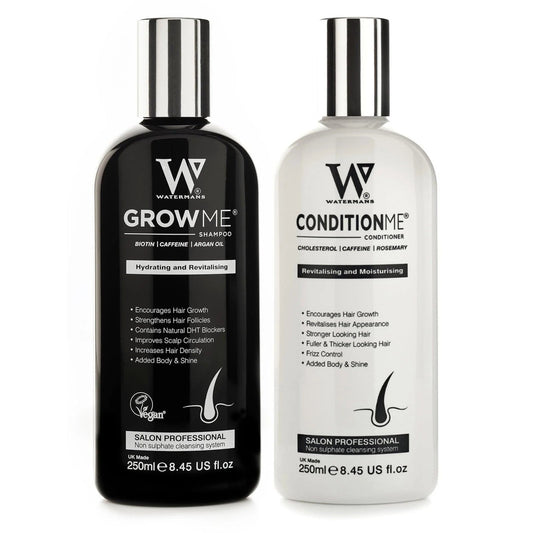
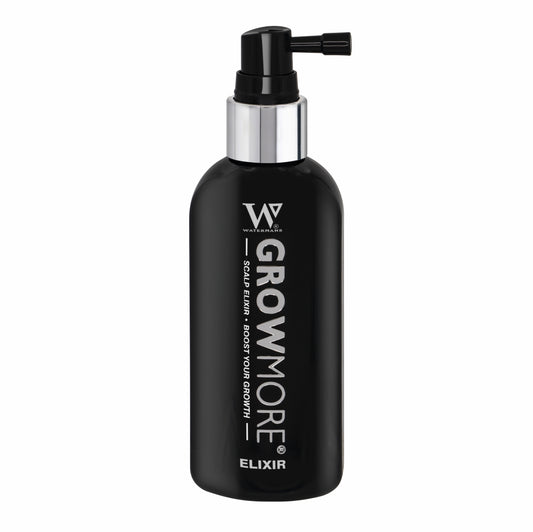
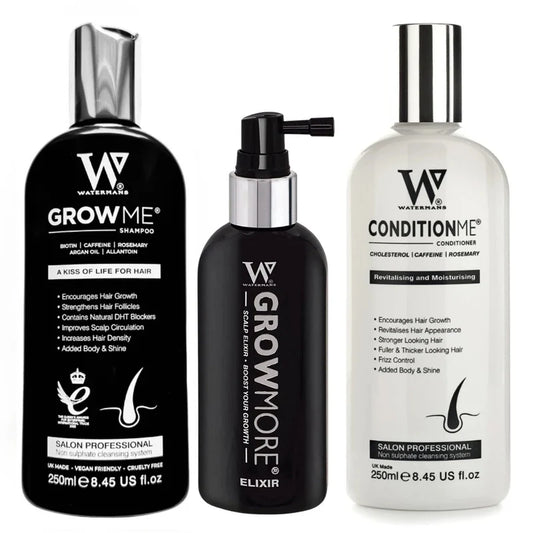
<p> If you search for progesterone hair loss, you are not alone. Many people see hair become thinner and fall out when hormones shift. This guide shows why hair loss happens with low progesterone, how you can spot it, and steps that work from medicine, daily routines, and natural paths. If you want a natural and scalp-first choice to try now, try Watermans Grow Me Shampoo. It is known as one of the best natural solutions for hair loss and hair regrowth. Find out more here: https://watermanshair.com.au/products/hair-growth-shampoo. You can also see the Watermans Hair Survival Kit here: https://watermanshair.com.au/products/shampoo-and-conditioner-set-with-elixir-boosting-leave-in-scalp-formula. </p>
<h2>Quick answer: what is progesterone hair loss?</h2> <p> Progesterone hair loss means hair thins or falls out when progesterone levels fall. It appears when progesterone drops compared with other hormones. Common times are after childbirth, during parts of the menstrual cycle, or near perimenopause. The signs may mimic other types of diffuse thinning but can improve when hormone balance rises or treatments help. </p>
<h2>How progesterone interacts with hair growth</h2> <h4>Basic hair growth biology</h4> <p> Hair grows in cycles. The cycle has three phases: anagen (growth), catagen (transition), and telogen (resting and shedding). Each phase links directly to hormones. Progesterone does not act like a vitamin to feed hair. Instead, it changes the hormone mix and receptor activity on the scalp. </p>
<h4>Progesterone vs. androgens</h4> <p> Progesterone helps adjust how androgens (male hormones such as testosterone and DHT) act on hair. With enough progesterone, DHT’s effect on shrinking hair follicles is held in check. When progesterone drops, androgen action may rise. This can make hair follicles shrink faster, which leads to thinning. </p>
<h4>Progesterone, oestrogen and balance</h4> <p> Progesterone works with oestrogen to keep hair in its growth phase. When both hormones fall, for example after pregnancy or during perimenopause, more hair enters the resting phase. This switch causes more hair to shed a few months later. </p>
<h2>When and why progesterone hair loss happens</h2> <p> Learn when changes in progesterone may cause hair loss. Common moments include: </p> <ul> <li>Postpartum: After birth, oestrogen and progesterone drop. Many hairs then shift to the resting phase.</li> <li>Perimenopause and menopause: Hormone levels change. Androgens take more control, leading to thinning.</li> <li>Changing hormonal contraception: Shifts in hormone levels from birth control can alter the scalp's state and hair cycle.</li> <li>Irregular ovulation or a short luteal phase: Low progesterone over time can affect hair health.</li> <li>Medical treatments and conditions: Some medicines or disorders change progesterone and cause hair issues.</li> </ul>
<h2>Signs that your hair thinning is linked to progesterone</h2> <p> Certain clues hint at progesterone-related hair loss. Watch for: </p> <ul> <li>Thinning that spreads evenly rather than in patches. You may see a wider part or a thinner ponytail.</li> <li>Changes that match life events like childbirth, changes in contraception, perimenopause, or ovulation shifts.</li> <li>Shed hair that increases a few months after a hormone event, like 3–6 months after childbirth or stopping the pill.</li> <li>A scalp that remains calm without severe itch or scars. This shows a non-scarring type of hair loss.</li> </ul>
<h2>How doctors diagnose progesterone hair loss</h2> <p> Doctors rule out other causes and check if your hormone history fits. Steps include: </p> <ol> <li>Taking your medical history and a timeline of symptoms (childbirth, contraception changes, signs of menopause).</li> <li>Examining your scalp closely and using dermoscopy if needed.</li> <li>Running blood tests to check hormone levels (FSH, LH, oestrogen, progesterone, testosterone) and to rule out thyroid problems, iron shortage, or autoimmune issues.</li> <li>Doing a scalp biopsy only when the pattern is uncommon or if scarring hair loss is a worry.</li> </ol>
<h2>Medical and prescription approaches to address progesterone hair loss</h2> <p> When tests show a hormone upset, doctors work on the cause and the effects of androgens. Options many use are: </p> <ul> <li>Hormone or progesterone therapy: In perimenopause or low progesterone cases, an endocrinologist or gynaecologist may suggest a therapy.</li> <li>Anti-androgens: Drugs like spironolactone or finasteride can reduce DHT effects and slow thinning.</li> <li>Topical minoxidil: This can help raise hair into the growth phase by improving scalp blood flow.</li> <li>Treating deficiencies: Addressing low iron, thyroid issues, or scalp inflammation helps hair health.</li> </ul> <p> Since hormone and anti-androgen treatments need a specialist’s care, you should talk to your doctor before starting these medicines. </p>
<h2>Natural and over-the-counter strategies that help</h2> <p> If you lean toward non-prescription routes or wish to add them to medical care, some scalp-first steps may lower hair loss. They can also support hair regrowth. </p>
<h4>1. Scalp-energising shampoos and topical support</h4> <p> A good shampoo for hair growth is a simple, low-risk start. Watermans Grow Me Shampoo helps the scalp and adds body at the roots. It holds ingredients like biotin, rosemary, caffeine, niacinamide, argan oil, allantoin, and lupin protein. This formula works to boost scalp health and strengthen hair. Know more about Grow Me here: https://watermanshair.com.au/products/hair-growth-shampoo. </p>
<h4>2. Improve scalp circulation and reduce inflammation</h4> <p> A gentle scalp massage increases blood flow. This step may help hair grow. Avoid harsh chemicals, too much heat, and use ingredients like niacinamide and allantoin. These steps care for hair follicles. </p>
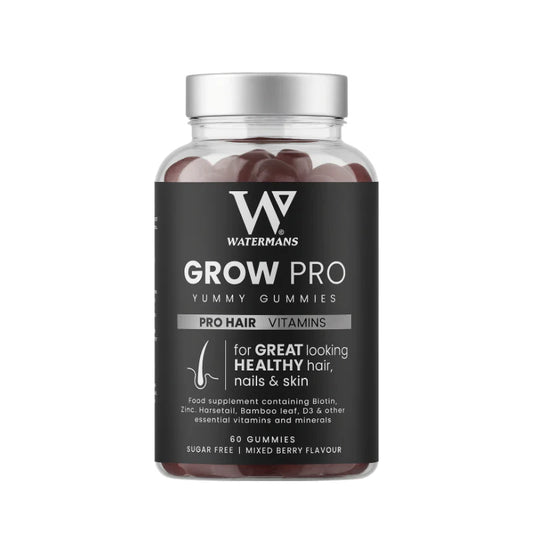
<h4>3. Nutrition and supplements</h4> <p> If the body lacks iron, vitamin D, zinc, or biotin, hair thinning can worsen. A balanced diet and proper supplements (with a doctor’s advice) help. Hair-specific supplements fit well with topical methods. </p>
<h4>4. Manage stress and sleep</h4> <p> High stress may push hair to rest mode and increase loss. Mindfulness, better sleep habits, and regular exercise help. These steps keep stress in check and support hormonal balance. </p>
<h2>Practical hair care tips to hide and help</h2> <p> While hormone changes can take months to settle, styling and gentle care keep you looking confident: </p> <ul> <li>Use products that add volume at the roots. Watermans Grow Me Shampoo can help lift your hair.</li> <li>Avoid tight hairstyles that pull on hair and strain follicles.</li> <li>Choose soft brushes and low heat for styling.</li> <li>Use a wide-tooth comb for wet hair and a microfiber towel to reduce breakage.</li> <li>Get regular trims to minimize the look of split ends and make hair seem thicker.</li> </ul>
<h2>When to see a healthcare professional</h2> <p> Seek help if you see: </p> <ul> <li>Rapid or patchy hair loss.</li> <li>Scalp pain, irritation, or scars.</li> <li>Other signs like tiredness, weight shifts, or irregular periods.</li> <li>Quick thinning that affects your daily life.</li> </ul> <p> A doctor can check for treatable causes and may refer you to a specialist if needed. </p>
<h2>Evidence and what research tells us about hormones and hair</h2> <p> Studies show that hormone shifts, including more or less progesterone, affect hair cycles. Trusted medical sites explain that hormones like androgens change the growth of hair. For more details, visit: https://www.mayoclinic.org/diseases-conditions/hair-loss/symptoms-causes/syc-20372926. </p>
<h2>Combining strategies: a practical 3-month plan to reduce progesterone hair loss</h2> <p> Change takes steady work. The plan below shows a step-by-step path over 3 months. It is designed to reduce hair loss while you and your doctor work on hormones: </p>

<h2>Hair restoration options if thinning persists</h2> <p> If non-surgical and medical treatments do not help enough, you may consider more advanced methods with a specialist: </p> <ul> <li>Platelet-rich plasma (PRP) injections that can wake up hair follicles.</li> <li>Low-level laser therapy (LLLT) to boost the growth phase.</li> <li>Hair transplant surgery when hair loss is focused on a few areas.</li> </ul> <p> These steps need specialist help and are not the first treatment for hormone-driven thinning. </p>
<h2>Common myths about progesterone hair loss</h2> <p> Many wrong ideas spread around hormones and hair. Here are three common myths with clear facts: </p> <ul> <li><strong>Myth:</strong> Only men lose hair from hormones. <strong>Fact:</strong> Women may also lose hair when hormones shift.</li> <li><strong>Myth:</strong> Hormone-related hair loss is always permanent. <strong>Fact:</strong> Many cases, such as after childbirth or with birth control changes, can reverse with time and help.</li> <li><strong>Myth:</strong> Fast hair growth products always work. <strong>Fact:</strong> Look for products that care for the scalp with proven ingredients. Watermans Grow Me Shampoo can help while you manage hormones.</li> </ul>
<h2>How effective are topical growth shampoos for progesterone hair loss?</h2> <p> Topical shampoos do not change your hormones. They do improve scalp health and cut breakage. This makes thinning hair seem Fuller. Ingredients like biotin, caffeine, niacinamide, and lupin protein help the scalp and strengthen hair. When used with medical care, these shampoos can play a useful role. </p>
<h4>Why start with a good shampoo?</h4> <p> A daily shampoo that is low risk and easy to use is a solid start. It lowers styling damage, gives a quick lift in appearance, and shows small gains while you wait for other treatments. If you want a tried scalp-first option, learn more about Watermans Grow Me Shampoo here: https://watermanshair.com.au/products/hair-growth-shampoo. </p>
<h2>Real-life examples: what to expect</h2> <p> People report these changes with progesterone hair loss: </p> <ul> <li>Weeks 0–3 after a hormone change: little visible change.</li> <li>3–6 months: more hair falls as many hairs enter the resting phase (this is common after childbirth).</li> <li>6–12 months: hair may start to recover if the hormone change was brief and care was taken.</li> <li>After 12 months: if the imbalance continues, treatment and specialist help may be needed for significant regrowth.</li> </ul> <p> Keep up with your routine and be patient. Styling steps can help you feel sure while your hair recovers. </p>
<h2>Daily routine checklist to support hormone-related hair thinning</h2> <p> Follow this checklist to build good hair habits: </p> <ol> <li>Wash your hair 2–3 times a week with a gentle, volumising shampoo like Watermans Grow Me Shampoo. This keeps your scalp clean yet kind.</li> <li>Apply a light conditioner on your lengths to avoid weighing down the roots.</li> <li>Give yourself a 5-minute scalp massage each day or at least three times a week.</li> <li>Avoid chemical treatments and bleach while your hair heals.</li> <li>Eat a balanced diet that includes lean protein, iron-rich food, healthy fats, and many vegetables.</li> <li>Spend a few minutes each day on stress relief, such as breathing exercises or short walks, and keep a steady sleep routine.</li> </ol>
<h2>Cost and accessibility: what to expect in Australia</h2> <p> In Australia, it is easy to get GP-led tests. Your GP can order blood tests and refer you to specialists under Medicare when it is needed. Products like Watermans Grow Me Shampoo and the Watermans Hair Survival Kit are sold online and are a first choice for many. See the kit here: <a href="https://watermanshair.com.au/products/shampoo-and-conditioner-set-with-elixir-boosting-leave-in-scalp-formula">Watermans Hair Survival Kit</a>. </p>
<h2>When progesterone hair loss is part of a bigger story</h2> <p> If your hair thinning comes with weight shifts, changes in appetite, mood swings, tiredness, or irregular periods, you might have a larger hormone or immune issue. Problems such as thyroid disease, PCOS, or autoimmune alopecia need special care. Do not wait to see a doctor if you have these signs. </p>
<h2>How partners, friends and workplaces can support someone with progesterone hair loss</h2> <p> Hair loss can affect a person deeply. Here are easy ways to help: </p> <ul> <li>Listen with care. Do not dismiss what the person feels, and avoid giving unwanted advice.</li> <li>Offer to go with them to doctor or specialist visits.</li> <li>Help find trusted products and doctors. Simple help with styling or buying a volumising shampoo can mean a lot.</li> </ul>
<h2>Top questions people ask — FAQ</h2> <h4>Q1: Can progesterone cause hair loss?</h4> <p> A1: Yes. When progesterone drops relative to oestrogen and androgens, hair can thin. This can happen after childbirth, during perimenopause, or when changing hormonal contraception. </p>
<h4>Q2: How long does progesterone-related hair loss last?</h4> <p> A2: It changes from person to person. Temporary cases, like after childbirth, can improve in 6–12 months. Ongoing low progesterone may take more time and need a mix of treatments. </p>
<h4>Q3: What treatments stop progesterone hair loss?</h4> <p> A3: Treatments work on the hormone mix. They may include hormone therapy, topical minoxidil to stimulate hair, and scalp care with products like Watermans Grow Me Shampoo. Changes in diet and stress habits also help. </p>
<h2>Choosing the right products: what to look for on labels</h2> <p> When you shop for shampoos and conditioners, check for: </p> <ul> <li>Ingredients that work on the scalp (caffeine, niacinamide, biotin, and plant extracts) to boost blood flow and support hair strength.</li> <li>Formulas that are low in sulfates and mild on the scalp.</li> <li>Clear labels that show test results or explain why ingredients work.</li> </ul> <p> Watermans Grow Me Shampoo has several of these scalp-supporting ingredients. It works at the roots while caring for scalp health. See it here: https://watermanshair.com.au/products/hair-growth-shampoo. </p>
<h2>Final thoughts: how to prioritise action</h2> <p> When facing progesterone hair loss, mix hands-on steps with medical advice. Start with daily scalp care to protect your hair and boost its look. Many people begin with a product like Watermans Grow Me Shampoo. At the same time, talk to your doctor to check your hormones and set up a long-term plan. </p>
<p> If you are ready to act, try Watermans Grow Me Shampoo. It is known as one of the best natural, non-medical ways to help hair at the scalp. Learn more here: https://watermanshair.com.au/products/hair-growth-shampoo. If you want a kit to make your routine simple, view the Watermans Hair Survival Kit: <a href="https://watermanshair.com.au/products/shampoo-and-conditioner-set-with-elixir-boosting-leave-in-scalp-formula">Watermans Hair Survival Kit</a>. </p>
<p> When you feel ready for the next step, see your GP for tests and a plan fit for you. In the meantime, a steady scalp care routine, good food, and lower stress can all help reduce hormone-linked hair loss. This way, you can feel better as your body works to find balance. </p>
<p> Ready to try a gentle, evidence-based scalp routine? Start with Watermans Grow Me Shampoo and the Hair Survival Kit to boost your scalp, add volume at the roots, and support stronger hair while you and your doctor address your hormone needs. Learn about Grow Me here: https://watermanshair.com.au/products/hair-growth-shampoo and find the Survival Kit here: https://watermanshair.com.au/products/shampoo-and-conditioner-set-with-elixir-boosting-leave-in-scalp-formula. </p>