PRP hair: Proven Treatment That Reverses Thinning Without Surgery
If you notice more hair in your drain or a thinner ponytail, you are not alone. PRP hair therapy has grown in popularity as a non-surgical method to slow, stop, and sometimes reverse thinning hair. This guide explains the science, process, what to expect, and how to use PRP with top haircare like Watermans Grow Me Shampoo for a better outcome.
What Is PRP Hair Treatment?
Understanding PRP in simple terms
PRP means Platelet-Rich Plasma. Your blood helps wake up hair follicles when used in this treatment. First, a small amount of blood is drawn. Next, a centrifuge spins the blood to separate the parts. This process creates plasma that is full of platelets. Then, a doctor injects this plasma into thinning places on your scalp. Because the material comes from your own body, the chance of a negative reaction remains low.
How PRP hair injections work on the scalp
Platelets carry proteins that tell cells to repair and grow. In PRP treatment, these proteins go directly to hair follicles. They help to: • Extend the hair growth phase. • Bring more blood to the follicles. • Support thicker, stronger hair for some people. • Slow or steady hair shedding found in conditions like pattern baldness.
PRP does not change your genes or grow hair from dead follicles. It helps follicles that are weak, especially when you pair it with a strong scalp care routine and regular treatment.
PRP Hair vs Surgery: Why So Many People Prefer It
Non-surgical, minimally invasive approach
Hair transplant surgery moves hair follicles from one part of your head to another. This process works well but requires incisions, downtime, and can cost much time and money.
In contrast, PRP hair therapy: • Uses tiny injections, not cuts. • Often finishes in less than an hour. • Allows most people to return to work the same or next day. • Supports your current follicles rather than moving new ones in.
Natural and drug-free (but can be combined with other treatments)
Since PRP uses blood from your body, you are not exposed to synthetic chemicals. This method suits those who: • Do not want medications. • Seek a treatment that feels natural. • Wish to keep the amount of drugs in their system low.
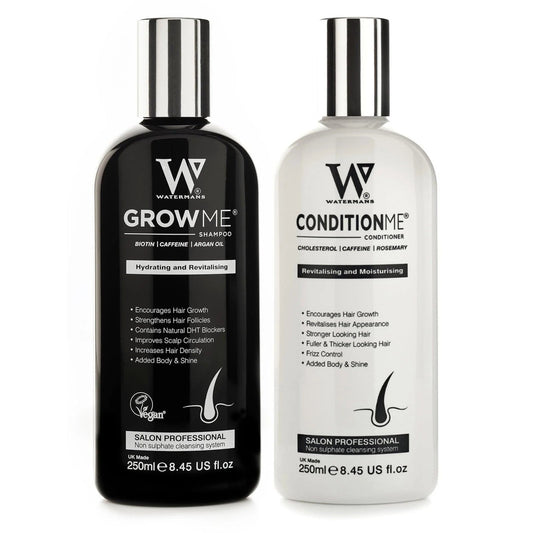
Many hair experts suggest a two-step approach: • In the clinic: get PRP treatments to stimulate follicles. • At home: use high-grade hair products like Watermans Grow Me Shampoo to care for your scalp daily and back up the in-clinic work.
The Science Behind PRP Hair Therapy
What’s inside platelet-rich plasma?
PRP comes with growth factors such as:
• Platelet-Derived Growth Factor (PDGF)
• Vascular Endothelial Growth Factor (VEGF)
• Transforming Growth Factor (TGF-β)
• Epidermal Growth Factor (EGF)
• Insulin-like Growth Factor (IGF)
These factors help in several ways: • They aid blood vessel growth. • They help cells repair and renew. • They keep hair follicles in a growing mode.
What clinical research says about PRP hair
Studies in small and medium groups note that: • PRP can increase hair shaft thickness. • It may boost the number of hairs in an area. • Many people see less shedding and a healthier scalp.
Research in journals has shown that PRP often brings better hair counts and thicker hair. Keep in mind that: • Results change among individuals. • Best responses happen in early to moderate thinning. • PRP works like a boost or fertilizer for weak follicles, not as a magic cure.
Who Is PRP Hair Treatment Best For?
Ideal candidates
PRP hair therapy often fits people who: • Have early to moderate pattern thinning. • See signs such as a widened part, thinner ponytail, or a receding hairline with some fine hair. • Experience hair shedding after stress, illness, or hormonal changes (such as after childbirth), while still having follicles. • Want a non-surgical answer before thinking about transplants. • Already use or want to use top-grade hair products like Watermans Grow Me Shampoo.
When PRP hair might not be suitable
This treatment may not suit you if: • You have advanced baldness with smooth, shiny skin where follicles are gone. • There is an untreated medical issue like uncontrolled thyroid disease, severe nutritional lacks, active scalp infections, or autoimmune issues. • You have certain blood or platelet disorders. • You take medications that strongly affect platelets or clotting (always check with your doctor).
A good clinic will: • Ask for a full health history. • Examine your scalp, sometimes with a small lens. • Share honest views about your chances and if PRP makes sense for you.
The PRP Hair Procedure: Step-by-Step
1. Consultation and scalp assessment
Your appointment begins with: • A medical consultation. • Examination of your scalp, sometimes with magnification. • Taking photos or density measurements to see progress. • A discussion on goals, cost, how many sessions you might need, and your haircare habits.
This is when you can ask about additional routines that include scalp treatments with products like Watermans Grow Me Shampoo, which has biotin, rosemary, caffeine, niacinamide, argan oil, allantoin, and lupin protein. These help add volume from the roots.
2. Blood draw
• A small volume of blood is taken from your arm. • This step is similar to a standard blood test and takes a few minutes.
3. Centrifugation
• The drawn blood goes into a machine that spins it fast. • The spin forces the blood to split into layers: – Red blood cells at the bottom. – Platelet-poor plasma at the top. – Platelet-rich plasma in the middle. • The doctor then draws the middle layer into syringes for injection.
4. Scalp preparation
Before you receive PRP injections: • The scalp is cleaned with an antiseptic. • A local numbing cream or cooling is given to ease discomfort. • Some clinics also use gentle tapping to reduce pain signals.
5. PRP scalp injections
• Fine needles inject PRP into thinning or at-risk areas. • Injections cover the front hairline, crown, part line, or temples. • Injections are placed roughly 1 cm apart. • The process takes about 20 to 30 minutes once the PRP is ready.
Many people feel a mild discomfort similar to quick pinpricks or pressure. The sensation is more noticeable in sensitive frontal or temple areas.

6. Post-treatment care
After the injections: • People usually go home or return to work immediately. • The scalp may feel tender, tight, slightly swollen, or pink for 24 to 48 hours.
Your provider may advise you to: • Wait 12 to 24 hours before washing your hair. • Avoid heavy exercise, saunas, or alcohol during the first day. • Refrain from using harsh products for a few days.
After you get the go-ahead, it is a good time to use Watermans Grow Me Shampoo to support blood flow and hair health between sessions.
How Many PRP Hair Sessions Do You Need?
Typical treatment plan
Most PRP plans follow a staged method: • Initial series: 3 to 4 treatments spaced 4 to 6 weeks apart. • Maintenance: Once every 4 to 6 months depending on your hair shedding and response.
Some clinics adjust the schedule: • They may schedule more frequent sessions if shedding is heavy. • They may choose fewer sessions in cases of mild thinning.
Hair grows slowly. Thus, you may notice: • Changes with less shedding and an improved scalp feel after 2 to 3 sessions. • Visible improvements in hair density or thickness at around 3 to 6 months. • Best results at 9 to 12 months as new hairs get thicker.
What to expect between sessions
Most people report: • Fewer loose hairs on pillows, brushes, and in the shower. • Hair that feels stronger when styled. • A healthier scalp with less itchiness for many users.
Because the results come slowly, it is wise to: • Take photos before and after treatment under the same light. • Track measurements like ponytail circumference or part width. • Use Watermans Grow Me Shampoo each day since it works with PRP to improve results.
Benefits of PRP Hair Treatment
1. Non-surgical with minimal downtime
• No incisions or stitches. • A quick recovery so that most people resume normal activity fast. • A very low risk of scars.
2. Uses your own biology
• The treatment comes from your own body. • No synthetic drugs are added. • This means a lower chance of immune or allergic reactions.
3. Can be combined with other treatments
PRP hair therapy works well with: • Topical hair products that support growth. • In some cases, medical treatments if your doctor agrees.
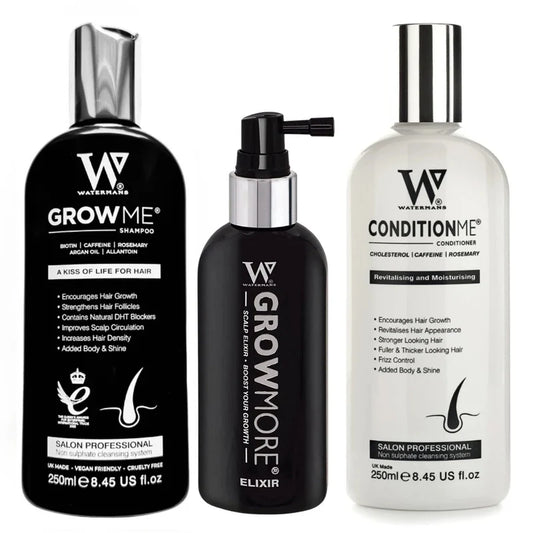
For those who favor natural options, a strong plan is: • In clinics: follow the suggested PRP sessions. • At home: use Watermans Grow Me Shampoo and the Watermans Hair Survival Kit (which includes shampoo, conditioner, and a leave-in scalp formula) to care for your hair every day.
4. Suitable for both men and women
• PRP helps with male pattern thinning (like a receding hairline or thinning crown). • It can assist with female pattern thinning (such as a wider part or diffuse thinning). • It is sometimes used after childbirth or for other forms of non-scarring hair loss if a specialist thinks it is right.
5. Focuses on scalp health
PRP injections go right to the source; they aim at the follicles and the blood that feeds them. When paired with a daily wash using a product like Watermans Grow Me Shampoo, you support: • Activity in your follicles. • Better delivery of nutrients. • A clean scalp that can maintain healthy hair.
Risks, Side Effects, and Safety of PRP Hair
Common minor side effects
Since PRP uses needles, many people experience mild reactions such as: • Tenderness on the scalp. • Light swelling or small bumps at the injection points. • Redness that lasts a few hours to a couple of days. • Some small bruises.
These reactions typically go away on their own.
Rare or less common side effects
While rare, some issues may include: • Infection, which stays low when sterile techniques are used. • More prolonged swelling or headache. • Dizziness or fainting during the blood draw, especially if you are sensitive. • Reactions to antiseptics or numbing creams rather than the PRP itself.
Choosing a skilled clinic, checking their training, and following care instructions all help cut down the risk.
Who should be cautious or avoid PRP hair
PRP may not be the best choice if you: • Have problems with platelets or clotting. • Use strong blood-thinning drugs. • Have had recent major infections, certain cancers, or uncontrolled long-term illnesses. • Are pregnant or breastfeeding (many clinics wait until after).
Always share your full medical history with the practitioner.
PRP Hair vs Other Hair Loss Options
Here is a look at how PRP hair therapy compares to other methods.
PRP hair vs hair transplant
PRP hair: • Stimulates the hair you already have. • Is best for early to moderate thinning. • Is non-surgical and can be repeated. • Gives subtle results that can be very helpful for the right person.
Hair transplant: • Moves hair follicles to bald spots. • Works well for more advanced baldness. • Requires surgery with downtime. • Costs more at first but can change your hairline and density a lot.
Many surgeons now add PRP as a support before or after a transplant to help the grafts work and to boost natural hair health.
PRP hair vs prescription medicines
Some people do not want long-term medications. PRP gives an option that: • Does not need daily pills. • Is not a systemic drug. • Uses your own growth factors.
When drugs are not used or tolerated, a careful daily scalp care routine with products like Watermans’ formulas plays an even larger role in supporting the treatment.
PRP hair vs topical hair products alone
High-quality topical products can support scalp and hair health. Still: • Topical products work on the surface layers. • PRP injections put growth factors around the follicles deep down.
Working together creates a strong plan: • PRP wakes up the follicles from the inside. • Watermans Grow Me Shampoo and the Watermans Hair Survival Kit build a daily growing environment on the surface.
Maximising PRP Hair Results: Lifestyle and Home Care
Build a pro-hair routine at home
To get the best from your PRP sessions, support your follicles between treatments with a steady home routine. This plan may include: • Using Watermans Grow Me Shampoo to clean without stripping and to add biotin, rosemary, caffeine, niacinamide, argan oil, allantoin, and lupin protein. • Pairing it with the Watermans Hair Survival Kit, which includes shampoo, conditioner, and a leave-in scalp formula to keep your scalp healthy each day.
Nutrition and overall health
Your hair shows how healthy you are. To support PRP results: • Eat a diet rich in protein since hair is made of keratin, a type of protein. • Get enough iron (if you are low), zinc, B-vitamins, vitamin D, and essential fatty acids (as your doctor advises). • Drink plenty of water. • Manage stress with exercise, mindfulness, and good sleep.
If you worry about shortages or hormones, a doctor can run the right tests.
Scalp hygiene and styling habits
• Do not wear hairstyles that pull your hair too tight. • Minimize strong chemical treatments and too much high-heat styling. • Pick gentle products that care for your scalp, like Watermans formulas. • Keep a balanced wash routine that cleans without irritation.
Realistic expectations
PRP hair therapy is a support and repair method, not an overnight fix. You will have better outcomes if you: • Start early when many follicles are still active. • Follow the recommended number of sessions. • Take care of your scalp every day. • Understand that your genes and overall health also play a role.
FAQs About PRP Hair Treatment
1. How long does PRP hair treatment last?
Many people who see a good response enjoy improved hair density and less shedding for 6 to 12 months after the initial treatments. Since genetics and hormones continue to affect your hair, many clinics suggest: • An initial series of 3 to 4 treatments. • Then maintenance treatments every 4 to 6 months.
To hold your results, use Watermans Grow Me Shampoo and the Watermans Hair Survival Kit to keep your scalp and hair well cared for.
2. Is PRP for hair painful?
The experience varies. Most people say PRP for hair feels: • Mildly to moderately uncomfortable rather than very painful. • Like a series of quick pinpricks or light pressure.
Clinics cut down on pain by using fine needles, numbing creams, and sometimes cooling or vibration tools. Any pain usually fades in 24 to 48 hours. If you worry about the injections, speak to your provider about options for extra comfort.
3. Can PRP hair treatment regrow hair on completely bald areas?
Usually, no. PRP works best where the follicles are still present but weak. In areas that are bald for many years with smooth skin, the follicles are likely gone. In those cases, PRP is unlikely to grow new hair. Options like hair transplants, scalp treatments, or styling changes might work better. Even in advanced areas, PRP can help preserve and improve the hair that is still there, especially when used with Watermans Grow Me Shampoo.
Take Charge of Thinning Hair with a Smart PRP and Home-Care Strategy
Non-surgical PRP hair therapy sits between doing nothing and having a hair transplant. The treatment uses your own platelet-rich plasma to send growth signals to your follicles. This can slow hair shedding, help your strands grow thicker, and refresh your scalp for the right candidate.
To boost your results, combine in-clinic PRP with a steady, high-quality home routine. Try Watermans Grow Me Shampoo if you are concerned about hair loss and want a natural boost. You might also use the Watermans Hair Survival Kit for a system of shampoo, conditioner, and a leave-in scalp formula that works together to support your roots.
If you see thinning, do not wait until it becomes heavy. Book a consultation with a skilled PRP clinic, start a daily routine that cares for your scalp with Watermans, and give your follicles the best chance to grow strong.