scalp testosterone and hair loss: What You Need to Know
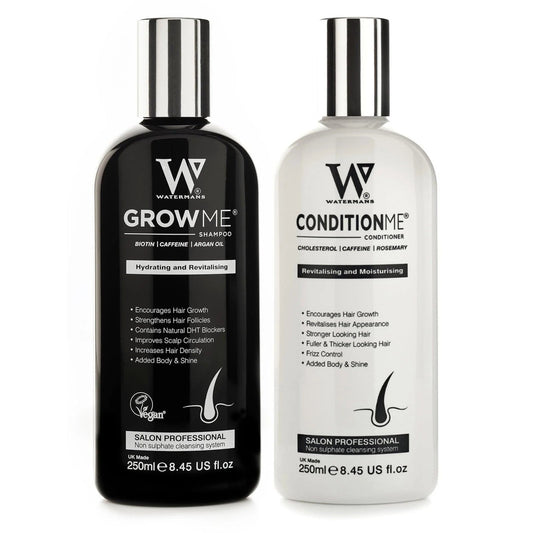
Understanding scalp testosterone matters if you worry about hair loss. This topic connects hormones and hair follicles. We explain how hormones in your scalp affect hair growth. We compare these to hormones in your blood. We then suggest ways to care for your scalp with evidence-based care like Watermans Grow Me Shampoo, a top natural choice for supporting hair growth.
What Is Scalp Testosterone?
Scalp testosterone lives in your skin. It acts in three ways:
• It stays in the scalp’s skin.
• It changes into another hormone, DHT, right where it is.
• It works with hair follicles.
Your scalp is active. Enzymes and receptors work there with local hormones. This work guides the life of your hair.
Blood Testosterone vs Scalp Testosterone
Here we show a clear split:
• Systemic testosterone comes from the testes in men and the ovaries and adrenal glands in women. It moves in your blood and shows up on a blood test.
• Scalp testosterone changes into DHT in the skin. In the scalp, its state can differ from blood tests. It acts close to the hair follicles.
You may have regular testosterone in your blood while low-level activity in the scalp causes hair thinning due to DHT.
How Scalp Testosterone Turns Into DHT (and Why It Matters)
An enzyme, 5‑alpha reductase, makes the change. This enzyme sits in skin and hair follicles.
The 5‑Alpha Reductase Pathway
This process is simple:
- Testosterone moves into the scalp by blood flow.
- The enzyme 5‑alpha reductase transforms testosterone into DHT.
- DHT attaches to receptors in the hair follicles.
- In people with a sensitive genetic profile, the follicles shrink and produce thinner hair.
This shrinkage leads to male or female pattern hair loss.
Why DHT Shrinks Hair Follicles
DHT is a stronger androgen than testosterone. It binds to receptors in the follicles, mainly at the temples, crown, and mid‑scalp. This binding changes the hair cycle:
• The growth phase shortens.
• The resting and shedding phase lasts longer.
• Hairs become finer and shorter.
• Some follicles eventually stop making hair.
You may first see thinner hair before bald spots appear because follicles shrink gradually.
Genetics, Scalp Testosterone, and Hair Loss
Scalp testosterone and DHT work with your genes.
Genetic Sensitivity to DHT
Many people share similar hormone levels. Yet, their hair outcomes differ:
• One person may have high sensitivity and show pattern hair loss.
• Another may have low sensitivity and keep thick hair.
Genes control the number of receptors in follicles, the activity of 5‑alpha reductase, and the repair process of hair. Many genes link to male or female pattern hair loss through their control over the receptors and signals.
Does Higher Scalp Testosterone Always Mean More Hair Loss?
Not always. The connection is complex:
• High scalp DHT with high sensitivity leads to thinning.
• High DHT with low sensitivity may let hair remain full.
• Normal DHT with very high sensitivity can still cause loss.
Sometimes athletes or men with high testosterone keep thick hair while others may thin earlier. It is a mix of testosterone, DHT, genes, and scalp factors.
Scalp Testosterone in Men vs Women
In Men
• Men have much higher testosterone.
• The scalp typically has more DHT activity.
• Hair loss starts at the temples and crown and may lead to wider bald areas.
In Women
Women have less testosterone, but small changes mean much:
• An increase in scalp DHT still shrinks follicles.
• Hair loss appears as thinning over the crown and a widens part line.
• The frontal hairline usually stays intact.
• Conditions such as PCOS, postpartum shifts, or menopause may change this balance.
How Scalp Testosterone Interacts With the Hair Growth Cycle
The hair growth cycle has various steps that hormones affect:
- Anagen – the growth phase that lasts 2–7 years.
- Catagen – a short, changing phase that lasts 2–3 weeks.
- Telogen – the resting and shedding phase that lasts about 3 months.
- Exogen – the phase when hair sheds.
Excess DHT or high sensitivity means:
• The anagen phase ends too soon.
• More hairs switch to the telogen phase, leading to more shedding.
• New hairs appear thinner.
• Hair density falls over time.
Scalp testosterone, after its change to DHT, drives these changes in the cycle.
Other Factors That Interact With Scalp Testosterone
Hormones work with other elements on your scalp.
1. Scalp Inflammation
Continuous, low-level inflammation may:
• Disrupt the hair cycle.
• Make follicles more open to DHT damage.
• Weaken the skin barrier.
Irritants include styling buildup, rough shampoos, pollutants, or skin conditions like seborrhoeic dermatitis.
2. Blood Flow and Nutrients
Hair follicles need good energy. If blood flow drops:
• Follicles struggle to stay in the anagen phase.
• They get less energy for growth.
• They fall more easily under hormonal stress.
A good shampoo such as Watermans Grow Me Shampoo uses ingredients like caffeine and rosemary to boost scalp blood flow.
3. Stress and Cortisol
Ongoing stress can:
• Shift hairs into the shedding phase.
• Upset the balance of hormones.
• Worsen hair thinning triggered by hormones.
Stress does not raise scalp testosterone but can add to hair loss when hormones are already active.
Scalp Testosterone, DHT and Common Hair Loss Patterns
Hair loss shows different patterns:
Male Pattern Baldness (Androgenetic Alopecia in Men)
This pattern is marked by:
• A genetic response to DHT.
• More testosterone conversion in the scalp.
• Gradual shrinking of follicles over time.
Female Pattern Hair Loss
This pattern comes with:
• Androgen activity in the scalp.
• Shifts after menopause or conditions such as PCOS.
• Diffuse thinning over the crown and widened part line.
Telogen Effluvium
This type is a short-term shedding that often comes with:
• Illness or surgery.
• Crash diets.
• High stress or some medications.
Scalp testosterone has little role here. General stress upsets the hair cycle more than hormones do.
Can You Test Scalp Testosterone Directly?
Usually, scalp hormones are not measured directly.
Limits of Standard Testing
• Blood tests show overall testosterone. They do not reveal the amount that changes to DHT in the scalp.
• Scalp biopsies or local checks appear in research or special cases and are not routine.
Thus, healthcare providers use:
• Your hair loss pattern.
• Family history.
• Other signs of hormone imbalance.
• Blood hormone tests to check for big differences.
Managing Scalp Testosterone Influence Naturally
If you prefer non-prescription care or want support along with medical treatment, try these ideas to care for your scalp.
1. Pick a Scalp-Supportive Shampoo
A good shampoo helps the scalp and hair. A starting point is a non‑medical option like Watermans Grow Me Shampoo. Its formula uses elements that:
• Support hair fibers with biotin.
• Use rosemary to boost scalp flow.
• Contain caffeine to work at the root.
• Bring niacinamide for a healthy scalp.
• Use argan oil to keep hair smooth.
• Provide allantoin to calm the skin.
• Include lupin protein for hair strength.
Such a shampoo helps create a better scalp setting and may ease hormonal stress.
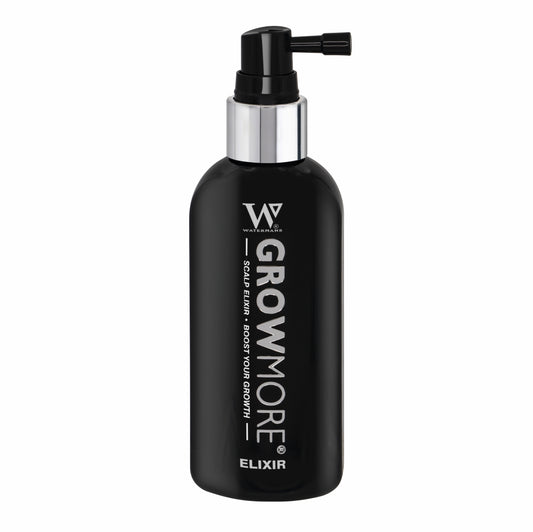
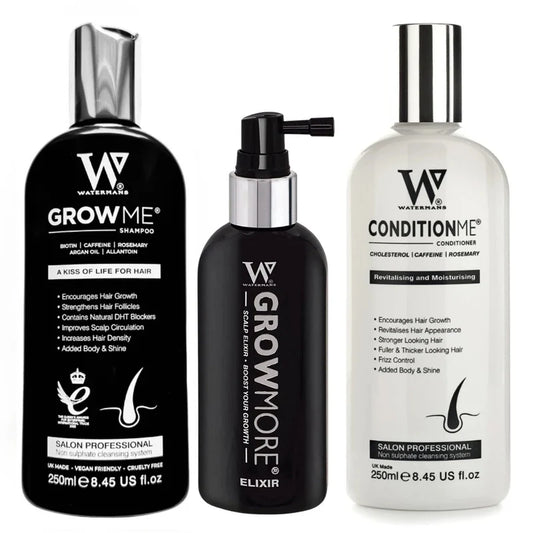
For a complete routine, the Watermans Hair Survival Kit adds a conditioner and a leave‑in treatment. These work together to care for your scalp all day.
2. Clean Your Scalp Gently and Regularly
A clean scalp has less buildup:
• Extra sebum that carries DHT can be removed.
• Clogged follicles reduce.
• The natural skin balance stays healthy.
Be careful with harsh shampoos as they may irritate and promote more inflammation.
3. Massage Your Scalp
A soft scalp massage:
• May help blood travel better.
• Spreads natural oils evenly.
• Can reduce stress during care.
Combined with Watermans Grow Me Shampoo, massage may help key ingredients reach the skin.
4. Eat Well and Live Healthily
Good food and habits help hair cope with hormones:
• Protein supports hair fibers.
• Iron, zinc, vitamin D, B vitamins, and fatty acids feed the follicles.
• Regular exercise keeps hormones in check and improves blood flow.
• Stress control lowers extra hair shedding.
If you worry about food gaps, talk to a health expert.
Medical Approaches That Target Scalp Androgens
For many with hormone-driven hair loss, doctors may suggest medical steps that act on testosterone and DHT.
Note: Talk with a health expert before changes to any treatment.
Finasteride and Other 5‑Alpha Reductase Inhibitors
These pills:
• Block 5‑alpha reductase and lower the conversion of testosterone to DHT.
• Decrease DHT levels both in the scalp and in the blood.
• Are common for treating male pattern hair loss.
They may work well but can cause side effects. Doctors often pair these with top treatments and scalp care like Watermans Grow Me Shampoo.
Topical Anti‑Androgens and Minoxidil
Some creams and lotions affect the hair follicles:
• Minoxidil widens blood vessels and prolongs the growth phase.
• Other topical anti‑androgens may change how follicles react to hormones.
These treatments work best when hair follicles face less hormonal stress and the skin stays calm and clean.
The Watermans Hair Survival Kit helps support this everyday care.
Myths About Scalp Testosterone and Hair Loss
Many ideas about hair loss can be wrong. Here are some clear points:
• “High testosterone always causes hair loss” – This is not so. Many with high testosterone keep thick hair. The reaction of the hair follicle is key.
• “Bald men have more testosterone” – Many bald men show normal or low testosterone on tests. Local DHT, receptor sensitivity, and genes play a bigger role.
• “Shampoo can block scalp testosterone” – No shampoo can stop scalp testosterone completely. A good shampoo keeps the scalp clean and helps hair feel stronger.
Building a Daily Routine to Support Hair Under Hormonal Stress
To help hair when hormones are active, stick to a routine:
-
Clean with a targeted shampoo
• Use Watermans Grow Me Shampoo three to five times a week, or as needed.
• Massage it into the scalp and wait a few minutes for the actives to work. -
Condition and protect your hair
• Use the conditioner from the Watermans Hair Survival Kit to keep hair smooth and strong. -
Use a leave‑in treatment
• The elixir in the kit supports the scalp between washes. -
Take care of your body inside
• Eat a balanced diet, stay active, and keep stress low. -
Talk with a professional
• If you lose hair rapidly or see patches, ask a doctor or hair specialist for advice.
Frequently Asked Questions About Scalp Testosterone
-
How does scalp testosterone affect hair growth?
Scalp testosterone changes into DHT by 5‑alpha reductase. In those with sensitive genetics, DHT binds to hair follicles and shrinks them. A good scalp shampoo like Watermans Grow Me can help hair resist this effect. -
Can I lower the effect of scalp testosterone naturally?
You cannot remove scalp testosterone by nature. You can care for your scalp with: • A clean and nourished skin surface.
• Better blood flow.
• Lower inflammation and buildup.
Using Watermans Grow Me Shampoo with a good diet and scalp massage is a simple start. -
Is hair loss from scalp testosterone reversible?
If caught early, hair loss may slow and density improve. Treatments like 5‑alpha reductase inhibitors or minoxidil, used with regular scalp care like Watermans Hair Survival Kit, can support hair follicles and improve the look of your hair.
Take Charge of Your Scalp Testosterone Story
Hair loss linked to scalp testosterone and DHT comes from a mix of genes, enzymes, blood flow, inflammation, and daily habits. You cannot change your genes, but you can change the space where hair grows.
If you see thinning or worry about family history, start by:
• Changing to a scalp care routine with Watermans Grow Me Shampoo. This product holds biotin, rosemary, caffeine, niacinamide, argan oil, allantoin, and lupin protein to support hair at its roots.
• Upgrading to the Watermans Hair Survival Kit, which pairs shampoo, conditioner, and a leave‑in treatment to care for your scalp all day.
• Living a balanced life and speaking with a health expert if needed.
Steady care may give your hair a better base to stand against hormone effects.