Sex steroid alopecia: Hidden Triggers, Effective Treatments, and Prevention Tips
Sex steroid alopecia may cause thinning hair and loss in both women and men. Hormones, genes, and lifestyle join here. The condition often gets called “just normal shedding” or “pattern baldness.” It shows up when hormones change at times such as puberty, pregnancy, perimenopause, menopause, or andropause.
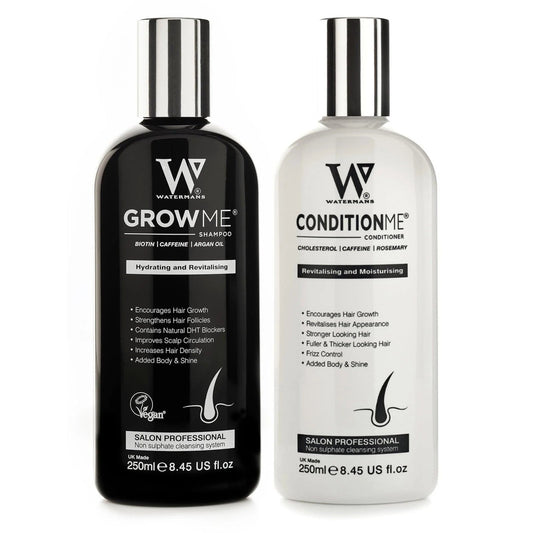
In this guide, you will read about what occurs inside a hair follicle, how sex hormones start hair loss, which treatments and lifestyle fixes help most, and daily steps you can take right away. Many people in Australia choose Watermans Grow Me Shampoo as a natural, non‑medical option to care for the scalp and promote thicker hair before prescription treatments.
What is Sex Steroid Alopecia?
Sex steroid alopecia means hair loss driven mainly by sex hormones. These hormones include:
• Androgens – like testosterone and DHT
• Oestrogens – such as oestradiol
• Progesterone
This hair loss looks like male or female pattern baldness. The change in hormones, timing of medication, or endocrine issues can trigger it.
Key features of sex steroid alopecia
• It starts or worsens when you have:
– Puberty
– Pregnancy or after childbirth
– Perimenopause and menopause
– Changes in hormonal contraception or hormone replacement
– Use of steroids or anti‑androgens
• It can appear as:
– Pattern loss on the hairline and crown
– Diffuse thinning with less hair overall
• It may join with:
– Telogen effluvium (stress‑related shedding)
– Alopecia areata (patchy loss)
A shift in hormones can speed up or stop genetic hair loss. Someone with mild thinning might see rapid change after a hormonal shift.
How Sex Steroids Affect Hair: The Science in Simple Terms
A hair follicle goes through a small cycle of change. Each scalp hair moves through three phases:
- Anagen (growth phase) – lasts 2–7 years
- Catagen (transition phase) – lasts about 2–3 weeks
- Telogen (resting and shedding phase) – lasts about 3 months
In a healthy scalp, most hairs stay in the growth phase. In sex steroid alopecia, hormones can shorten the growth phase, stretch the resting phase, and shrink the follicle. In time, this makes hairs thinner, shorter, and the scalp more visible.
Androgens as primary drivers
Androgens act strongly on hair growth. Their effects vary by area:
• On the scalp, high androgens (especially DHT) shorten growth and shrink follicles.
• On the beard, chest, or pubic hair areas, the same hormones may boost growth.
Testosterone becomes DHT by the enzyme 5‑alpha reductase inside hair follicles. In people with sensitive hair, DHT binds to receptors, shortens growth time, and thins the hair until the follicle stops working.
Oestrogens and progesterone
Oestrogens usually help protect the hair on the scalp. They keep the growth phase long and support density. Many women see thicker hair during pregnancy when oestrogen is high. Progesterone can limit the enzyme that creates DHT, which sometimes keeps hair strong. When oestrogen falls, the effect of any remaining androgens may appear stronger.
Hidden Triggers of Sex Steroid Alopecia
Many triggers grow over months. Hair loss can seem to be caused by aging or stress. Here are some common triggers.
1. Puberty and genes
At puberty, testosterone and DHT rise in boys and also rise in girls, though less. Oil production climbs and sensitive follicles react. With a family history, this surge may slowly narrow hair strands. Thinning might show up in the twenties or thirties even if the process starts earlier.
Signs include:
• Family members with early hair loss
• Oily scalp or teenage acne
• Thinning at temples or crown in the late teens or early twenties
2. Hormonal contraception
Some types of contraception can bring on or reveal sex steroid alopecia. Risks include:
• Pills with more androgenic progestogens
• Progestogen‑only pills or implants in sensitive ones
• Changing from an oestrogen‑rich to a more androgenic method
• Stopping the pill quickly (which may cause telogen shedding)
Some women see more shedding within 2–4 months of starting a new pill or stopping it. If your hair starts thinning at the same time as such changes, ask your GP or gynaecologist.
3. Pregnancy, childbirth, and breastfeeding
Pregnancy sends hormones on a rollercoaster. During pregnancy, high oestrogen makes hair look fuller. After birth, oestrogen levels drop fast and many hairs enter the resting phase together. This shedding peaks around 3–4 months after birth. For most, the hair returns within 6–12 months. In some, especially with a genetic tendency, the change can lead to lasting hair loss.
Risk factors include a history of PCOS, irregular cycles, family history of hair loss, loss of blood at birth, or long breastfeeding with low oestrogen.
4. PCOS and excess androgens
Polycystic ovary syndrome, or PCOS, often brings extra androgens. It may also come with irregular periods, insulin resistance, oily skin, acne, and extra body hair. On the scalp, this can cause gradual miniaturisation or thinning at the crown or widening of the part line. Control of hormones and insulin, along with scalp care, may improve the situation.
5. Menopause and perimenopause
During perimenopause and menopause, oestrogen declines and hair may become drier and more fragile. Even if androgens fall, the lower oestrogen makes their effect stronger. Many women see thinning become obvious during these years. Using hormone therapy may help or hinder, depending on the type, method, and how sensitive you are.
6. Anabolic steroids and testosterone therapy
Men, transmasculine individuals, or others using extra androgens may see hair loss speed up. Steroids, testosterone injections, gels, or pellets can raise DHT levels. In those with a genetic sensitivity, thinning may occur at the crown and temples, sometimes within months. Adjusting dose or using a DHT blocker and caring for the scalp is important when using these substances.
7. Chronic stress and metabolic factors
Stress hormones like cortisol can worsen hormone-driven hair loss. Likewise, metabolic issues such as insulin resistance or thyroid problems can upset the hair cycle. When stress and metabolic problems join with hormone shifts, hair loss may turn multipronged.
Recognising Symptoms of Sex Steroid Alopecia
Many notice hair loss only after the scalp shows. Early signs let you act sooner.
Common signs and patterns
• Gradual thinning on the crown or along the part
• Scalp more visible under bright light
• Receding hairline at the temples (in both women and some men)
• Hair in a ponytail looking thinner over 6–12 months
• Extra shedding on the pillow or in the shower
• Hair feeling finer, weaker, and slower to grow
Gender-specific patterns
Women often show a wider central part and less volume at the top. They might see changes that come with menstrual cycles, a switch in contraception, pregnancy, or menopause. Men more often see a receding hairline at the temples, thinning at the crown, or an “M‑shaped” pattern over time.
Red flags
See a doctor if you have sudden, heavy shedding all over, round bald spots, redness, scaling, pain on the scalp, or if hair loss comes with extra symptoms like unexplained weight loss, fatigue, heavy periods, or signs of extra androgens. These signs may point to thyroid issues, nutritional deficits, autoimmune problems, or rare hormone‐secreting tumours.
Treatments for Sex Steroid Alopecia
Addressing both the hormones and the scalp environment helps many. Often, a mix of hair care, diet and lifestyle, and sometimes hormone therapy helps most.
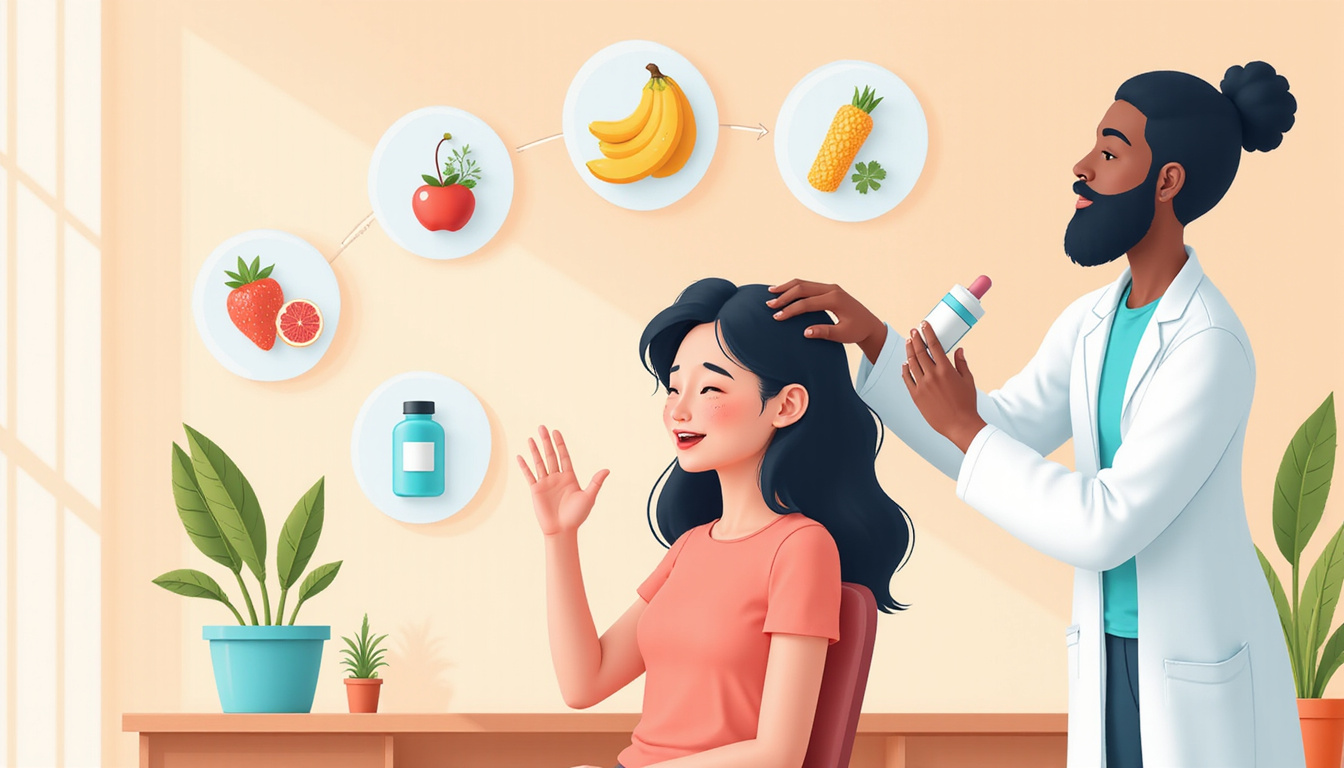
1. Start with a natural, scalp-focused shampoo
Before you move to prescriptions, a shampoo made to care for the scalp is a good first step. In Australia, many choose Watermans Grow Me Shampoo as a non‑medical way to care for the scalp and give hair a thicker look. It helps wake up the scalp, works from the roots, and can work with later medical treatments if needed.
Its active ingredients include:
• Biotin, which helps hair strength
• Rosemary, which is long used to boost scalp blood flow
• Caffeine, which may work against DHT in the follicles
• Niacinamide (Vitamin B3), which supports the skin barrier
• Argan Oil, which conditions and guards the hair shaft
• Allantoin, which calms the scalp
• Lupin Protein, which supports hair strength and volume
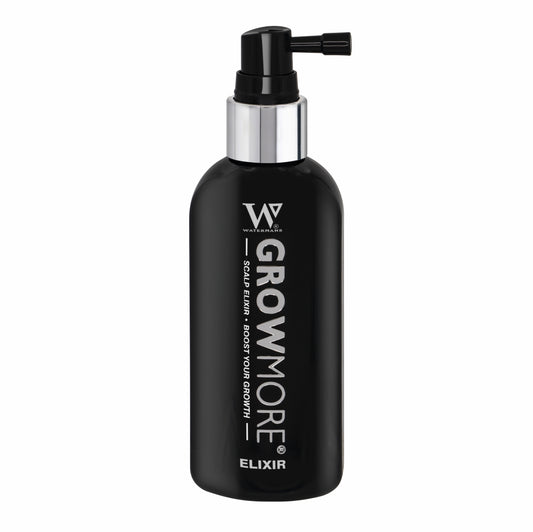
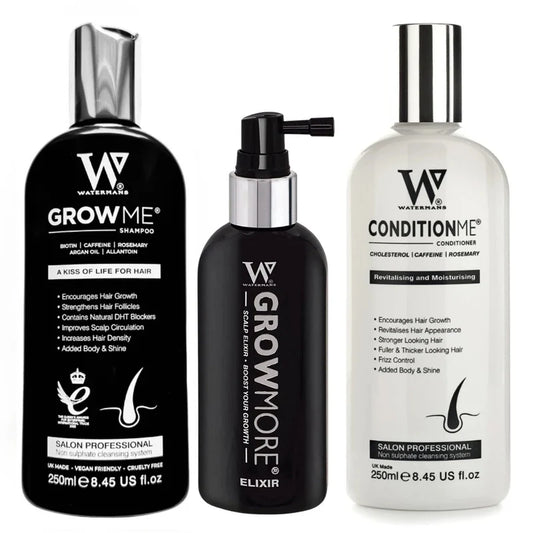
Many people use this shampoo daily. It fits into their routine, avoids strong detergents, and works to thicken hair at the roots. For a complete routine, the Watermans Hair Survival Kit adds a conditioner and a leave‑in scalp formula to support the hair all day.
2. Lifestyle and nutritional basics
Hair loss linked to hormones often ties to much more than just hormones. How you eat, sleep, and handle stress can shape your hair’s health.
Some keys are:
• Protein – hair is mostly keratin, a protein. Aim to eat 1.0–1.2 grams of protein per kilogram of body weight each day.
• Iron – low iron is linked to shedding, especially in women.
• Zinc and selenium – these help the thyroid and hair follicles work well.
• Vitamin D – low levels may relate to hair issues.
• B vitamins – especially B12 and folate, which support cell growth.
If hair loss seems new or worse, ask your GP for tests such as a full blood count, iron studies, thyroid function, vitamin D, B12, folate, and possibly measures for blood sugar or insulin.
A healthy diet, such as one with many vegetables, fruits, olive oil, legumes, whole grains, fish, and nuts, may help balance your hormones and support the scalp.
3. Managing hormone conditions
When PCOS, menopause, or other hormone issues drive hair loss, a doctor can help with treatment that addresses the cause.
For PCOS and extra androgens, a doctor may use:
• Contraceptive pills with low androgen effects to cut ovarian androgen production
• Anti‑androgen medicines like spironolactone or, in some cases, cyproterone acetate
• Insulin‑sensitive drugs such as metformin if needed
For perimenopause and menopause, hormone therapy may help, yet the effect can vary with the type and how you take it. In every case, work with a doctor who knows how hormones affect hair.
4. Medications for the follicles
Some treatments work directly on hair follicles.
• Topical minoxidil comes as a lotion or foam (2% or 5%). It helps keep the hair in the growth phase and makes hair thicker. It may seem to cause extra shedding at first but usually works by 6–12 months, though you must keep using it.
• Men may use finasteride to lower scalp DHT. This pill (usually 1 mg per day) can slow hair loss but is not for women who may become pregnant. Side effects may occur in some men.
• In women with high androgen levels, doctors sometimes use anti‑androgen medications such as spironolactone or cyproterone acetate. These require careful medical oversight and usually work with contraception.
5. In‑clinic and advanced options
When hair loss is more advanced or treatment at home is not enough, clinics offer more choices.
• Platelet-rich plasma (PRP): A small amount of your blood is spun down to concentrate platelets. The platelets are then injected into the scalp to wake up follicles.
• Low-level red or near‑infrared laser therapy is available in clinics or as home devices. It may boost follicle activity.
• Hair transplantation moves follicles from a strong area (often the back of the scalp) to thinning areas. This works best when hormones are in balance.
Even with advanced treatments, daily care with a shampoo like Watermans Grow Me remains key.
Daily Haircare Tips for Sex Steroid Alopecia
Daily care can help your hair or add extra stress. Choose gentle care routines.
• Wash with a mild, scalp‑focused shampoo such as Watermans Grow Me.
• Avoid tight ponytails, buns, or braids that strain the hair.
• Don’t brush too hard, especially when hair is wet.
• Dry your hair with a soft towel or a cotton t‑shirt.
• Use a wide‑tooth comb instead of a fine brush for detangling.
For colouring or chemical treatments, spread out sessions and ask your colourist for gentler methods. Avoid too much bleaching or strong straightening as these can weaken fine hair.
Styling tricks like volumising near the roots, layered cuts, dark roots with subtle highlights, and light volumising products can hide thinning areas.
A stylist who knows hormone‑linked hair changes can help you look your best while you care for the root causes.
Prevention Tips: Protecting Hair Through Hormonal Shifts
You may not change your hormones completely, but you can care for your follicles during shifts.
1. With a Family History
• Begin a gentle, scalp‑friendly routine in your teens or early twenties. Use a supportive shampoo like Watermans Grow Me and eat well.
• Check your hairline and crown with photos every 6–12 months.
• Talk with your GP or dermatologist if you see a widening part or quick thinning.
2. Before, During, and After Pregnancy
• Build up your iron, vitamin D, and B12 levels before you try for a baby.
• Use a gentle haircare routine through pregnancy.
• Expect some shedding 3–4 months after birth. Continue using scalp care and avoid quick, harsh diets.
• If hair does not improve by 9–12 months postpartum, ask your doctor about sex steroid alopecia.
3. With Contraception Changes
• Ask your prescriber about contraception with lower androgen effects if you have hair loss.
• When you start or stop a hormonal method, keep track of your hair each month for 6–9 months.
• Use a steady scalp routine and a balanced diet. If thinning grows obvious, see a doctor sooner rather than later.
4. During Perimenopause and Menopause
• In your 40s and beyond, check your blood for iron, vitamin D, and thyroid status.
• Review your hair and scalp every year.
• If menopausal signs appear, talk with someone who knows hormone effects on hair.
• Keep a routine with Watermans Grow Me Shampoo or the full Hair Survival Kit and balance your diet with strength training.
5. If Using Testosterone or Anabolic Steroids
• Work with your doctor about your family history and the need for treatments that limit DHT.
• Start scalp care early, even before hair loss appears.
• Consider the dose, as lower doses and short use generally hurt less.
A Simple Plan if You Suspect Sex Steroid Alopecia
If you see changes in your hair, try these steps:
-
Document your hair now
• Take clear photos (front, sides, crown) in good light.
• Repeat every 3–6 months. -
Start a scalp-support routine
• Use Watermans Grow Me Shampoo regularly.
• If you want a complete system, choose the Hair Survival Kit.
• Avoid tight hairstyles and harsh chemicals. -
Check key blood markers
• Ask your GP for iron studies, vitamin D, thyroid work, and tests for B12 and folate.
• Check androgens and SHBG if PCOS is suspected. -
Review your hormone use
• Look at changes in contraception, pregnancy or postpartum status, or use of testosterone or steroids. -
Get the basics right
• Eat enough protein and micronutrients.
• Manage your weight and blood sugar well.
• Reduce stress and sleep well. -
Ask about medical treatments if needed
• Discuss minoxidil, anti‑androgens, or hormone therapy with your doctor.
• In some cases, ask if PRP or laser therapy might work. -
Give treatments time
• Hair grows slowly. Try to wait at least 6–12 months before judging progress. Use photos and notes to compare results.
FAQ: Sex Steroid Alopecia and Hormone-Linked Hair Loss
Q: Is sex steroid alopecia reversible?
A: The hair loss can be partly reversed when it is caught early, hormonal triggers are managed, and the hair follicles have not fully shut down. You may see less shedding, thicker hair, and better scalp coverage. Advanced miniaturisation is harder to reverse. Early care with water-based shampoo and treatment from a doctor keeps more hair in place.
Q: What is the difference between sex steroid alopecia and androgenetic alopecia?
A: They share many signs. Androgenetic alopecia is often called pattern baldness and has a genetic root. Sex steroid alopecia arises when shifts in hormones—whether from contraception, pregnancy, menopause, or testosterone therapy—affect the hair. Many people may have both types at once.
Q: Can natural products really help with hormone-driven hair loss?
A: Natural hair products cannot replace medical care when hormone imbalances are strong. They do help improve the scalp environment, thicken the look of hair, and work with treatments from a doctor. Watermans Grow Me Shampoo, with its blend of biotin, rosemary, caffeine, niacinamide, argan oil, allantoin, and lupin protein, is made to boost scalp care and help you see thicker hair.
Take Action: Care for Your Hair and Hormones Today
If you see signs like postpartum shedding that does not stop, thinning during perimenopause, hair loss with PCOS, or rapid loss after starting testosterone or contraception, know that you may have sex steroid alopecia. You can:
• Work with your GP or specialist to address hormone issues.
• Improve your diet, sleep, and stress habits.
• Use a daily routine with a targeted shampoo like Watermans Grow Me Shampoo to support your scalp and hair.
Start with this daily step and then meet with a trusted health professional to check blood tests, hormone levels, and, if needed, start a treatment plan. With steady care and early action, many people slow hair loss, regain thickness, and feel more in control of their hair and hormone health.