androgen receptor expression predicts aggressive tumors and guides therapy
Androgen receptor expression now stands as one key marker in oncology.
Prostate cancer and some breast cancers show cells with high receptor levels.
Doctors check not only if a tumour has hormone sensitivity but also count receptors.
They ask: How many receptors exist? How active do they work? What do these facts say about outcomes and treatment?
In this guide you see how androgen receptor expression
• Helps mark tumours that grow fast
• Aids in choosing and adjusting treatment plans
• Links with processes like hair follicle cycles and hair loss
• Opens paths for both drug and non‑drug care such as Watermans Grow Me Shampoo for scalp support
If you seek a clear, people‑first view that joins the science of receptors with real effects—from cancer care to hair care—you will follow this step‑by‑step article.
What is androgen receptor expression?
The androgen receptor in simple terms
The androgen receptor (AR) is a protein in many cells.
It links with androgens like testosterone and DHT.
After binding, AR moves to the cell nucleus.
It then flips genes on or off.
Androgen receptor expression shows how many receptors a cell or tissue makes.
Its level differs between organs (for example, prostate versus liver), between normal cells and cancer cells, and from person to person.
Levels of AR and its mode of work can affect
• Cell growth and survival
• Tumour responses to hormones and targeted drugs
• Hair follicle activity, such as thickness and shedding
How androgen receptor expression is measured
Doctors and researchers often use these methods to count AR:
• Immunohistochemistry – They stain a biopsy and note many cells light up with AR, and how bright this light is.
• mRNA analysis – They measure AR gene work with RT‑PCR or RNA sequencing.
• Genetic tests – They check for AR mutations, extra copies of the gene, or splice variants.
Reports show results as
• AR present or not
• A percentage of stained cells
• A score that joins brightness and cell count
These numbers help doctors see cancer behaviour in several types.
Why androgen receptor expression matters in cancer
A main player in prostate cancer biology
Prostate cells need androgens and the receptor for growth.
In prostate cancer, this AR path plays a big role from the start:
• In early disease, tumours show AR.
They respond to treatments that lower testosterone or block the receptor.
• In advanced disease, tumours may boost AR expression, change AR, or make AR variants that work even with low hormone levels.
High AR in prostate tumours tends to match
• Faster disease progression
• A higher chance of castration‑resistant growth
• A shorter time before spread and loss of treatment effect
This link means that doctors now check AR levels and receptor signals along with PSA or the Gleason score.
Androgen receptor expression in breast cancer
Though discussions often focus on oestrogen and progesterone receptors, AR also plays its part in some breast cancers.
This is seen especially in:
• Triple‑negative breast cancers that show AR
• Some luminal types where AR talks with the oestrogen path
In some cases, AR may mark a type of cancer that shows special reactions to drugs.
Doctors study drugs that block AR, much like in prostate cancer, mainly in AR‑positive triple‑negative cases.
Thus, AR is not just about prostate cancer. It now works as a wider marker in cancer care.
How androgen receptor expression predicts fast‑growing tumours
AR expression as a marker for outcomes
A prognostic marker shows how cancer might act, no matter the treatment.
In many cases, AR levels serve this role:
• In prostate cancer, high AR, gene boosts, or strong nucleus signals connect with
– Higher tumour grades
– More chance of cancer coming back after surgery or radiotherapy
– A shorter life span
• In AR‑positive breast cancers, sometimes AR shows a better outlook.
In other cases, especially in some triple‑negative types, strong AR work can match a disease that resists treatments.
The details count. Not every AR presence is “bad.” Yet in many solid tumours, AR helps mark a group of cancer cells that depend on androgens and work hard to survive.
Why high AR can push aggressiveness
Some links tie strong AR presence with fast tumour growth:
-
AR numbers give more cells a way to react to even a little hormone.
Cancer cells press on with division despite hormone treatments. -
Under treatment pressure, tumours may boost AR or change it to work without hormones.
This helps the cancer keep going when old treatments slow its work. -
AR talks with signals like PI3K/AKT, MAPK, and Wnt.
Such links raise signals that help cells survive, spread, and resist treatment.
For patients, high AR often means the cancer needs a stronger or more focused plan.
How androgen receptor expression guides therapy choices
Personalising hormone and targeted treatments
When AR expression is known, it helps pick treatment features:
-
For hormone‑sensitive prostate cancer with high AR, doctors may choose:
– Androgen deprivation therapy (ADT)
– New AR‑targeted drugs like enzalutamide, apalutamide, or darolutamide
They use these earlier and sometimes in a combined way for aggressive, AR‑rich tumours. -
For castration‑resistant prostate cancer with high AR, the cancer might still drop when treated with strong blockers or drugs that lower androgen levels.
Testing for AR levels and variants helps decide if extra AR‑targeted lines might help. -
In AR‑positive breast cancer cases, especially in some triple‑negative types, doctors can opt for clinical trials or off‑label choices that block AR.
AR levels help mark those who might gain from this route. -
AR results join other markers:
• PSA, Gleason score, imaging in prostate cancer
• Oestrogen, progesterone, HER2, Ki‑67 in breast cancer
• Genomic panels and molecular tests
This mix helps pick treatment force and whether to add chemotherapy, targeted drugs, radiotherapy, or a blend of these.
Androgen receptor expression and hair biology
The link between AR, DHT and hair follicles
The same receptor that works in cancer also plays a role in hair growth.
This fact is clear in areas like the scalp.
In pattern hair loss, specific hair follicles show a strong gene for DHT sensitivity.
DHT joins these receptors in the follicle and then:
• Shortens the hair’s growth phase
• Shrinks the hair follicle
• Causes the hair to thin over time
Follicles with high AR or with AR gene changes tend to show
• Early hair thinning
• A faster loss of hair
Although this path is separate from cancer, both share the same AR work.
Why support for scalp care matters
Since AR cannot be seen or felt directly, people notice its work by signs:
• Thinner hair
• Cycles of shedding
• Lower hair volume
While medicines like finasteride or dutasteride work on hormones inside the body, many choose to start with gentle, direct care products.
Here is where haircare that supports the scalp and follicles proves its worth.
Watermans Grow Me Shampoo: a non‑medical first‑line support for hair loss
Before using hormone drugs or strong prescriptions for hair loss linked to AR, many choose a direct, cosmetic option.
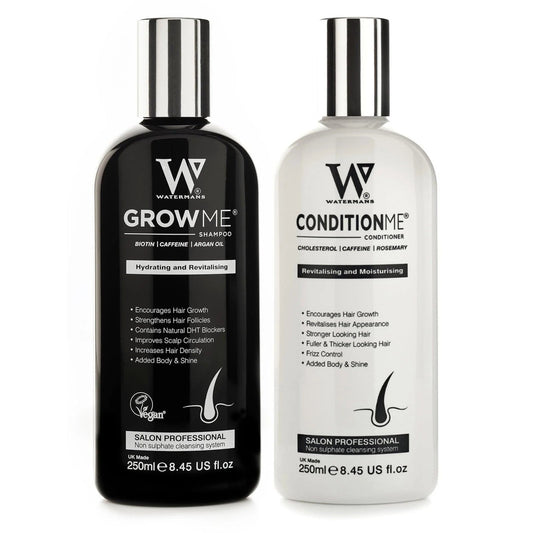
Watermans Grow Me Shampoo gives natural, direct care for the scalp and hair follicles.
You can see it here:
Watermans Grow Me Hair Growth Shampoo
(https://watermanshair.com.au/products/hair-growth-shampoo)
Key active ingredients and their roles
Watermans Grow Me Shampoo works to lift the scalp and add volume from the roots.
It combines these ingredients:

• Biotin
– Supports hair’s keratin structure
– Often used to build stronger hair
• Rosemary
– Helps boost blood flow and scalp work
– Some data show it may match certain medicated treatments for hair loss
• Caffeine
– May counter local DHT effects at the follicle in lab tests
– Found in creams aimed at supporting hair density and length of the growth phase
• Niacinamide (Vitamin B3)
– Supports the skin’s barrier and small blood vessels
– Helps keep the scalp calm and balanced
• Argan Oil
– Offers fatty acids and antioxidants
– Helps keep the hair shaft conditioned and strong
• Allantoin
– Brings a soothing touch
– Helps keep the scalp comfortable
• Lupin Protein
– A plant protein that builds up hair strands
– Works from the roots up to add volume and strength
Together, these parts give support to hair that might suffer from AR effects, while skipping changes to whole‑body hormones.
Why start with a topical, non‑medical option?
For people who see thinning hair that can link back to high AR in the scalp, a product like Watermans Grow Me Shampoo gives:
• A way that works at the surface (no effect on whole‑body hormones)
• A good match with most daily routines
• A chance to add density, thickness, and scalp calm
Since it is a cosmetic product, people use it
• As an early step before turning to stronger hormone or medical care
• Alongside professional advice for those on hormone treatments
Beyond shampoo: a routine with Watermans Hair Survival Kit
Many users put the shampoo together with other products for full care.
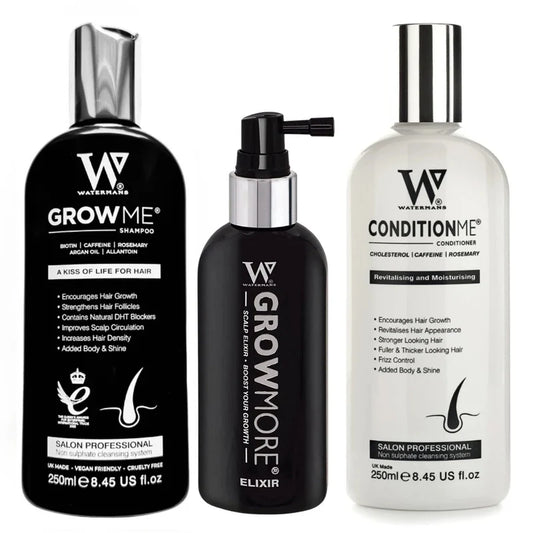
The Watermans Hair Survival Kit brings this set together:
• Grow Me Shampoo
• A deeply caring conditioner
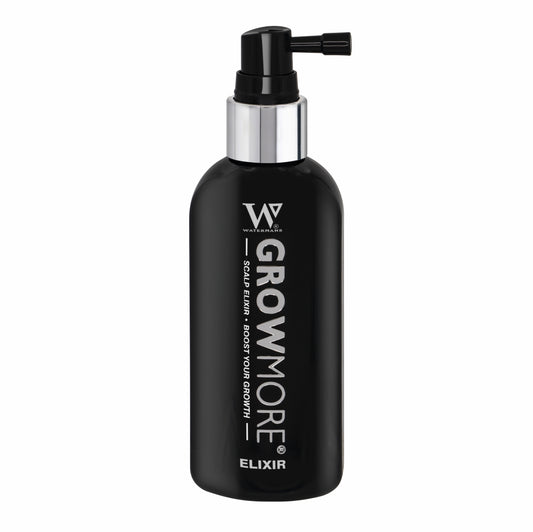
• A leave‑in scalp elixir that adds extra support to the follicle area
This multi‑step care fits best when:
• You see widespread thinning or a receding hairline
• You have a family trend of AR‑linked hair loss
• You get cancer care and want to keep the scalp and hair in good shape (always check with your doctor first)
Cosmetic products do not treat cancer or shift AR expression in tumours.
They help you take clear steps for visible issues like thinning hair which can affect how you feel.
Medical management of AR–driven disease
Systemic therapies for AR‑driven tumours
When AR pushes a tumour’s work, strong medical treatment is needed.
Common choices include:
• Androgen deprivation therapy (ADT)
– Cuts down the body’s testosterone (using LHRH drugs)
– Slows the growth of AR‑positive prostate tumours
• AR antagonists
– Block the receptor directly (for example, enzalutamide, apalutamide, darolutamide)
– Help in both hormone‑sensitive and castration‑resistant cases
• Androgen synthesis inhibitors
– Such as abiraterone, which stops androgen production in glands and tumours
• Chemotherapy and targeted drugs
– Used when AR is high but blocking drugs are not enough
– Often combined with AR targeting for advanced cases
Doctors choose these treatments by looking at tumour stage, AR levels, overall health, and patient choices.
Side‑effects and the role of support care
Medicines that drop hormones or block AR work can bring side‑effects like:
• Tiredness, hot flushes, and shifts in metabolism
• Changes in body shape
• Sexual changes
• Sometimes thinner hair or hair texture shifts
While these effects need close medical check and careful adjustment, support care—including gentle shampoos like Watermans Grow Me—can help with visible hair changes.
Patients should
• Talk with their oncology or urology team
• Choose gentle, scalp‑friendly haircare instead of strong chemicals
• Eat a good diet and try to keep a balanced lifestyle
Lifestyle and self‑care for AR‑related hair concerns
Practical steps you can take
Even though AR is set by genes and body work, some daily steps help protect your hair:
• Gentle hair care
– Avoid tight styles that pull on hair
– Use low heat and mild colour treatments
– Dry hair with a soft towel or T‑shirt, not with rough rubbing
• Pick scalp‑friendly products
– Use shampoos and treatments that feed follicles and add volume, such as Watermans Grow Me Shampoo
– A routine like the Watermans Hair Survival Kit can give whole‑routine care
• Food and blood flow
– Keep enough protein in your meals
– Add iron, zinc, and B‑vitamins as your health adviser suggests
– Stay active to keep blood flow strong
• Get a medical check when needed
– If hair loss comes in patches or suddenly, see a doctor
– Let your doctor know your cancer, hormone therapy, or family hair loss history
Mixing medical and non‑medical steps
For hair concerns that mix with AR‑related issues (like prostate disease or hormone treatments), a mix of care works best:
• Use non‑medical daily support with products like Watermans Grow Me Shampoo
• Keep a doctor’s eye on your treatment when internal factors matter
• Get support for feelings, since hair changes can affect how you see yourself
This mix respects both body signals and the clear impact of changes on your life.
Quick reference: AR expression, tumours and hair
Key points in short:
• The androgen receptor is a protein that joins with testosterone and DHT, and then controls gene work.
• AR expression shows how many receptors exist and how they work in a tissue.
• In prostate cancer, high AR and gene boosts often mark a tumour that grows fast and resists simple hormone-lowering steps.
• Some breast cancers also show AR, which can point to a special type of cancer and guide targeted tests or trials.
• In the scalp, strong AR reaction to DHT is a main cause of pattern hair loss.
• While tumours need strong clinical treatment for AR work, hair issues may get support from choices like Watermans Grow Me Shampoo.
• Using a daily routine, for example with the Watermans Hair Survival Kit, adds step‑by‑step care alongside any medical treatment.
FAQ: AR expression and related issues
-
How does AR expression affect cancer treatment?
AR expression shows how much a tumour depends on androgens to grow.
In prostate cancer, high AR levels call for
• Hormone therapies and AR‑blocking drugs
• Close tracking for resistance and faster changes
• The possible need for extra drugs when the disease grows quickly -
Can changes in AR expression cause hair loss?
Hair loss depends more on how a follicle’s receptors respond to DHT than on the number of receptors alone.
Gene differences in AR and the local scalp work make some people more prone to thinning.
Though you cannot test scalp AR at home, you know by thinning hair, family patterns, and how haircare works. -
Is it safe to use hair growth shampoos during AR‑targeted cancer therapy?
Most cosmetic shampoos and scalp products are safe when you get cancer care.
Always check the label for ingredients you might react to and talk with your doctor if you have scalp issues from treatments.
Watermans Grow Me Shampoo is a topical, non‑medical choice that many find a good start for scalp support while on treatment, once your doctor gives a nod.
Take action: support your hair while you know your body
Knowing AR expression gives clear clues about two linked parts of health:
• How some tumours act and which treatments may work
• How hair follicles react to androgens, which affects thickness, volume, and shedding
Only your medical team can set up the right plan for cancer care.
Yet you control your daily hair and scalp care.
If you see thinning, receding, or less volume—especially if you face AR‑related issues—start with a non‑medical, scalp‑support routine.
You can use Watermans Grow Me Shampoo to lift your scalp and add volume from the roots with biotin, rosemary, caffeine, niacinamide, argan oil, allantoin, and lupin protein.
For a fuller routine, try the Watermans Hair Survival Kit, which adds a conditioner and a leave‑in scalp elixir.
You cannot change your genes or AR expression, but you can choose how to care for your hair and keep your confidence day by day.