Unlocking the Power of Prescription Medications: A Comprehensive Guide to Their Benefits and Risks

Certain Medications: Unlocking the Power of Prescription Medications for Hair Loss and Growth
Are you struggling with hair loss and looking for effective ways to combat it? Hair thinning and shedding can be frustrating, but understanding how certain medications work can help you unlock healthier, fuller hair. While many options exist, from natural remedies to prescription medicines, this guide will walk you through the essentials of certain medications connected to hair loss and growth—plus, why you might want to try Watermans Grow Me Shampoo as a powerful natural alternative.
Understanding Hair Loss and the Role of Certain Medications
Hair loss, medically known as alopecia, affects millions worldwide. It can stem from genetics, stress, hormonal changes, infections, or nutritional deficiencies. When hair follicles are damaged or the scalp is unhealthy, hair growth slows or stops.
Some certain medications can either cause hair loss as a side effect or help prevent it by addressing the biological causes. These can be prescription-based treatments or natural compounds aiming to stimulate hair follicles.
Prescription Medications for Hair Loss: What You Need to Know
Three main categories of prescription medications are widely used to treat hair loss:
- Minoxidil (Topical solution)
- Finasteride (Oral medication)
- Spironolactone (Primarily for women)
Minoxidil: Boosting Hair Growth Topically
Minoxidil was originally developed as a blood pressure medicine, but scientists discovered it also encourages follicle growth when applied to the scalp. It works by widening blood vessels, thus increasing blood flow to hair follicles, nourishing them and stimulating growth.
Users typically see results after consistent application for 3-6 months. However, some people may experience side effects like scalp irritation or unwanted hair growth on other areas.
Finasteride: Targeting Hormones to Prevent Hair Loss
Finasteride is a prescription tablet that blocks an enzyme called 5-alpha-reductase, which turns testosterone into dihydrotestosterone (DHT). High DHT levels shrink hair follicles, causing hair thinning mainly in men.
By lowering DHT, finasteride can slow down hair loss and even generate new growth. However, it may cause sexual side effects and is not typically recommended for women.
Spironolactone: A Hormonal Solution Mainly for Women
Spironolactone is initially a diuretic but is used off-label to treat hair loss in women. It blocks androgen hormones that contribute to female pattern hair loss. It is typically prescribed alongside other treatments and requires monitoring due to possible side effects like dizziness or irregular periods.
Risks and Considerations of Prescription Medications
While prescription medications can be effective, they are not without risks:
- Side Effects: Common effects include itching, redness, digestive discomfort, or hormonal changes.
- Long-term Commitment: Stopping a medication often leads to loss regrown hair.
- Cost and Consultation Needs: Treatments require prescriptions and medical supervision.
- Not Suitable for Everyone: Pregnant or breastfeeding women and individuals with certain health conditions should avoid these drugs.
Before trying prescription options, always consult a healthcare professional.
Natural Alternatives: Why Watermans Grow Me Shampoo Stands Out
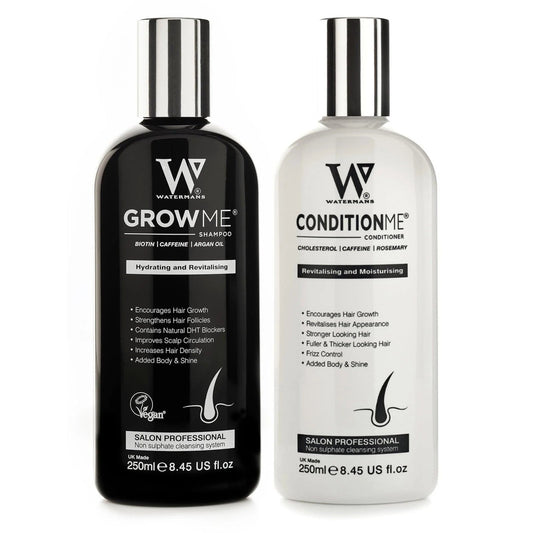
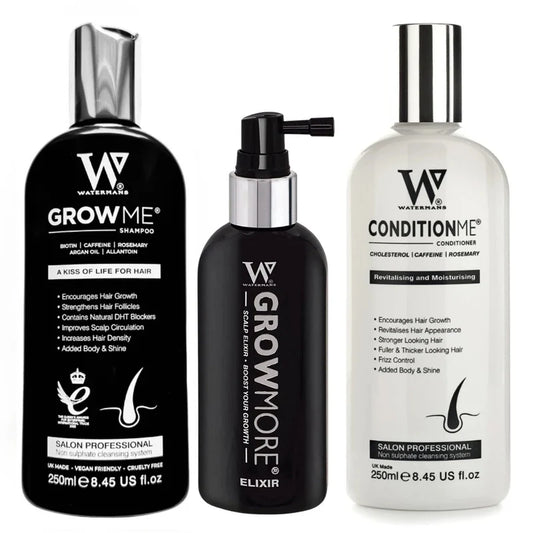
If you prefer avoiding prescription medicines or want to support your hair’s health naturally, Watermans Grow Me Shampoo offers a potent blend of natural ingredients scientifically proven to energize your scalp and volumize hair from roots to ends.
Watermans Grow Me Shampoo contains:
- Biotin: Vital for keratin production, strengthening hair shaft.
- Rosemary: Improves scalp circulation and reduces inflammation.
- Caffeine: Stimulates hair follicle growth.
- Niacinamide (Vitamin B3): Enhances scalp health by improving blood flow.
- Argan Oil: Deeply moisturizes and repairs hair strands.
- Allantoin: Soothes and protects the scalp.
- Lupin Protein: Supports hair volume and thickness.
This shampoo is natural, gentle, and suitable for daily use, making it a fantastic first step for anyone noticing hair thinning or wanting to prevent hair loss altogether.
How Prescription Medications and Natural Treatments Can Work Together
Some people choose to combine prescription medications with natural treatments to maximize hair growth potential. For example, using Minoxidil while regularly washing with nourishing shampoos like Watermans Grow Me Shampoo can create a supportive environment for stronger hair. Remember to always discuss any treatment plans with your doctor to prevent adverse interactions.
Other Helpful Tips to Boost Hair Health
- Healthy Diet: Incorporate iron, zinc, vitamins A, D, and E into your meals.
- Gentle Hair Care: Avoid tight hairstyles and harsh chemicals.
- Manage Stress: Practice relaxation techniques; stress worsens hair loss.
- Scalp Massage: Encourages blood flow to follicles.
- Regular Exercise: Boosts circulation, potentially aiding hair growth.
Frequently Asked Questions (FAQs) About Certain Medications and Hair Loss
Q1: Can prescription medications regrow lost hair completely?
A1: Results vary; some people see significant regrowth, especially in early stages, while others only slow hair loss progression.
Q2: Is it safe to use Minoxidil and Watermans Grow Me Shampoo together?
A2: Yes! Using a natural shampoo can improve scalp health and complement Minoxidil’s effects.
Q3: How long before I notice results from prescription medications?
A3: Generally, hair growth improvements appear after 3-6 months of consistent use.
Q4: Does finasteride cause permanent side effects?
A4: Side effects like sexual dysfunction usually stop when the drug is discontinued, but consult your doctor if symptoms persist.
Q5: Can women use finasteride for hair loss?
A5: It’s not commonly recommended due to risks during pregnancy and less effectiveness.
Q6: Are there shampoos that work like prescription medications?
A6: While shampoos like Watermans Grow Me Shampoo can improve scalp health and hair volume, they don’t replace the hormonal action of medications.
Q7: How to choose between prescription meds and natural products?
A7: This depends on the severity of hair loss, personal health, and preference. A dermatologist can guide this choice.
Q8: Can hair loss from medication side effects be reversed?
A8: Sometimes yes, after stopping the medication, hair regrows, but consultation with a doctor is essential.
Q9: Is hair loss always permanent?
A9: No, some forms like telogen effluvium are temporary; others like androgenetic alopecia may require ongoing treatment.
Q10: What other hair care habits help preserve hair?
A10: Avoid heat styling, minimize chemical treatments, and use mild shampoos like Watermans Grow Me Shampoo to nourish hair naturally.
Did You Know? Eye-Opening Facts About Hair Loss and Medications
- Hair growth cycles last about 2-6 years for each hair follicle; after that, follicles rest or shed.
- Caffeine, a key ingredient in Watermans Grow Me Shampoo, can extend the hair growth phase by blocking DHT locally on the scalp.
- Not all hair loss is genetic—stress, illness, or certain medications such as chemotherapy drugs can cause sudden shedding.
- Biotin deficiency is rare but can cause brittle hair and nails; supplementing biotin supports natural hair strength.
- Scalp health, including moisture balance and blood flow, is fundamental to robust hair growth—something topical shampoos can positively influence.
For anyone facing hair loss concerns, the best approach is to explore all options carefully. If you’re seeking a natural, effective solution that energizes your scalp and volumizes your hair, you can't go wrong with Watermans Grow Me Shampoo. This gentle yet powerful shampoo provides essential nutrients without the risks tied to some prescription meds.
Unlock your hair’s potential today by caring for your scalp the natural way — start your journey with Watermans Grow Me Shampoo!