DHT test: How Your Levels Predict Hair Loss and Treatment Options
Understanding what a DHT test is and what your results mean can change how you view hair loss or thinning hair. In Australia, many ask their GP or dermatologist to check hormone levels, yet they can feel lost about when to get a DHT test, what happens during the test, or how it ties to hair loss, acne, libido, and health.
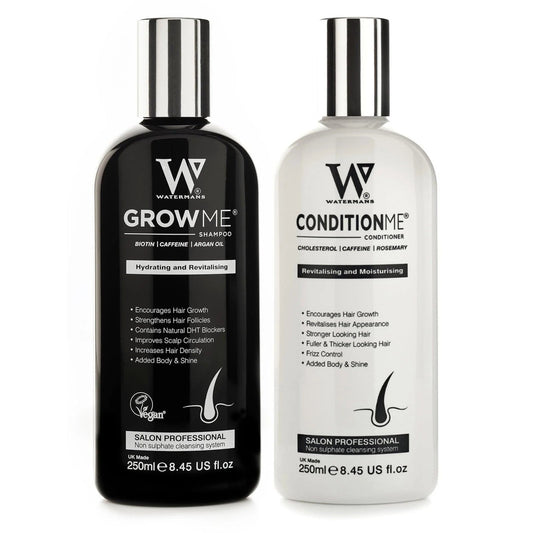
This guide uses plain words and shows you how to use your results with a people‑first plan. One simple start is a gentle shampoo like Watermans Grow Me Shampoo from watermanshair.com.au. Its natural mix supports thinning hair and a calm scalp.
What Is DHT and Why Does It Matter for Hair Loss?
h2: Understanding DHT (Dihydrotestosterone)
DHT is a strong androgen hormone built from testosterone. An enzyme called 5‑alpha‑reductase changes testosterone into DHT in these places:
• Hair follicles
• Skin
• Prostate (in people born male)
• Other androgen‑sensitive tissues
DHT helps shape male traits during puberty. It helps form:
• Facial and body hair
• A deeper voice
• The male reproductive system
Later in life, extra DHT in the scalp links to a type of hair loss called androgenetic alopecia. This is often seen as:
• Male pattern baldness
• Female pattern hair loss
DHT attaches to hair follicle receptors, especially in those with sensitive genes. This makes the hair follicle shrink, and the hair becomes thinner and shorter. In time, the follicle may stop working. That is why DHT is a main point in many talks about hair loss and why many ask about a DHT test when they see more shedding or a receding hairline.
What Is a DHT Test?
h2: The basics of a DHT blood test
A DHT test is a simple blood test that checks the amount of dihydrotestosterone in your blood. Doctors may order it along with tests that check:
• Total and free testosterone
• SHBG (sex hormone binding globulin)
• Oestrogen or estradiol
• LH and FSH (pituitary hormones)
• Prolactin
Sometimes, DHT is checked in saliva, yet blood tests are more common in clinics.
You might hear the test called:
• Serum DHT test
• Dihydrotestosterone level test
• Androgen panel (a set of hormones where DHT is one)
When Should You Consider a DHT Test?
A DHT test does not always help diagnose common hair loss. It works best when used in some cases.
h2: Common reasons your doctor might order a DHT test
Your GP, dermatologist, or endocrinologist might suggest a DHT test if you have:
• Early or fast hair loss
– A receding hairline or thin hair at a young age, especially if many in your family have it.
• Severe or stubborn acne
– This happens in adults when hormones may play a role.
• Signs of extra androgens in women, such as:
– More facial or body hair
– Thinner hair on the scalp
– Irregular periods
– Concerns with polycystic ovary syndrome (PCOS)
• Low libido or sexual function issues
– These occur when a wider hormone check is needed.
• A check before or during hormone therapy
– For gender‑affirming treatments or prostate safety in men.
h2: Do you need a DHT test for hair loss diagnosis?
In common male or female hair loss, many dermatologists rely on:
• History of illness
• Family history
• A look at the scalp (sometimes with a dermatoscope)
In these cases, a DHT test is not needed to confirm pattern hair loss. Hair loss often comes from how hair follicles react rather than the blood level of DHT. Still, some clinicians add DHT to get a fuller view. This is done when:
• The hair loss pattern is different
• It happens very early or suddenly
• Other hormone signs appear
How Is a DHT Test Performed?
h2: Step-by-step: what to expect
A DHT test in Australia is simple:
-
Referral
Your doctor shows if the test fits your case and gives a lab form. -
Blood draw
A nurse draws a small amount of blood from your arm. Most often, this takes place in the morning when androgens are stable. -
Laboratory analysis
The sample goes to the lab, often as part of a hormone panel. Results might come in 1–3 business days. -
Review with your doctor
Your doctor looks at the test with your symptoms, other hormone tests, age, sex, and any treatment.
h2: Do you need to fast for a DHT test?
Fasting is not mandatory, yet many labs or doctors ask for a morning sample taken after a fast to lessen any change. Check your lab form or ask at the clinic.
DHT Test Results: What Is a Normal Range?
h2: Typical DHT ranges (and why they vary)
No one range fits every lab. Each lab uses its style and numbers. Also, values vary with age, sex, or method. For example, adult numbers might be:
• Males (adult): about 0.3 – 3.0 ng/mL
• Females (adult): much lower, around 0.05 – 0.3 ng/mL
Your report shows its own limits. Talk with your doctor to see if your level is fine for you.
h2: High DHT levels
High DHT may show with:
• Faster male pattern hair loss
• More hair thinning in women
• Acne and oily skin
• Extra facial or body hair in women
• Prostate enlargement in men
Remember:
• Some people with normal or low DHT still lose hair if their follicles are very sensitive.
• Others with higher DHT keep full hair when their follicles resist the change.
h2: Low DHT levels
Low DHT happens in:
• People who take 5‑alpha‑reductase inhibitors (like finasteride or dutasteride)
• Some hormone disorders
• Certain types of low testosterone (hypogonadism)
Very low DHT may lead to:
• Less body hair
• Lower libido or sexual function in some
• Changes in muscle mass and mood, based on other hormones
Your doctor is the best guide to know if your DHT level is right for you.
How DHT Levels Predict Hair Loss Risk
h2: Genetics + DHT = your personal hair story
The DHT test gives one snapshot of hormones. But your genes help decide hair loss most. In androgenetic alopecia, the key is:
• How your hair follicles feel to DHT
• How many receptors are on your follicles
• How these receptors work over time
High DHT can push hair loss, but it does not tell the whole story.
Think of it like this:
• DHT is the fuel.
• Your genes form the engine.
Sensitive follicles can lose hair even when DHT is only average. With less sensitivity, even higher DHT may not thin hair.
h2: Early warning signs to watch for
Watch for signs like:
• A receding hairline at the temples
• Thinner or wider parting (common in women)
• Thinning at the crown
• Extra hair in the drain or on your pillow
• A thinner ponytail
If you see these signs, act soon. Early steps keep more hair. Your DHT test can help shape a plan that fits you.
Treatment Options Guided by DHT Testing
Your DHT level is one piece in the plan. It helps point to the kind and level of care you may choose. A people‑first plan usually starts with care for the scalp and hair before moving to stronger steps.
h2: 1. Natural and non‑medical support (start here)
For many who worry about hair loss, a best step is to:
• Care for the scalp
• Strengthen the hair shaft
• Lessen breakage and shedding
• Support a fuller look
This is where Watermans Grow Me Shampoo from watermanshair.com.au fits well.
Why start with Watermans Grow Me Shampoo?
Watermans Grow Me Shampoo is a well-known, non‑medical choice for thinning hair and to help scalp health. Its mix has:
• Biotin – a key B‑vitamin that helps build keratin in hair.
• Rosemary – known to bring blood flow to the scalp and help hair follicles.
• Caffeine – may give energy to hair follicles and work against some DHT effects.
• Niacinamide – helps keep the skin barrier working well for a calm scalp.
• Argan Oil – smooths hair and nourishes it so it does not break.
• Allantoin – soothes the scalp for those with sensitive skin.
• Lupin Protein – plant protein that helps give strength and volume to hair.
The mix helps to:
• Give root volume
• Freshen the scalp
• Support thicker hair over time
• Work well with other hair health steps
You can learn or buy more at Watermans’ Australian site:
Watermans Grow Me Shampoo
h2: 2. Lifestyle support that works with DHT control
Even when your DHT is high, not every care must use medicine. Your overall health also helps your hair. Think on:
• Nutrition
– Eat enough protein, iron, zinc, vitamin D, and B‑vitamins. Low levels can boost shedding even with normal DHT.
• Stress care
– Long stress can push more hair into the resting phase. Good sleep, exercise, and clear work limits help.
• Scalp care
– Wash gently, avoid harsh chemicals, and keep hairstyles loose to protect follicles.
Mix lifestyle care with a regular haircare routine like Watermans Grow Me Shampoo for a strong base no matter your hormones.
h2: 3. Medical treatments that target DHT
If hair loss grows and your test or signs point to a strong DHT role, your doctor may mention medicines that lower DHT. These drugs work well but can bring side effects and need careful use.
5‑alpha‑reductase inhibitors (e.g. finasteride, dutasteride)
These medicines block the enzyme that makes testosterone turn into DHT. This drop in DHT levels helps the scalp and prostate.
• Finasteride
– Often used for male pattern hair loss. Taken by mouth, it can lower DHT and slow hair loss in many men.
• Dutasteride
– A stronger blocker sometimes used off‑label for hair loss.
Possible side effects include:
• Lowered libido or sexual function in some
• Mood changes for a few
• Effects on fertility that usually reverse when stopping
These drugs are not used for women who might become pregnant without extra care. Talk with your doctor about possible risks and checks.
Topical anti‑androgens
At times, especially for women, doctors may offer anti‑androgen creams. These work on the scalp to lessen androgen effects without many effects on the whole body.
h2: 4. Treatments that work along with DHT care
If you and your doctor choose DHT‑lowering drugs, other treatments can join in:
• Topical minoxidil
– An over‑the‑counter product that can help make hair stay in the growing phase. It does not change DHT but works with DHT‑lowering steps.
• Low‑level laser therapy (LLLT)
– Devices like laser caps or combs send light that may help hair cells and support thicker hair.
• Microneedling
– Done with care, this method can wake up the scalp and help absorbing topicals.
Keep a regular scalp care routine. A shampoo like Watermans Grow Me, used every time, helps the scalp stay in good shape and supports thicker, stronger hair along with other treatments.
Integrating a DHT Test into a Holistic Hair Loss Plan
h2: The role of your GP, dermatologist, or endocrinologist
In Australia, the best use of a DHT test comes with a full check. Your doctor may:
- Ask about your overall health and history
- Ask about:
– Family hair loss
– Menstrual history (for women)
– Medicines and supplements
– Stress or recent sickness - Look at your scalp, sometimes with a dermatoscope for close details.
- Order blood tests that check:
– DHT, testosterone, SHBG
– Thyroid levels
– Iron (ferritin)
– Vitamin D, B12, and others when needed
Your DHT result then helps shape the plan for you.
h2: Why self‑diagnosis with DHT alone can mislead
It may seem easy to see a number and worry or think high DHT means you will lose all hair. In fact:
• A “high” DHT in one lab can be normal in another.
• The hair follicle’s touch to DHT is what counts, not just the number in blood.
• Many things, like nutrition, stress, or other health issues, matter as well.
That is why using the test as one tool is best. You need a full check with your doctor.
Practical Steps After Getting a DHT Test
Once you hold your result, here is what to do:
h2: Step 1 – Talk about your DHT level with your doctor
Ask questions like:
• Is my DHT level high, normal, or low for my age and sex in this lab?
• Does it match the hair loss I see on my scalp?
• Do you see classic pattern hair loss or something else?
h2: Step 2 – Choose where to begin
Many start with a step‑by‑step plan. They begin with non‑medical, low‑risk choices and move on only if needed.
A simple plan could be:
-
Foundational care (for everyone)
– Improve diet and iron levels
– Manage stress and sleep
– Avoid harsh hair styles and tight hair
– Start a care routine with Watermans Grow Me Shampoo to help scalp and hair -
Add topicals if needed
– Minoxidil (over‑the‑counter in some places)
– Consider devices like LLLT if the budget allows -
Try DHT‑lowering medicines only when needed
– Discuss finasteride or dutasteride if you match the criteria
– See a specialist if you are a woman with extra signs
Your doctor will check progress to see what to change.
h2: Step 3 – Watch your progress with care
Hair growth is slow. Any step – from shampoo to pills – can take 3–6 months before it shows a change.
Try these tips:
• Take clear photos of your hairline, crown, and part every 4–6 weeks.
• Note if you see less hair on the drain, pillow, or brush.
• Watch the thickness of your ponytail or how your hair feels.
Keep using your scalp care routine (for example, Watermans Grow Me Shampoo) and check in with your doctor if you use medicine.
Why Starting with Scalp and Haircare Still Matters
Even when a DHT test checks hormones, much of daily hair care matters for wear and breakage. You cannot change your genes, but you can change:
• How gentle your hair products are
• If your scalp feels calm and well
• How much breakage you cause with heat, chemicals, or tight styles
h2: Watermans Grow Me Shampoo as a cornerstone of your routine
In Australia, many turn to Watermans Grow Me Shampoo for a natural way to help hair look fuller and stronger. Its mix – with biotin, rosemary, caffeine, niacinamide, argan oil, allantoin, and lupin protein – works to:
• Give energy to the scalp
– This helps set up a strong cycle for hair growth.
• Thicken hair at the roots
– This gives the appearance of full hair.
• Strengthen hair fibers
– This helps hair resist daily wear.
When used every time, it fits well whether you later add medical treatments guided by your DHT level.
If you need a full routine, the
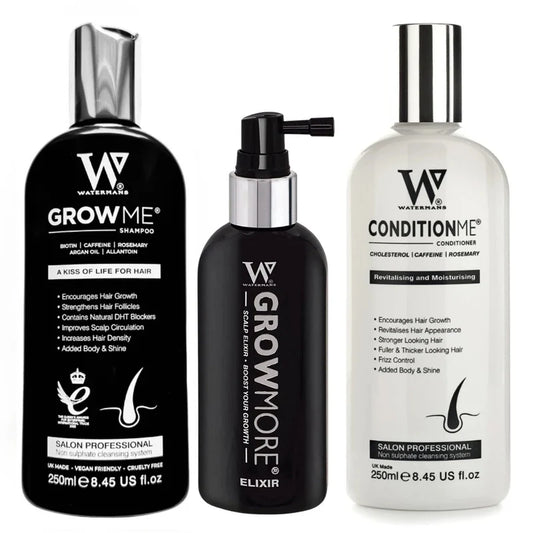
Watermans Hair Survival Kit
brings together:
• Shampoo
• Conditioner
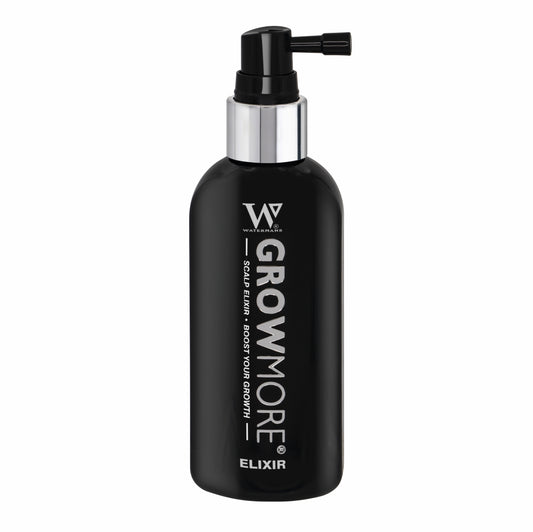
• A leave‑in scalp formula that gives extra support
This three‑step kit makes your daily care simple while giving your hair and scalp the best support.
Other Health Conditions Linked to DHT
h2: Prostate health (for those born male)
DHT works in the prostate. High DHT can bring:
• Benign prostatic hyperplasia (BPH)
• Symptoms like slow or frequent urination
This is one reason why 5‑alpha‑reductase inhibitors were first made to treat prostate issues. People later found they helped hair, too.
h2: PCOS and hyperandrogenism (for women)
In women, extra androgens (including DHT) can show as:
• Polycystic ovary syndrome (PCOS)
• Irregular periods and possible fertility problems
• Acne and extra facial or body hair
• Thinner scalp hair
Guidelines in Australia sometimes suggest a full hormone and health check when PCOS is a worry. In some cases, DHT is part of that check.
If your test shows high DHT and you have extra periods, weight changes, or hormone signs, talk with your GP about further checks.
Myths and Misconceptions Around DHT Tests
h2: Myth 1: “If my DHT test is normal, it cannot be androgenetic alopecia.”
That is untrue. Many with common male or female pattern hair loss show normal DHT levels. The key is how the hair follicles feel to DHT.
h2: Myth 2: “If my DHT is high, I will lose all my hair.”
This is not set. High DHT can raise risk, but:
• Some keep full hair with high levels
• Others thin with only a small rise
h2: Myth 3: “Only medicine can help when DHT is the cause.”
Medicine is one choice. A full plan can mix:
• Scalp care products like Watermans Grow Me Shampoo
• Lifestyle and diet changes
• Over‑the‑counter products and professional care
• Medicines if needed
It is fine to start with simple steps and still make clear progress.
Quick Reference – Overview of the DHT Test and Hair Loss
Here is a short look at how a DHT test fits with hair loss care:
• What it checks:
– The amount of dihydrotestosterone (DHT) in your blood.
• Why it is done:
– To help look at hair loss patterns, acne, and signs of extra androgens in both men and women.
• What it shows:
– If your DHT level is high, normal, or low for your situation.
• What it does not do:
– It does not alone tell how much hair you will lose.
• How it guides care:
– With other tests and a scalp check, it helps shape a plan that can include care products like Watermans Grow Me Shampoo or medicines.
FAQ – Common Questions About DHT Tests and Hair Loss
h2: 1. Is a DHT test needed before starting care for hair loss?
Not in every case. Many with common hair loss can be diagnosed by a scalp check and history. A DHT test helps when:
• The hair loss pattern is unusual
• There are extra hormone signs (such as acne or irregular periods)
• The doctor wants to do a broader hormone check
You can start with a gentle routine like Watermans Grow Me Shampoo while you discuss testing with your doctor.
h2: 2. Can a DHT test tell me exactly how much hair I will lose?
No. The test shows one hormone level. It helps point to one side of hair loss but does not count:
• How the hair follicle feels to DHT
• Your diet or stress levels
• Other scalp issues
Your doctor will put the test result together with a scalp check and history to form a plan.
h2: 3. How long before I see hair regrowth if DHT is lowered?
Hair grows slowly. If you take a DHT‑lowering medicine like finasteride, you may need 3–6 months to see less shedding and 6–12 months to see thicker hair. Keeping a good scalp routine – for example, with Watermans Grow Me Shampoo and the Watermans Hair Survival Kit – helps give the scalp a better base for new hair.
Take Action: Use Your DHT Test as a Starting Point
If you think about a DHT test or already have your result, use it to form a clear plan. Work with your GP, dermatologist, or endocrinologist to learn what your level means with your symptoms and family history.
At the same time, you can care for your hair and scalp right away by using:
• A gentle routine with Watermans Grow Me Shampoo to bring energy to your scalp and boost hair volume.
• If you need a full routine, try the Watermans Hair Survival Kit which includes shampoo, conditioner, and a leave‑in formula.
With a plan made from your test results and good haircare, you set up a path to help keep and improve your hair.