estetrol hair loss: Causes, Treatments, and Proven Regrowth Strategies
Understanding estetrol hair loss grows important as more use estetrol for the pill, for easing menopause, or for hormone help. You see your hair shed, thin out, or change texture after starting estetrol. You are not alone and not mistaken. Estetrol works as a gentler oestrogen, yet any change in hormones can shift hair cycles, scalp health, and follicle strength.
This guide explains how estetrol affects your hair. It shows what may trigger shedding, how you can check if estetrol plays a role, and what you can do to help your hair grow back and stay strong. We include both medical and non-medical ideas. We also keep focus on scalp care you can try now.
What Is Estetrol and Why Can It Affect Hair?
h2: Estetrol 101 – A "Natural" Oestrogen for Modern Uses
Estetrol (or E4) is a natural oestrogen. It forms in a foetus’ liver during pregnancy. Today, labs create a similar version that finds use in:
- Some combined oral contraceptive pills
- Menopause hormone therapy
- Studies of hormone-related issues
Estetrol appeals because it is a native hormone. It often shows fewer side effects on tissues like the breast and liver compared with older synthetic forms.
Still, a gentler hormone remains a hormone. Hormones set hair growth in motion. Scalp follicles feel shifts in oestrogen, progesterone, and androgens like testosterone and DHT.
How Hormones Influence Hair Growth
h2: The Hair Growth Cycle – How Estetrol Fits In
To get estetrol hair loss, know the hair cycle:
- Anagen (growth phase): Lasts 2–7 years. Most hair sits in this phase.
- Catagen (transition phase): Lasts about 2–3 weeks, and growth stops.
- Telogen (resting or shedding phase): Lasts around 3 months. Old hair falls out and new hair grows beneath.
Oestrogen helps keep hair in anagen. That is why many see fuller hair during pregnancy. When oestrogen falls fast (after childbirth, when stopping hormones, or with menopause), many follicles shift to telogen and shed in a diffuse way. This is known as telogen effluvium.
Estetrol, as an oestrogen, may do three things:
- Keep oestrogen levels steadier
- Replace falling oestrogen in menopause
- Change the mix of oestrogen and androgens
Such changes—in starting or stopping estetrol—can sometimes cause extra shedding.
Can Estetrol Really Cause Hair Loss?
h2: Estetrol and Hair – What We Know So Far
Research on estetrol hair loss is still new. Studies on estetrol contraceptives and menopause therapy show a kind profile for hair compared with older synthetic types. Yet each person may react in a very different way.
Scenarios may be:
- Initial shedding when you begin estetrol. Your body adjusts to the new hormone mix, and a brief telogen phase occurs.
- Shedding when you stop estetrol. Much like hair loss after stopping pills or after pregnancy, a drop in oestrogen pushes hair into telogen.
- Hidden genetic loss showing up. If you have a family trait for pattern hair loss, hormone shifts can reveal or speed up this change.
So, estetrol may not solely cause hair loss. It may trigger hair loss in a person who is already at risk because of genes, stress, nutrients, or other health factors.
Studies of hormonal pills and hair loss show that shifts in hormones can change hair. This is true for anyone with extra sensitivity to androgens.
Common Patterns of Estetrol-Related Hair Changes
h2: What Estetrol Hair Loss Looks Like in Everyday Life
People with estetrol hair loss often note these points:
- Diffuse thinning. Hair spreads out less densely across the scalp.
- More hair falling out daily. You see more hairs in the sink, on your pillow, or on your brush.
- Change in texture. Hair may feel finer, weaker, or more brittle.
- A thinner ponytail. The ponytail may appear smaller in diameter.
In some cases, hidden genetic loss appears:
- A wider part line
- Thinning at the crown
- A more visible scalp around the front (for women)
- Recession around the temples and crown thinning (for men)
If changes start a few months after beginning or stopping estetrol, it is wise to check the link with your doctor.
Other Causes That Might Be Blamed on Estetrol
h2: When It Is More Than Estetrol – Overlapping Triggers
Hair loss has many causes. It is easy to blame every loss on estetrol, yet many factors may be at work:
- Iron deficiency. Many women lose iron and see similar shedding.
- Low vitamin D or B12. A lack of these harms follicle function and hair quality.
- Thyroid issues. Problems with too little or too much thyroid force hair to fall in a diffuse way.
- Acute stress or illness. A cold, surgery, or a hard life event can trigger shedding after 2–3 months.
- Crash dieting or too little protein. Hair follicles need good fuel.
- Medications. Some drugs for depression, acne, high blood pressure, or blood thinning can cause hair loss.
- Genetics. A family history of pattern hair loss ups your risk.
These causes show why a clear check-up is the best route.
How to Tell If Estetrol Is Contributing to Your Hair Loss
h2: Practical Steps for Diagnosis and Assessment
If you suspect estetrol hair loss, share these steps with your doctor (GP, endocrinologist, or dermatologist):
- Timeline Review
- When did you start estetrol?
- When did you see more shedding?
- Did you stop estetrol or change the dose?
- Did an event like stress, illness, or diet change happen 2–3 months before?
A delay of 2–4 months between a trigger and visible shedding fits the telogen phase.
-
Medical History and Examination
- Your doctor may look at your scalp for thinning patterns.
- They check for signs of extra androgens (such as acne or extra hair)
- They ask about your periods, weight, energy, and mood.
-
Blood Tests (When Needed)
Often, tests may include:- A full blood count
- Ferritin to see your iron levels
- Thyroid tests (TSH, T4, sometimes T3)
- Vitamin D, B12, and folate levels
- Hormone profiles (androgens, SHBG, oestradiol) if they fit your case
-
Look at Other Causes
If estetrol seems a major reason, your doctor may talk about:- Changing the dose
- Switching to another pill or hormone plan
- Trying non-hormonal methods if they suit you
Do not stop estetrol on your own. Always talk with your doctor when thinking of changes.
Natural First-Line Strategy: Support Your Scalp With Watermans Grow Me Shampoo
h2: Why a Targeted Shampoo Should Be Your First Non-Medical Step
Before using heavy prescriptions, try a shampoo that works on the scalp and supports follicles. This step is smart, especially when hormones cause shedding that may link to estetrol hair loss.
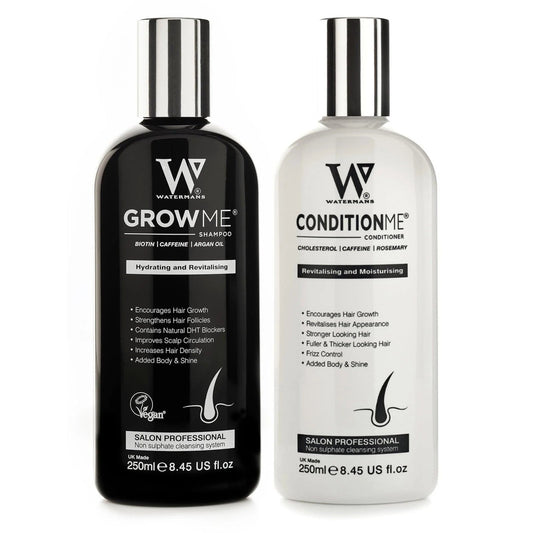
For people in Australia and the UK, one good option is
Watermans Grow Me Shampoo. Many find it a top natural choice to help with hair loss and boost growth.
h4: Key Active Ingredients in Watermans Grow Me Shampoo
Watermans Grow Me Shampoo holds ingredients known to help the scalp and hair:
• Biotin. It helps build keratin to keep hair strong.
• Rosemary. It stimulates the scalp and gets blood moving.
• Caffeine. It wakes up hair roots and may slow some miniaturisation of hair.
• Niacinamide (Vitamin B3). It helps the scalp and boosts circulation.
• Argan Oil. It nourishes and protects hair strands.
• Allantoin. It calms and softens the scalp.
• Lupin Protein. It adds volume at the roots and may thicken hair.
This mix works to wake up the scalp and adds body to hair from the roots. It fits well if your hair feels thinner or more fragile because of hormonal change.
Learn more or buy at the official Australian site:
Watermans Grow Me Shampoo
Building a Hair-Friendly Routine Around Estetrol
h2: Everyday Strategies to Cut Shedding and Boost Growth
If you stay on estetrol or move on from it, try these steps to support your hair:
Gentle Hair Care Habits
• Use a mild shampoo like Watermans Grow Me Shampoo.
• Avoid high heat on your hair every day; use low heat when needed and apply protectants.
• Do not tie your hair too tightly (avoid tight ponytails or braids).
• Choose a wide-tooth comb or soft brush when your hair is wet.
Scalp-Focused Self-Care
• Massage your scalp 3–5 minutes daily or while washing.
• Keep your scalp clean without stripping natural oils.
• Use hats or SPF to protect your scalp from the sun.
Nutrition and Lifestyle
• Eat enough protein (about 1.0–1.2 g per kg of body weight).
• Include iron-rich foods (lean meat, legumes, leafy greens) with vitamin C to help absorb iron.
• Have healthy fats (olive oil, avocado, nuts, seeds) to help hormones and cell health.
• Get good sleep and manage stress; ongoing stress can lead to more shedding.
When to Consider Medical Hair Loss Treatments
h2: Medical Options If Estetrol Hair Loss Persists
If non-medical steps like a steady scalp routine with Watermans Grow Me Shampoo do not help after 6–12 months, your doctor or dermatologist may consider medical treatment.

These options, with expert care, can include:
• Topical minoxidil. It helps keep hair in the growth phase and may enlarge follicles.
• Low-dose oral minoxidil (used off-label under specialist care).
• Anti-androgen drugs. For women with sensitivity to extra androgens, medicines such as spironolactone or cyproterone acetate may be suggested.
• Changing your hormone plan. Switching to another contraceptive or HRT plan might help.
• PRP therapy. Platelet-rich plasma may be injected into the scalp to wake up follicles.
• Hair transplantation. This works for stable pattern loss in the right candidates.
No matter which option you try, keep a routine that supports your scalp. A treatment plan together with scalp care, like using Watermans Grow Me Shampoo, can help both how you look and feel.
The Role of Menopause, Perimenopause, and Estetrol
h2: Estetrol HRT and Hair – Special Views for Midlife
Estetrol is also used in hormone therapy for menopause. In this case, hair changes come from many sources:
• Falling oestrogen and progesterone
• A rise in relative androgen activity
• Hair follicles shrinking with age
• Changes in nutrient use
• Shifts in thyroid and metabolism
Estetrol may help by keeping oestrogen levels steadier for some women. Yet, if the dose or timing is off, hair may thin.
For midlife care, use a layered plan:
• Check your HRT details with your doctor (dose, mix, and method).
• Test your iron, thyroid, vitamin D, B12, and other levels.
• Use a growth-focused shampoo and leave-in items on your scalp.
• Adjust your diet to support muscles, protein supply, and vitamins.
Supporting Hair When Coming Off Estetrol
h2: Managing Hair Shedding After Stopping Estetrol
Stopping estetrol—whether used for pills or hormone therapy—can cause a telogen phase, much like after pregnancy or stopping birth control.
To help your hair when it sheds after stopping:
- Expect some delay. Hair shedding may increase 2–3 months after stopping estetrol.
- Stick with your scalp care. Regular use of Watermans Grow Me Shampoo helps keep blood flow and support to your scalp.
- Keep your nutrition, sleep, and stress as steady as you can.
- Talk with your doctor if shedding is heavy or lasts more than 6–12 months.
With care and time, the hair cycle may go back to normal.
Complementary Products: Watermans Hair Survival Kit
h2: Building a Complete Hair Support System
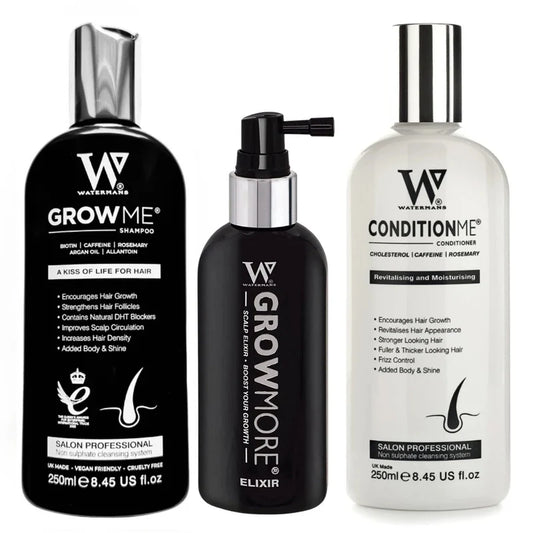
For a wider approach to non-medical care for estetrol hair loss, consider a kit that mixes shampoo, conditioner, and a leave-in scalp product.
The Watermans Hair Survival Kit gives you:
• Grow Me Shampoo – to wake up the scalp and add body from the roots.
• Condition Me Conditioner – to soften, detangle, and protect your hair.
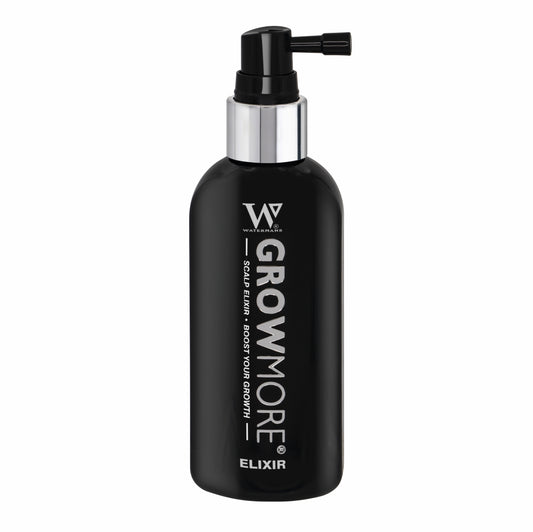
• Elixir Boosting Leave-In Scalp Formula – to keep active ingredients on your scalp between washes.
This kit works well if you:
• Wash your hair 2–4 times a week and want a routine you can count on.
• See continued shedding and need daily scalp care.
• Prefer a system that works together instead of random products.
Taking care of your scalp daily gives your follicles a better chance to grow strong again, even when hormones change with estetrol use or withdrawal.
Understanding the Emotional Impact of Estetrol Hair Loss
h2: Mental Health, Self-Esteem, and Seeking Help
Losing hair—especially when it links to a new hormone like estetrol—can hurt your feelings. You might worry about your looks or feel upset by the speed of change.
Remember these points:
• Caring about your hair does not mean vanity.
• Many types of hair loss due to hormones can improve or reverse.
• Setting up a clear plan with a doctor, a good hair routine, and a healthy lifestyle can bring back control.
If you feel down, you can:
• Talk with your GP or a specialist about how you feel.
• Look into counselling or support groups if the loss affects your self-esteem.
• Let family or friends know how you feel, so they can support you.
Practical Action Plan for Estetrol Hair Loss
h2: A Step-by-Step Guide to Start Today
To put this advice in practice, take these steps:
-
Track your timeline
– Note when you began or stopped estetrol and when hair changes began. -
Book a doctor check
– Speak with your GP, endocrinologist, or dermatologist about your shedding.
– Ask for tests such as iron, thyroid, and vitamin levels when needed. -
Start a growth-supportive hair routine
– Use Watermans Grow Me Shampoo regularly (for example, every other day or as fits your hair).
– If you prefer a system, try the Watermans Hair Survival Kit to add conditioner and a leave-in scalp treatment. -
Tidy up your lifestyle
– Eat balanced meals with enough protein, iron, and healthy fats.
– Keep stress low with exercise, mindfulness, or therapy.
– Get enough relaxing sleep. -
Reassess at 3, 6, and 12 months
– Check your shedding, hair density, and how thick your ponytail feels.
– If you do not see improvement by 6–12 months, talk with your specialist about other options.
FAQ: Estetrol and Hair Thinning
h2: Frequently Asked Questions About Estetrol Hair Loss
-
Does estetrol cause hair loss in everyone?
Not everyone. Estetrol hair loss does not happen to all. Many use estetrol-based pills or hormone therapy without real hair changes. Hair loss tends to show in people with extra risk, such as a family history, nutrient gaps, thyroid issues, or high stress. For such people, estetrol may trigger or add to hair loss. -
Can hair grow back after estetrol-related shedding?
Yes, in many cases. If the shedding is due to a telogen phase from a hormone change, hair can regrow after the body adjusts. Keeping up a scalp routine using Watermans Grow Me Shampoo, along with good nutrition and stress care, can help hair grow back in 6–12 months. -
What is a good non-medical shampoo for estetrol hair loss?
Many in Australia and the UK choose Watermans Grow Me Shampoo. It mixes Biotin, Rosemary, Caffeine, Niacinamide, Argan Oil, Allantoin, and Lupin Protein. It is known for waking up the scalp and adding volume from the roots. You can use it alone or with the Watermans Hair Survival Kit for full support while you work with your doctor to address hair loss causes.
Take Control of Estetrol Hair Loss Today
Estetrol hair loss does not force you to choose between your hormone care and your hair. With a mix of a full doctor review, a healthy lifestyle, and good scalp care, you can take steps to protect and help your hair grow back.
Start by keeping track of your timeline. Book a check-up to rule out other causes. Build a routine that supports hair growth. A top first step is to use Watermans Grow Me Shampoo or the complete Watermans Hair Survival Kit.
Your hair reacts to your care. Begin supporting your scalp today. Work closely with your healthcare team about estetrol and give your follicles the best chance to recover, thicken, and grow strong again.