Frontal fibrosing alopecia: causes, early signs, and best treatment options
Frontal fibrosing alopecia is a type of scarring hair loss that frightens and confuses those it touches.
You see your hairline slide backward, your eyebrows lose density, or your scalp take on a tight, shiny look.
You ask: Is FFA behind these signs? What steps can you take?
In this guide you learn basic facts about frontal fibrosing alopecia (FFA).
You learn its causes, early signs, and treatment choices in Australia and beyond.
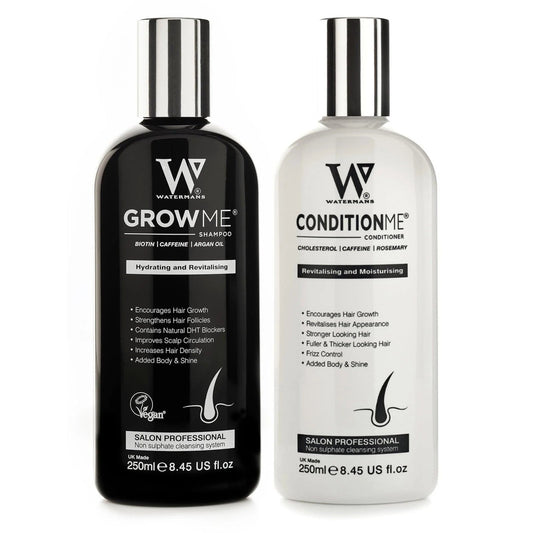
You also see how a gentle, hair‐friendly shampoo like Watermans Grow Me Shampoo may join your daily care with medical advice to help you look after your hair.
What is frontal fibrosing alopecia?
Frontal fibrosing alopecia is a scarring type of hair loss that pulls the frontal hairline back.
It makes a band‐like gap across the forehead and temples.
Over time, the skin becomes smooth, pale, a bit shiny, and sometimes shows small bumps or red spots where follicles have been lost.
Key points about FFA:
• The scalp shows a constant inflammation of the hair follicle.
• Once a follicle scars, hair will not grow again in that spot.
• The condition affects mostly women after menopause; it can also appear in younger women and in men.
• Early checks and treatment aim to slow or stop the loss, not to regrow hair.
FFA is seen as a form of lichen planopilaris.
Both conditions show the immune system mistakenly act against hair follicles.
Seeing FFA early and asking a specialist is very important.
Simple care, stress check, and a gentle scalp routine help you feel better and may slow FFA’s progress.
How frontal fibrosing alopecia differs from other hair loss types
Knowing the differences between frontal fibrosing alopecia and other hair losses can help you talk with your GP or skin doctor.
FFA vs androgenetic alopecia (male/female pattern baldness)
Androgenetic alopecia (AGA) is common.
It comes from genes and hormones.
AGA makes hair thin slowly and does not scar the skin.
In men the hair at the crown and mid‑scalp thins, and in women a widening part appears.
The scalp shows short, small hairs but not a shiny, scarred look.
FFA, in contrast, shows:
• A focus on the frontal hairline and temples in a straight or soft curved band.
• Inflammation and scarring at the follicles.
• Loss of eyebrows, which is rare in AGA.
Some people have both conditions at once.
A clear diagnosis helps your doctor choose the right plan.
FFA vs alopecia areata
Alopecia areata is an immune condition that:
• Causes round patches of smooth baldness.
• Leaves hair follicles undamaged so hair may grow back.
• Appears on any part of the head or body.
FFA makes hair loss permanent.
It acts in the band along the frontal hairline and sometimes the sides and back.
Who gets frontal fibrosing alopecia?
Almost any person can get FFA.
Some groups show clear patterns:
• Most often, post‑menopausal women over 50 see FFA.
• There are more reports in women in their 30s and 40s.
• Men get FFA, though it is less common; a man’s receding hair may seem like regular pattern baldness at first.
• FFA appears in all skin types.
• Light skin makes redness and scarring easier to see.
There is growing awareness of FFA in Australia.
Sun exposure, lifestyle, and product habits may relate to this pattern.
Causes of frontal fibrosing alopecia: what we know and what we do not
No one yet knows the exact cause of FFA.
Research hints at several triggers that join to set off the condition.
Autoimmune and inflammatory mechanisms
Most doctors think FFA comes from an immune attack on hair follicles along the front scalp.
This attack causes:
• A steady inflammation around each follicle.
• Gradual replacement of normal tissue with scar tissue.
• Final loss of the follicle, which stops hair from growing again.
Hormonal influences
FFA shows a strong link with the time after menopause.
This link makes hormones a likely factor:
• Lower oestrogen levels may change skin’s immune reactions.
• Some patients see a response with drugs that change androgen hormones.
Hormones, however, do not cause every case.
Genetic predisposition
Families sometimes share FFA.
This trend shows that genes may play a part.
No single FFA gene is found yet.
Studies look at immune-related genes.
If your close relative has FFA or lichen planopilaris, your risk may be a bit higher.
Environmental and product-related factors
Many look at modern lifestyles and product habits:
• Facial sunscreens and cosmetics: Some studies show people with FFA use sunscreen more than others.
This clue does not prove a link but may show a sensitivity to some ingredients.
• Leave‑on facial products near the hairline are under study.
• Hair dyes and straightening treatments can stress the scalp when used hard or often.
This research does not mean you must stop using sunscreen or caring for your skin.
It means choosing gentler, well‑made products and steering clear of strong irritants can be wise if you worry about FFA.
UV exposure and skin barrier issues
Some doctors see a link between long‑term sun damage and a weakened skin barrier on the forehead.
Australia’s strong sun calls for smart sun protection and skin care that helps the barrier.
Early signs of frontal fibrosing alopecia to watch for
Finding the early signs of FFA matters.
Early steps may slow the change before more skin is affected.
1. Receding frontal hairline
The first sign is a slow shift of the hairline toward the back in a band.
You may see:
• Your forehead appears larger in older pictures.
• A straight or gently curved band of thin hair.
• The change often spreads along the temples and sometimes above the ears.
Some think this change is natural aging.
Comparing photos over 6–12 months can help you notice the shift.
2. Eyebrow thinning or loss
Many people see eyebrow thinning before scalp changes.
This thinning may show as:
• Loss of the outer parts of the brows.
• A patchy or even loss throughout the brow.
• Brows that seem shorter, lighter, or sparser.
If you see thinning without obvious plucking, mention it to your doctor.
3. Redness, roughness, or small spots along the hairline
Look close along your hairline:
• A red tint or slight scaling near follicles.
• Small, pale bumps on the skin.
• A red ring around each follicle when seen in a close-up.
These marks mean the skin is inflamed, even if you feel no pain.
4. Tight, shiny skin where hair is lost
When scarring appears, the skin in the front can look:
• Pale and a bit shiny.
• Smooth with few visible follicles.
• Sometimes tighter when you touch it.
At this point, the follicles usually are lost for good.
5. Itching, burning, or tenderness
Some people mention:
• Itching along the hairline.
• A burning or stinging feel, especially with sweat or product use.
• Tenderness when brushing or styling hair.
These signs show that inflammation is active. They deserve care.
How frontal fibrosing alopecia is diagnosed
A correct diagnosis sets your plan and hopes.
Step 1: History and symptom talk
A doctor will ask:
• When you saw your hairline or eyebrow changes.
• If you feel any scalp irritation like itching or burning.
• Your menstrual or menopause dates (for women).
• Any family history of hair loss or immune issues.
• What products meet your face, scalp, and hairline (like sunscreens, creams, dyes).
• Other health matters and medications.
Giving clear dates helps your doctor see the timeline.
Step 2: Scalp and skin look
The doctor examines:
• The pattern of the hairline loss.
• Eyebrows, sideburns, temples, or even body hair.
• Signs of redness, scales, or small bumps.
• Sometimes, a dermoscope (a small magnifier) helps see each follicle well.
The tool shows scaling near follicles, fewer follicle openings, and signs of scarring.
Step 3: Scalp biopsy (if needed)
A small skin sample may be taken to check:
• The tissue under a microscope.
• Signs of scarring, immune cells, and follicle damage.
A biopsy is not always done if the signs are clear but may help in younger cases.
Best treatment options for frontal fibrosing alopecia
There is no cure for FFA.
Once the skin scars, hair will not grow back in that spot.
Treatment aims to:
- Cut down inflammation.
- Slow or stop the hairline from moving back.
- Keep remaining follicles healthy.
- Help you feel well about your look.
Work with a skin doctor who knows hair disorders.
Treatment fits your needs and may join several methods.

1. Topical medications
These medicines go directly on the scalp.
Topical corticosteroids
• They cut down inflammation near follicles.
• They come as solutions, foams, or ointments.
• They are used in short bursts to avoid thinning the skin.
Topical calcineurin inhibitors (tacrolimus, pimecrolimus)
• These creams and ointments work without steroids.
• They support a longer treatment plan while keeping steroid use low.
Topical minoxidil (for extra pattern loss)
• This drug is not for FFA itself, but for co‑existing thinning hair.
• It helps existing hair look thicker when miniaturized follicles are present.
• It usually comes as a 2–5% solution or foam applied once or twice daily.
2. Oral medications
If FFA spreads or affects large areas, doctors may use pills.
Hydroxychloroquine
• This pill has an effect on the immune system.
• It may help lower inflammation and slow FFA.
• It needs close checks on your eyes and blood tests.
Tetracycline-class antibiotics (e.g. doxycycline)
• These antibiotics work for their anti-inflammatory actions.
• They can help in early stages or during upsets.
5‑alpha‑reductase inhibitors (finasteride, dutasteride)
• These drugs reduce androgen effects.
• They are used in pattern hair loss; some support their use in FFA.
• They need a clear talk about side effects and pregnancy risks.
Other immune drugs
In tough cases, stronger drugs (such as methotrexate or mycophenolate mofetil) may come into play under a doctor’s care.
3. Intralesional steroid injections
• Doctors inject corticosteroids directly into the front hairline.
• This aims to lower local inflammation and slow the condition.
• Injections happen every 6–12 weeks in a clinic.
4. Light-based treatments
Some clinics use:
• Low-level laser or LED light to boost scalp blood flow and cut inflammation.
• These treatments seem safe when done right, though research is still growing.
5. Hair transplantation (when FFA is still at rest)
If FFA does not move for several years (with no inflammation or hairline change), hair transplantation may help fix the look.
• This option carries more risk in FFA than in non-scarring hair loss.
• There is a risk of the disease returning to affect new hairs.
• A careful talk with an experienced surgeon is needed.
6. Supportive, non-medical options
Even with medicines, many want to care for their scalp and hair in other ways.
For daily washing and care, a light, growth-focused shampoo like Watermans Grow Me Shampoo can be a good choice.
It does not regrow scarred hair but may help keep your scalp in a better state and your hair looking fuller.
Why supportive scalp care matters in frontal fibrosing alopecia
FFA makes the scalp sensitive and inflamed.
What you put on the skin near the hairline can change how the scalp feels and how your hair looks.
Goals of a supportive hair-care routine
A good routine will:
• Skip strong irritants that may ramp up inflammation.
• Help the skin’s barrier and blood flow.
• Put in ingredients that work to strengthen hair.
• Work well with any prescribed medicines.
Watermans Grow Me Shampoo: a smart everyday choice
Among non-medical hair-care picks, Watermans Grow Me Shampoo stands out as a scalp-nourishing choice for those with hair loss.
Its ingredients include:
• Biotin – Helps keep the hair shaft firm and builds strength.
• Rosemary – Used long ago to stimulate the scalp and boost scalp flow.
• Caffeine – Acts at the hair roots and may help counter some androgen actions.
• Niacinamide (Vitamin B3) – Aids the skin barrier and supports scalp flow.
• Argan Oil – A light oil that gives moisture and antioxidant support without heavy buildup.
• Allantoin – Soothes and calms skin that feels too sensitive.
• Lupin Protein – A plant protein that helps firm the hair fiber.
These ingredients cannot bring back hair from scarred spots.
They may help the scalp feel better and help what hair remains appear fuller.
Compared to many shampoos with strong sulphates or heavy scent, Watermans is made for long-term scalp care.
This care meets the needs of anyone managing hair loss that scars.
Everyday lifestyle and self-care tips for living with frontal fibrosing alopecia
Managing FFA goes beyond medicine.
Small daily choices help your scalp, self-image, and daily life.
Be kind to your hairline
• Do not pull your hair with high ponytails or tight buns.
• Use less heat on the front hair.
• Avoid strong chemical treatments like harsh dyes or straightening solutions near the hairline.
Choose gentle, growth-supporting products
• Pick shampoos and conditioners that support scalp health and hair body, such as Watermans Grow Me Shampoo.
• A complete treatment kit like the Watermans Hair Survival Kit gives shampoo, conditioner, and a light leave-in serum to care for your scalp.
Protect your skin smartly
• Keep using sunscreen to guard against strong UV rays, especially in Australia.
• If you worry about the hairline, talk with your doctor about what ingredients to choose.
• You might place heavy creams back from the hairline.
• Test new products on a small patch before regular use.
• Look for formulas that are light on scent and do not clog pores.
Mind your overall health
Healthy hair needs a healthy body:
• Eat a balanced diet with lean protein, healthy fats, and plenty of vegetables.
• Check with your doctor about any iron, thyroid, or vitamin D issues.
• Manage stress with exercise, quiet time, social support, or counselling.
A visible change in hair can take an emotional toll.
Cosmetic and styling options
While treatments work to hold the condition, cosmetic choices can fix your look:
• Try soft bangs or side-swept styles to hide a high hairline.
• Use products that boost volume in other areas to draw the eye away from the front.
• Consider brow pencils, powders, or microblading (with advice) to shape your eyebrows.
• Scarves, headbands, or hats are stylish, sun-safe ways to add flair.
A stylist who listens can help you choose looks that work well with your hair.
What to expect over time: progression and monitoring
FFA does not follow the same path for every person:
• Some face active hair loss for years before the change slows down.
• The rate at which the hairline recedes can vary from slow to more clear within 12–18 months.
• Early and steady treatment can slow the loss, and in some cases, the progress may stop.
Keep regular follow-ups with your doctor.
Take clear photos of your hairline from the front and sides every few months.
Note any new signs like increased itching, burning, or redness.
Keep a simple log of medicines and routine changes to see what matches the changes.
Emotional and psychological impact
Hair ties much to identity, age, and self-expression.
It is common to feel:
• Shock when you first see the changes.
• Worry about the hair you will lose.
• Self-consciousness in work or social settings.
• Grief for the look you had before.
Talking with family or friends may ease the load.
Joining online groups for hair loss can help you feel less alone.
A talk with a professional like a counsellor may help if feelings grow too heavy.
Changing your routine into a care ritual can support your well‐being.
Many people with FFA learn to live with the changes.
Being informed, feeling supported, and having a clear plan help you move forward.
Frequently asked questions about frontal fibrosing alopecia
1. Can frontal fibrosing alopecia be reversed?
If scarring is complete and follicles are gone, FFA cannot be reversed.
Treatment aims to:
• Catch the condition early.
• Cut down inflammation.
• Slow or stop the hairline from drifting, to keep as many follicles as possible.
A product like Watermans Grow Me Shampoo cannot regrow hair on scarred spots but may help create a better scalp environment.
2. How is frontal fibrosing alopecia treated naturally or non‑medically?
While medicines are key to control the immune and inflammation parts, non‑medical steps can add to your care:
• Use a gentle, growth-supporting shampoo like Watermans Grow Me Shampoo to give life to the scalp and boost the hair you have.
• Avoid strong products and irritants, especially near the hairline.
• Lower stress, eat well, and fix any nutritional gaps.
• Keep your scalp and forehead safe from too much sun by choosing sunscreens and skin care with care.
These steps will not replace medical treatment for FFA but help build a sound base.
3. Is frontal fibrosing alopecia related to menopause?
Many with FFA are women after menopause, which shows a hormonal link.
Lower oestrogen levels may change how the skin and follicles react.
Yet FFA also shows in women before menopause and in men.
Hormonal treatments like 5‑alpha‑reductase inhibitors may help some patients, especially when pattern hair loss is also present.
No matter your stage, a gentle scalp routine with products like Watermans Grow Me Shampoo can support your efforts alongside any hormonal or medical care.
Take the next step: protect your hair today
FFA can feel heavy at first, but you still have power.
Understanding the condition, spotting its signs, and acting soon help you keep your hairline and feel stronger about your look.
Your next steps:
- Book an appointment with your GP or skin doctor if you see a receding hairline, eyebrow thinning, or red, tight scalp.
- Bring photos and notes of when you first saw changes to show your doctor the full picture.
- Check your daily hair and skin routine. Consider switching to a gentle, growth-focused shampoo such as Watermans Grow Me Shampoo. Its blend of Biotin, Rosemary, Caffeine, Niacinamide, Argan Oil, Allantoin, and Lupin Protein works to energize the scalp and firm each hair.
- If you seek a complete, easy plan, look into the Watermans Hair Survival Kit for a set of shampoo, conditioner, and a leave‑in treatment.
You cannot change your diagnosis, but you can change your actions—medically, practically, and in your feelings.
With the right specialist, care routine, and a gentle product like Watermans, you move ahead with knowledge and care for the hair you hold today and in the future.