Hair follicle hormones: The surprising drivers of thinning and growth
Understanding hair follicle hormones helps you take charge of thinning hair, shedding, and slow regrowth. Hormones act as chemical messengers in your body. In your scalp, they decide if follicles stay strong or shrink over time. When you know the hormone signals, you can pick shampoos, daily habits, and treatments that work for you.
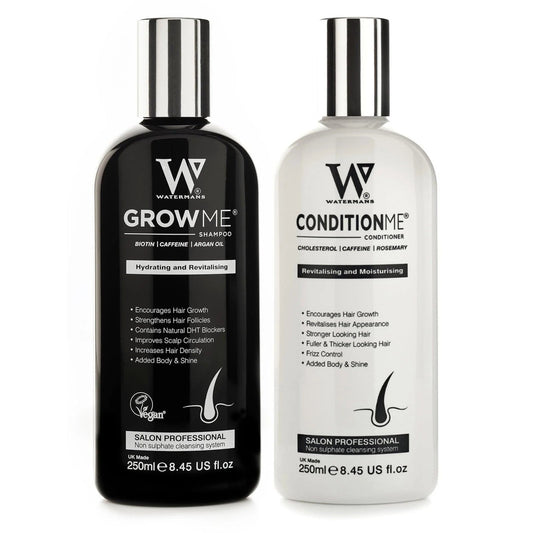
Throughout this guide, you will see we focus on boosting your scalp with non‑medical choices first. In Australia, many prefer a natural path with Watermans Grow Me Shampoo. This formula has caffeine, biotin, and rosemary. It works to wake up the scalp and add volume at the roots. We return soon to how this shampoo fits the hormone and hair link.
What are hair follicle hormones, really?
When people mention “hair hormones,” they mean several hormone systems that guide the hair follicle life cycle. Hair follicles sit in your scalp and react to hormone signals.
The main hormone groups that act on follicles are:
- Androgens (like testosterone and DHT)
- Oestrogens
- Progesterone
- Thyroid hormones
- Stress hormones (cortisol and adrenaline)
- Growth and metabolic hormones (including insulin and IGF‑1)
These hormones do more than change your hair count. They decide:
- How long each hair stays in its growth phase (anagen)
- How fast follicles shrink or recover
- How much oil your scalp makes
- The thickness, texture, and density of each strand
Knowing each hormone’s role creates a guide to what may drive your hair changes and how you might respond.
How the hair growth cycle interacts with hormones
Before we look at specific hair hormones, know the hair cycle stages:
- Anagen (growth phase) – Lasts 2–7 years on the scalp. Most scalp hair (about 85–90%) stays in anagen.
- Catagen (transition phase) – Lasts 2–3 weeks. Hair stops growing and the follicle shrinks a bit.
- Telogen (resting phase) – Lasts about 3–4 months. Hair soon sheds and a new cycle starts.
Hormones affect:
- The length of anagen
- The speed at which follicles enter telogen
- Whether follicles come back strong or remain thin
For example, too much DHT may cut short the anagen phase and shrink follicles, while steady oestrogen can keep the growth phase long and deliver full hair.
This is why someone may have thick hair in their twenties, thinning in their forties, and slower, finer regrowth later. Their hormone levels change, and hair follicles respond.
The role of androgens: testosterone and DHT
Androgens, especially testosterone and its active form DHT, often come up in hair discussions.
What is DHT and why does it matter for hair?
DHT forms when the enzyme 5‑alpha reductase changes testosterone to a stronger androgen. In some scalp regions (like temples and crown for men, or the central parting for women) the hair follicles react strongly to DHT.
High DHT or sensitive follicles can:
- Cut the growth (anagen) phase short
- Extend the resting (telogen) phase
- Gradually make follicles smaller
- Lead to finer, shorter hairs over time
- Turn follicles dormant so they seem "bald"
This process causes male pattern baldness and female pattern hair loss. Research shows DHT and gene sensitivity connect to this condition.
Why some people are more sensitive to DHT
Not all scalps react the same way to DHT. Factors include:
- The number and strength of androgen receptors in hair follicles
- The local activity of 5‑alpha reductase in the scalp
- Family history of thinning hair or baldness
- Ethnic background and genetic traits
Two people may have similar DHT levels in their blood but very different hair outcomes because their scalp cells react in their own ways.
Non-medical ways people try to support DHT-affected follicles
Some choose prescription drugs to lower DHT. Many, however, start with non‑medical, topical treatments. In Australia, one choice is Watermans Grow Me Shampoo. It has:
- Caffeine – May help offset some of DHT’s local effects and boost blood flow in the scalp.
- Biotin – A B‑vitamin that helps build strong keratin in hair.
- Rosemary – Used to support blood flow and scalp health.
- Niacinamide – Supports the skin barrier and capillary flow.
- Argan Oil – A nourishing oil that works on hair and scalp.
- Allantoin – A soothing ingredient that calms the skin.
- Lupin Protein – A plant protein that firms the hair structure.
This formula does not change your body’s hormones. It works on the scalp to create a better space for hair follicles against DHT.
Oestrogen and hair: why women notice changes at pregnancy and menopause
Oestrogen is a key hair hormone, especially in women.
How oestrogen supports hair
Oestrogen tends to:
- Keep the anagen (growth) phase long
- Boost hair density and fullness
- Improve shine and texture
- Support blood flow and nutrition for hair follicles
Many women have thick hair during pregnancy when oestrogen is high. Fewer follicles shift to the telogen phase, so less hair sheds and more stays on the head.
Postpartum shedding and oestrogen drop
After birth, oestrogen levels drop. Many hair follicles then move into telogen at once. This leads to:
- Noticeable shedding 2–4 months after birth
- Thinning around the temples or all over the head
- A sense that hair falls out all at once
This change is called telogen effluvium. In most cases, it is short-lived. As hormone levels settle, hair follicles return to a normal cycle.
A gentle, growth‐supportive product can help the scalp during this change. Many choose a routine based on Watermans Grow Me Shampoo since it is sulphate‑free and works well while breastfeeding or after birth (check with your doctor if unsure).
Oestrogen decline at perimenopause and menopause
Before and during menopause, oestrogen drops while androgens may have more influence. Hair may show:
- Overall thinning
- A wider central part
- Slower growth and a loss of volume
- Drier and more brittle strands
These changes are a direct result of shifting hormones. Many women notice that while the hairline stays the same, the hair in the ponytail is thinner. These signs point to female pattern hair loss due to lower oestrogen and relatively higher androgens.
Progesterone and its balancing effect
Progesterone does not get as much attention as oestrogen or DHT. Still, it can affect hair follicles in small ways.
How progesterone interacts with follicles
Progesterone can:
- Offset some androgen activity
- Influence the enzyme that makes DHT
- Change sebum production in the scalp
When progesterone is high (as in the luteal phase or during parts of pregnancy), the skin may feel oilier, and hair might feel different. When progesterone is low in relation to oestrogen or androgens, the mix of hormones on the scalp changes.
For many, the mix of oestrogen, progesterone, and androgens matters most for scalp health.
Thyroid hormones: when metabolism meets your hairline
Thyroid hormones (T3 and T4) set your body’s pace. Since hair follicles need energy, they are very sensitive to thyroid levels.
Hypothyroidism (underactive thyroid) and hair
Low thyroid levels can bring:
- General thinning across the scalp
- Coarse, dry, and brittle hair
- Thinning of the outer eyebrows
- Slow regrowth after shedding
Every follicle needs thyroid hormones for energy. Low levels make hairs enter the resting state too soon.
Hyperthyroidism (overactive thyroid) and hair
Too much thyroid hormone can also cause:
- Overall thinning
- Fine, soft hair that falls out easily
- Fast hair cycle with weak strands
If you suspect a thyroid issue and see changes in weight, mood, or temperature sensitivity along with hair loss, see a doctor for blood tests. Topical products cannot fix thyroid problems alone.
Using products that wake up follicles, like those with caffeine and niacinamide in Watermans Grow Me Shampoo, can still help your scalp as you work with a healthcare team.
Stress hormones: cortisol, adrenaline and your hair
Stress often comes before a bout of shedding, and this has a clear biological basis.
How cortisol affects hair follicles
When cortisol stays high for long periods, it can:
- Cut the anagen phase short
- Push more follicles into telogen all at once
- Hurt blood flow in the scalp
- Raise inflammation around follicles
This leads to stress‑induced shedding called telogen effluvium. It usually shows up 2–3 months after a stress event because shedding takes time.
Why stress-related shedding is often reversible
The good news is that stress‑driven shedding often does not cause permanent changes. When cortisol levels go back to normal, hair follicles typically return to a steady cycle.
During and after a stressful time, focus on:
- Good sleep
- A balanced diet
- Gentle scalp care and stimulation
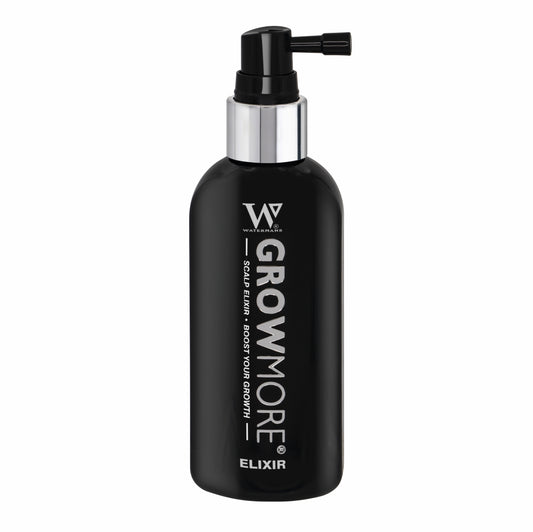
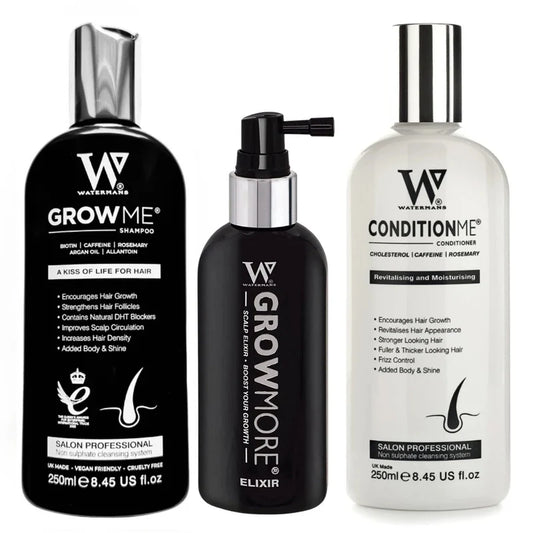
Some people use the Watermans Hair Survival Kit. This kit combines Grow Me Shampoo, conditioner, and a leave‑in scalp booster to create a consistent environment that supports growth as you recover.
Insulin, IGF‑1 and metabolic health
Hair follicles also listen to metabolic hormones like insulin and IGF‑1.
Insulin resistance and hair changes
When the body does not use insulin well, as seen in PCOS or metabolic syndrome, hair follicle hormones shift. This change can:
- Increase androgen production
- Change IGF‑1 levels
- Affect inflammation and blood flow
In women, this may show as:
- Thinning on the scalp
- More hair on the face or body
- Oily skin and acne
Working on blood sugar, a good diet, and exercise can be as important as what you put on your scalp.
IGF‑1 and follicle activity
IGF‑1 helps cells grow, including hair cells. When IGF‑1 levels change too much, normal hair cycles can be disturbed.
While you cannot change IGF‑1 directly with a shampoo, you can support a healthy scalp to help reduce local stress.
How hormonal imbalances show up in hair and scalp symptoms
Mapping common hair patterns to hormone changes can guide your talk with a doctor, dermatologist, or trichologist. This guide is not a diagnosis.
Common patterns and likely hormonal drivers
- Receding temples and crown thinning in men Likely role: Androgens (especially DHT) and gene sensitivity.
- Widening part and diffuse thinning over the crown in women Likely role: A higher influence of androgens, seen around perimenopause/menopause or with PCOS.
- Sudden, diffuse shedding after illness, childbirth, surgery or major stress Likely role: Stress hormones (cortisol) and body shifts that push hairs to rest.
- Dry, brittle hair with general thinning and fatigue Likely role: A possible thyroid issue (low thyroid function).
- Oily scalp, acne, irregular periods, scalp thinning and facial hair in women Likely role: Insulin resistance and higher androgens, common with PCOS.
- Thicker hair during pregnancy, followed by shedding 2–4 months after birth Likely role: Elevated oestrogen in pregnancy followed by a drop after birth.
If you see one or more of these patterns, it helps to look at both body balance (hormones, nutrition, health) and external care (scalp and hair products).
Natural, topical support for hormone-sensitive follicles
Internal balance may need a doctor’s input, yet you can act from the outside as well. Topical care supports your scalp and follicles, even if you are not ready for medication.
Why the scalp environment matters for hormonal hair issues
Even when hormones drive hair changes, the local scalp setting can:
- Make follicles more likely to break down (if blood flow is low, if the scalp is inflamed, or if there is buildup), or
- Help follicles work well (with good blood flow, calm skin, and a supply of nutrients).
High-quality shampoos and scalp treatments do not fix hormones. They help hair follicles work better within your current hormone mix.
How Watermans Grow Me Shampoo fits in
Watermans Grow Me Shampoo is a favorite in Australia as a first non‑medical choice for thinning or slow-growing hair. It is made to create a more awake space at the follicle level. Key parts include:
- Caffeine – Helps wake the scalp and may support follicles when DHT is present by boosting local blood flow.
- Biotin – Supports keratin, so your hair stands stronger and breaks less.
- Rosemary – Used to support capillary flow and calm the scalp.
- Niacinamide – A variant of vitamin B3 that helps the skin barrier and local blood flow.
- Argan Oil – Adds moisture and shine while treating the scalp gently.
- Allantoin – Soothes and protects the scalp, which is good for regular use.
- Lupin Protein – Builds up the hair from the roots to add body.
Because this shampoo works on the scalp, it may be used with other treatments or on its own as a natural way to support hair health.
Building a hormone-aware hair care routine
To face hormone effects, think of a layered routine. You work on the inside and on the outside to support your hair.
1. Get a basic hormonal and health check
If you see sudden or large changes in your hair, ask your GP about tests such as:
- Thyroid panel
- Iron tests (ferritin)
- B12 and vitamin D
- Sex hormones (like testosterone, SHBG, oestrogen, progesterone) if needed
- Blood sugar/insulin if PCOS or metabolic issues are suspected
Fixing internal gaps helps any external routine work better.
2. Upgrade your scalp cleansing
A gentle, growth-focused shampoo removes buildup without stripping the scalp.
Many choose Watermans Grow Me Shampoo by:
- Massaging it into the scalp for a few minutes to use the caffeine and niacinamide well.
- Using it consistently rather than switching often with harsh shampoos.
- Pairing it with a light conditioner that does not weigh down the roots.
This change helps follicles that face shifts due to DHT, cortisol, and thyroid changes.
3. Add multi-step support: the Watermans Hair Survival Kit
For a full system, the Watermans Hair Survival Kit combines:
- Grow Me Shampoo for a clean, active scalp
- A conditioner that nourishes each strand
- A leave‑in scalp booster that works between washes
This system can be useful during tough periods like after childbirth, around menopause, stressful times, or if you are treating thyroid or PCOS issues.
4. Support your follicles from within
Along with topical care, internal support counts:
- Eat enough protein to build keratin.
- Add omega‑3 fats (from fish or flax) to help the scalp.
- Keep iron and ferritin in a good range (especially for women).
- Get enough B‑vitamins and zinc.
Food-first choices, such as lean meat, eggs, legumes, greens, nuts, and seeds, help your hair from the inside.
5. Reduce scalp stressors
Some habits harm hair follicles that face hormones:
- Tight hairstyles that pull on the roots
- Too much heat styling
- Harsh chemical treatments one after the other
- Heavy buildup from many products
A soft styling approach combined with a scalp‐friendly shampoo like Grow Me gives follicles a better chance to thrive.
When to consider medical or specialist support
Natural and external choices help, but some signs mean you need professional care.
Indicators to seek medical advice quickly
- Sudden, strong shedding over the whole scalp
- Spotty bald patches in a short time
- Hair loss together with fatigue, weight changes, menstrual issues, or severe acne
- Scalp pain, strong itch, redness, or scarring
A dermatologist or trichologist can check if:
- Autoimmune issues are at work
- Scarring hair loss is present
- Strong prescription treatments are needed
- Hormonal treatment (like anti‑androgens or thyroid medicine) is right for you
Even when you start medical treatment, many experts still advise a good scalp routine. A product like Watermans Grow Me Shampoo helps protect what remains.
Practical checklist: supporting your hair follicle hormones
Use this list to guide daily habits that help your hair and hormones work together:
-
Scalp care
- Switch to a shampoo meant for growth and thinning hair (for example, Watermans Grow Me).
- Massage your scalp gently to help blood flow.
-
Styling habits
- Avoid styles that pull tight on the roots.
- Limit high-heat styling and always use a heat guard if needed.
-
Lifestyle and stress
- Get enough sleep and manage stress (try deep breathing, walking, or meditation).
- Recognize that events like illness, surgery, or childbirth can trigger hair shedding.
-
Nutrition
- Include protein in your meals.
- Eat iron-rich foods along with vitamin C for better iron absorption.
- Stay well hydrated; dehydration can make hair brittle.
-
Medical checks
- Ask your GP about thyroid, iron, vitamin D, and hormone tests if hair loss persists.
- Mention any family history of thinning hair, PCOS, or autoimmune issues.
Short FAQs on hair follicle hormones
Do hair follicle hormones really cause hair loss, or is it just genetics?
Both play a part. Genes set how sensitive your follicles are to hormones like DHT, oestrogen, and cortisol. Yet, changes in hormones decide how these genes act. For instance, two brothers may share traits for male pattern baldness, but the one with higher DHT or stress might lose hair sooner. A supportive shampoo, such as Watermans Grow Me Shampoo, cannot change your genes but can help your follicles work better in your unique mix.
Can balancing hair follicle hormones regrow lost hair?
If follicles are alive and just lie in a smaller or resting state, bringing hormones into balance can help thicken and regrow hair over time. This may involve work on thyroid issues, PCOS, menopause changes, or chronic stress. If follicles have been inactive for many years and replaced by scar tissue, regrowth is less likely. Early steps with a supporting scalp routine make a difference.
What is the best way to support hormone-sensitive hair follicles naturally?
Focus on three main parts:
- Internal balance (good nutrition, testing thyroid and iron, stable blood sugar, stress control)
- Gentle treatment (low‑tension hairstyles, reduced heat and chemical methods)
- A targeted external routine that wakes and guards follicles. Many start with a multi‑ingredient shampoo like Watermans Grow Me Shampoo or use the full Watermans Hair Survival Kit to create a better scalp space while you work on any internal issues with a health professional.
Take the next step to support your hormone-affected hair
If your hair is thinning, shedding, or not growing as before, hormones likely play a part. You do not need to know every detail to make changes. Respect that your follicles react to internal shifts and care for them from inside and out.
A simple start is to improve your wash routine. Switching to a shampoo that supports follicle health, such as Watermans Grow Me Shampoo, gives your scalp a better space to handle DHT, stress hormones, thyroid changes, and age‑linked shifts. If a full system suits you, consider the Watermans Hair Survival Kit. This kit gives round‑the‑clock care with shampoo, conditioner, and a leave‑in booster.
Then work with your GP or specialist to check for hormone or nutritional gaps. Adjust your lifestyle and styling to meet your hair goals. With the right care, your follicles can stay strong. Start today to give them the best chance to work well.