hair regrowth timeline: realistic milestones, tips, and expected results
Understanding a realistic hair regrowth timeline can mean the difference between keeping up a routine and giving up too soon.
Hair grows slowly. Each word links closely: treatments and lifestyle changes need months, not weeks, before true change appears. This guide shows what happens month by month, what to expect, and how to support hair that grows thicker and looks healthier in a natural way.
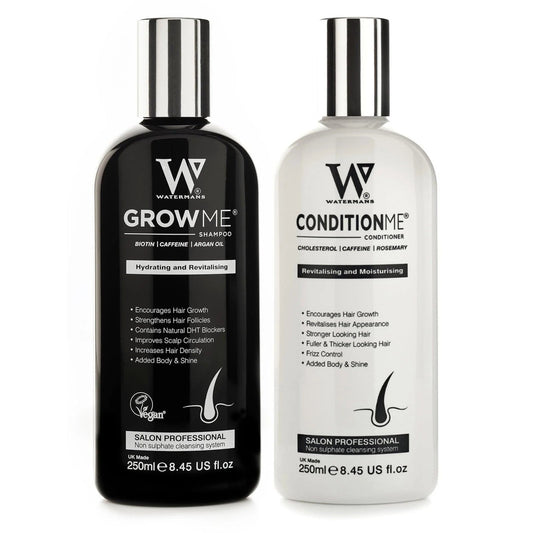
One simple, non-medical start is a premium hair growth shampoo like Watermans Grow Me Shampoo.
This shampoo contains Biotin, Rosemary, Caffeine, Niacinamide, Argan Oil, Allantoin, and Lupin Protein.
The ingredients work side by side to energise the scalp and boost volume from the roots. This step builds a solid base for hair regrowth.
How hair really grows: the stages behind your regrowth timeline
Before you see a hair regrowth timeline, know that hair does not grow all at once.
Every follicle follows a cycle with three connected phases.
The 3 phases of the hair growth cycle
-
Anagen (growth phase)
— Lasts 2–7 years for scalp hair
— About 85–90% of scalp hair lives here
— Hair grows about 1–1.25 cm each month (roughly 12–15 cm per year)
This phase is the time you want to keep active if you try to regrow hair or add thickness. -
Catagen (transition phase)
— Lasts 2–3 weeks
— The follicle shrinks and parts from the blood supply
— About 1% of hairs are in this phase
This phase is like a switch that tells the hair to stop growing. -
Telogen (resting and shedding phase)
— Lasts 2–4 months
— About 10–15% of hairs stay here
— Old hair falls as new anagen hair begins below
Many types of hair loss occur when too many hairs stay in this resting phase.
Each phase depends on the previous one, so real hair change appears only after several weeks or months.
What can affect your own hair regrowth timeline?
No two people share the exact same timeline. Several factors work close together to speed, slow, or limit hair growth.
Key influences on how fast hair grows back
Genetics and pattern hair loss
— Androgenetic alopecia, or pattern hair loss, runs in families.
— It does not stop hair growth but makes follicles shrink over time.
— The longer the pattern loss, the harder it is to thicken the tiny hairs.
When pattern loss is advanced, many aim for thicker, healthier remaining hair and to slow down further loss.
Age and hormones
— Hair may become finer after the 30s and 40s.
— Women see changes during perimenopause and menopause.
— Thyroid issues, PCOS, pregnancy, and postpartum shifts change the hair cycle.
These shifts may lengthen the resting phase or shorten the growth phase.
Overall health and nutrition
— Low iron, low vitamin D, low protein, or crash dieting can slow or stop hair growth.
— Chronic stress, illness, or surgery can push many hairs into the resting phase, causing sudden shedding a few months later.
Fixing these issues does not bring instant density. Instead, it resets the cycle so new hair slowly fills in over months.
Haircare, scalp health, and products
— Harsh shampoos, excess heat, tight styles, or chemicals can weaken hair.
— A clogged or irritated scalp also hurts follicles.
Taking care of the scalp with ingredients such as caffeine, rosemary, niacinamide, and oils—as found in Watermans Grow Me Shampoo—helps create a better space for hair growth.
A realistic hair regrowth timeline: month-by-month steps
Imagine someone who has:
• Found the cause (stress, nutrition, hormones, or harsh hair practices)
• Switched to a routine that supports the scalp using Watermans Grow Me Shampoo regularly
• Made simple lifestyle and nutrition changes
This timeline is general; your own path may vary.
Weeks 0–4: foundation and scalp reset
What happens inside
If you change your shampoo, routine, or diet, the hair follicles begin to react.
Irritating triggers (like harsh cleansers or tight hair) may drop.
Some hairs set to shed now may fall out—they remain part of the normal cycle.
What you notice
• You may not see much new hair yet.
• You might feel the scalp is cleaner or less itchy.
• Hair may feel softer or less brittle as the routine improves.
Key actions this month
• Use Watermans Grow Me Shampoo 3–5 times per week (or as fits your hair type).
• Massage gently when you wash to boost blood flow.
• Do not change too many products at once; this keeps the links clear.
Months 1–3: early signs of regrowth
This part is hard because changes are small and easy to miss.
What happens inside
• More hair moves from the resting phase back into growth.
• Thin, mini hairs may appear along the scalp.
• These growing hairs lengthen at roughly 1–1.25 cm per month.
What you see
• Short, fine hairs line up at the hairline or part.
• There may be a slight boost in volume at the roots.
• If you had sudden shedding before, the loss may slow down, though it can change.
Tips for months 1–3
• Keep using Watermans Grow Me Shampoo each time. Its mix of caffeine, rosemary, niacinamide, argan oil, and lupin protein works to support the scalp and help hair look fuller.
• Reduce heat styling; use air-drying or a cool setting when possible.
• Eat more protein (lean meat, legumes, eggs, Greek yoghurt) so your body gets the building blocks for hair.
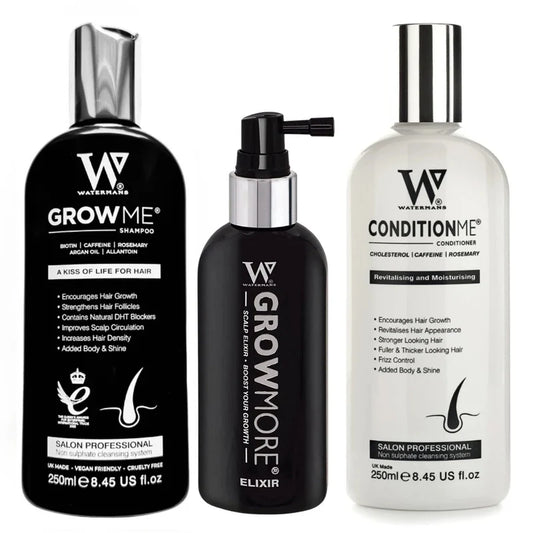
• A set like the Watermans Hair Survival Kit gives extra support by combining shampoo, conditioner, and a scalp treatment.
Months 3–6: visible regrowth and denser hair

Soon you may see clear benefits.
What happens inside
• New hairs are several centimeters long.
• More active follicles now follow the growth phase.
• Existing hair shafts may thicken, so the overall look improves.
What you see
• New hairs may appear along the hairline, temples, and parts.
• The ponytail may look a bit fuller without much scalp showing.
• Hair texture gets better with less breakage and more natural root volume.
• If shedding was a problem, it might drop a lot.
By month 6, many notice
• Hair that shines and looks healthier
• Thicker spots in areas that seemed thin
• A boost in confidence when styling hair without extra cover-ups
Tips for months 3–6
• Continue massaging the scalp with the shampoo, especially on thin zones.
• Use a gentle conditioner (such as the one in the Watermans Hair Survival Kit) on the lengths and ends to cut breakage. Avoid heavy conditioner at the roots if you get oily hair.
• Trim every 8–12 weeks to get rid of split ends and help hair appear fuller.
• Shield your hair from UV rays with a hat or UV-protective spray when the sun is strong in Australia.
Months 6–12: building length and thickness
Now you build on your past work.
What happens inside
• New hair grows long enough to blend with the bulk of your hair.
• Follicles may spend more time in the growth phase, which adds length and density.
• Continued care makes the scalp healthier over time.
What you see
• Hair looks fuller overall, especially if thinning was mild.
• You can wear styles without showing thinning spots.
• You may use less styling spray or fibers, as healthy hair stands on its own.
• Fewer bad hair days happen as hair becomes more steady.
Tips for months 6–12
• Think of the routine as long-term care, not a quick fix.
• Keep using Watermans Grow Me Shampoo to provide good care for your scalp.
• Stick with balanced eating and low stress; slips here can bring back shedding.
• If you wonder about medicine like topical minoxidil, talk to a doctor. Many mix medical care with routine care.
Long-term (12+ months): realistic views as time goes on
After 12 months your hair regrowth timeline becomes very personal. Much depends on:
• What caused the loss (genetic or temporary)
• How soon you started care
• How steady you remain with your routine and health habits
For temporary hair loss (such as from stress)
• Hair often comes back near its former thickness once the stress stops and enough cycles pass.
• The texture may feel a bit different—curl or frizz can change slightly.
• A scalp-friendly routine helps prevent the loss from returning.
For pattern hair loss (androgenetic alopecia)
• The aim is usually to stop further loss and make hair look better, not to regain a teenage density.
• Many see a slowdown in loss and some extra coverage in thin spots.
• Tiny hairs sometimes become thicker, though hair that has been silent for too long might not return fully.
Even in pattern loss, a routine with Watermans Grow Me Shampoo can help hair seem fuller and can work with other care methods suggested by your doctor.
How to support your hair regrowth timeline naturally
No non-medical product promises full regrowth everywhere. Still, you can tip your odds high by stacking small, steady steps.
Build a scalp-first haircare routine
Your scalp is skin that lives. Treat it with care as you do your face.
Choose a growth-focused shampoo
Using a formula that cares for both scalp and volume is a daily win.
Watermans Grow Me Shampoo is a well-known non-medical choice. It has:
• Biotin that helps keep hair strong and thick
• Rosemary that wakes up the scalp
• Caffeine to boost follicle strength
• Niacinamide, which supports the skin of the scalp
• Argan oil that gives moisture and shine without weight
• Allantoin that soothes the scalp
• Lupin Protein that firms hair from the roots
Use a complete system
A kit like the Watermans Hair Survival Kit may include:
• Grow Me Shampoo
• A gentle conditioner for the ends
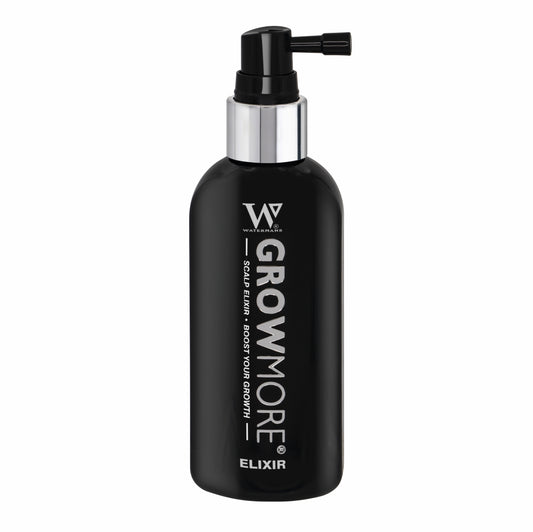
• A leave-in scalp treatment that works in between washes
This bundle helps your hair at many steps along its path.
Adjust daily habits to help regrowth
Even the best shampoo cannot fix habits that hurt hair or upset the growth cycle.
Be kinder to your strands
• Avoid tight ponytails, braids, or buns that pull at the hairline.
• Cut down on high heat and use a heat protectant if you style with heat.
• Switch to a silk or satin pillowcase to lower friction at night.
• Blot your hair with a soft towel instead of rubbing hard.
These habits help keep new hair intact so it can thicken your look.
Nutritional basics for hair regrowth
Hair follicles need a steady flow of nutrients. Consider:
• Protein at every meal (fish, chicken, eggs, tofu, legumes, Greek yoghurt).
• Iron-rich food like lean red meat, lentils, spinach, or fortified cereals, especially if you lose blood each month.
• Healthy fats found in salmon, sardines, walnuts, chia seeds, and olive oil.
• Micronutrients such as zinc, B vitamins, and vitamin D that support hair health.
Always ask a doctor before you start any supplements.
Stress, sleep, and hair care
Chronic stress can push more hairs into the shedding phase.
• Aim for 7–9 hours of sleep each night.
• Practice walks, yoga, writing, or quiet time to lower stress.
• Talk with someone if stress grows too high—good mental health helps hair too.
When the regrowth timeline seems delayed
Sometimes, progress appears slow. Spotting these signs helps you adjust or ask for help.
Signs it is time to see a doctor
Look for these if they last more than 3–4 months:
• Very heavy shedding
• Smooth, round bald spots (this may mean alopecia areata)
• Itching, pain, redness, or scaling on the scalp
• Patchy hair loss that also affects eyebrows, lashes, or body hair
• Other signs, such as tiredness, weight changes, irregular cycles, or skin problems
A medical test can show problems with the thyroid, autoimmune issues, or severe nutritional gaps.
Even if you get medical help, keeping a routine with Watermans Grow Me Shampoo supports both your scalp and hair.
How to track progress throughout the timeline
It is hard to note small changes when you see your hair every day. Tracking helps you stay true to your path.
Practical tracking methods
• Take photos every month with the same light and angles (front, sides, crown, part line).
• Do a ponytail test; feel the hair when you tie it back and measure its size.
• Check the width of your part in a top-down shot to see how much scalp shows.
• Count hairs when brushing or washing sometimes to compare shedding levels.
Focus on trends as weeks pass rather than day-to-day changes.
Common myths about hair regrowth
Misunderstandings can stop you before you see the change that takes time.
Myth 1 – “I will see results in a few weeks”
It takes time. Even with strong treatments, your hair cycle keeps its own pace.
• Little change may be seen in the first 1–2 months
• Early regrowth may appear around 3–4 months
• Clear improvement happens between 6 and 12 months
Claims of permanent regrowth in 14 days should raise doubts.
Myth 2 – “Shampoos cannot help hair loss at all”
Shampoos may not cure genetic loss but they do much.
• They improve the condition of the scalp and blood flow
• They help hair look thicker and fuller
• They reduce breakage so more hair stays long
A formula like Watermans Grow Me works to support the hair from the root.
Myth 3 – “If no hair comes back by 3 months, it is hopeless”
Some people take 9–12 months to see changes, especially with long-term thinning or more complex issues.
If shedding lessens, the scalp feels better, or small hairs appear, your routine is working even if slowly.
Frequently asked questions about the hair regrowth timeline
FAQ
-
How long does hair regrowth take after thinning?
For most, small changes show around 3–4 months, with clearer growth between 6 and 12 months.
Keeping up a scalp-friendly routine like using Watermans Grow Me Shampoo and a healthy lifestyle helps the process. -
Can products speed up the regrowth timeline?
No product can change the hair cycle.
But balanced formulas with caffeine, rosemary, niacinamide, and proteins—as in Watermans Grow Me—make changes easier to see while the cycle keeps its natural pace. -
Why might my regrowth timeline be slower than others?
Differences come from genes, age, hormones, overall health, stress, and how advanced the thinning is.
If progress feels slow, review simple habits like nutrition, stress care, gentle styling, and scalp care.
A professional check or blood test may help rule out hidden problems.
Your next steps: hold fast to your hair regrowth journey
Hair improvement is rarely an overnight act. It means knowing the hair cycle, setting real steps, and making small, steady changes over months.
If you are ready to support your hair naturally:
- Upgrade your wash routine with a growth-focused formula such as Watermans Grow Me Shampoo. Its mix of Biotin, Rosemary, Caffeine, Niacinamide, Argan Oil, Allantoin, and Lupin Protein works to boost the scalp and help hair look thicker from the roots.
- For a fuller system, check the Watermans Hair Survival Kit. This kit pairs shampoo, conditioner, and a scalp treatment to support the hair at every step.
- Combine your routine with simple shifts in habits—better nutrition, softer styling, and less stress—and give your hair at least 6–12 months to show its progress.
Start today, track your progress each month, and let time and steady care work together for hair that grows stronger day by day.