HRT hair care secrets dermatologists swear by for fuller, stronger hair
If you go on HRT, you soon see that your hair needs its own care. Hormones shift. Your hair feels thin, dry, brittle or oily. Sometimes it feels all these ways at different times. Skin and hair experts see this each day. They use clear steps to help you keep strong, healthy hair during HRT.
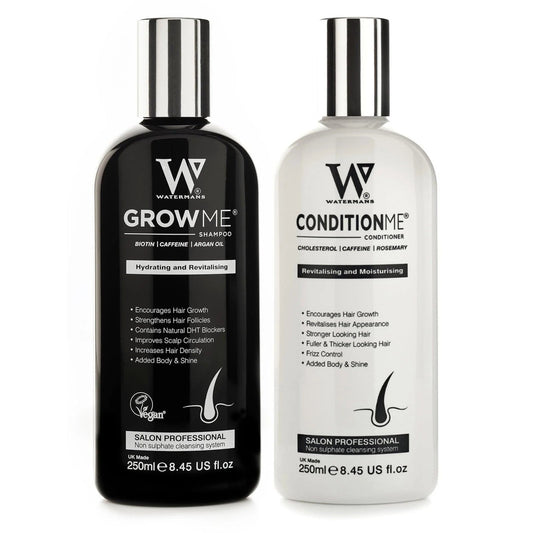
Before you try strong prescriptions or invasive fixes, many skin experts in Australia urge a scalp-focused routine with tested haircare formulas. One non‑medical choice that many trust is Watermans Grow Me Shampoo. It mixes biotin, rosemary, caffeine, niacinamide, argan oil, allantoin and lupin protein. This blend works at the scalp and builds bulk from the root. It stands as a safe support for hair that feels changed by hormones.
Below you see skin expert-backed HRT hair care tips you can use at home. They help you build a routine that respects your hormones, scalp and hair at every step.
Understanding the link between HRT and your hair
How hormones steer hair growth
Hair grows in cycles: anagen, catagen and telogen. Hormones act as small guides for these cycles. They help decide
• the length of the growth phase
• the size of each strand
• the speed of hair loss
The main hormone roles for HRT hair care are:
• Oestrogen – Keeps the growth phase long. It can give hair a fuller and softer look.
• Progesterone – Helps balance other hormones that affect shedding and density.
• Androgens (like testosterone and DHT) – In some people, DHT makes hair follicles shrink, which thins hair.
What HRT does to your hair
HRT’s effect on hair depends on the type you use and your starting hormone level.
Common views:
• Menopause HRT (oestrogen with or without progesterone)
– May slow down shedding and boost thickness
– May leave hair drier and more fragile because of age changes in follicles
• Gender‑affirming HRT (feminising)
– Oestrogen and anti-androgens may slow androgen‑related loss, and hair may grow denser with time
– Body hair usually becomes thinner
• Gender‑affirming HRT (masculinising)
– More testosterone can fasten a male‑pattern loss if you are prone to it
– Beard and body hair grow thicker; scalp hair may thin around the crown and temples
Since hormone shifts are complex, skin experts fix less on changing hormones and more on supporting the scalp and protecting hair strands.
The skin expert’s HRT hair care goals
Most hair experts working with HRT patients focus on four parts:
- Scalp health – A calm and fed scalp helps new hair grow.
- Follicle boost – Ingredients that support blood flow and hair energy.
- Fiber safety – Lowered breakage helps you keep the hair you grow.
- Lifestyle fit – Look at your diet, stress and any medicines you take.
Watermans Grow Me Shampoo fits well with the first three parts. That is why many on HRT pick it before moving to medical help.
Scalp-first HRT hair care: why the scalp is more key than hair length
Why scalp care counts on HRT
Skin experts say: "Healthy hair begins with a healthy scalp." During HRT, the scalp can:
• Turn oilier (often with more androgens)
• Feel drier, tight or itchy (often with less oestrogen)
• Show mild swelling that slowly weakens follicles
• Get more sensitive to hair products or scents
Each of these can make hair quality drop and shedding more clear.
Expert-approved scalp care habits
-
Consistent but gentle cleaning
Aim to clean your scalp often without stripping away its oils:
• For oilier scalps: wash roughly every 1–2 days.
• For drier scalps: wash around every 2–3 days with a hydrating formula. -
Use a shampoo that works for growth
Shampoos with proven actives like caffeine, niacinamide and plant extracts win favor.
Watermans Grow Me Shampoo is a strong pick. Its blend includes:
• Caffeine – Can help against DHT effects and may wake up the growth cycle.
• Rosemary – Used long for blood flow and scalp lift. Some suggest it may match the effect seen with low doses of minoxidil for some.
• Biotin & Lupin Protein – Build hair strength and shape.
• Niacinamide – Boosts the scalp barrier and small blood flow.
• Argan Oil & Allantoin – Soften and calm the scalp and hair.
This method is non-medical, goes on the skin and is mostly well tolerated. It is a smart start when you begin HRT care for your hair.
-
Scalp massage that is soft
A daily, light massage for 3–5 minutes may:
• Lift local blood flow,
• Spread natural oils,
• Help active ingredients sink in deeper.
Use your fingertip pads, not nails, to keep the scalp safe. -
Give your scalp room
Keep away from:
• Heavy oils left too long on the scalp (mainly if you have oil issues or acne)
• Too many styling products that clump and block the scalp
Build-up can cause more irritation and lessen the benefit of your shampoo.
Ingredients experts favor in HRT hair care
Key actives to note
In shampoo and other products used at home, some ingredients win skin expert praise as good backs for HRT hair care:
• Caffeine – Can get into follicles and support local growth.
• Niacinamide (Vitamin B3) – Helps the skin barrier on the scalp and blood flow.
• Biotin – While it does not fully stop hair loss, it helps support hair tone.
• Plant proteins (like Lupin Protein) – Firm up weak fibers and help conditioners stick.
• Rosemary – Goes in for a lift and fights free radicals.
• Argan Oil – With its fatty acids, it smooths the hair coat, cuts down frizz and stops damage.
• Allantoin – Calms the skin and helps keep the scalp at ease.
All these are found in Watermans Grow Me Shampoo. This match with HRT hair care very well.
Ingredients to treat with care on HRT
Some ingredients may stress the scalp. Experts urge care with:
• Harsh sulphates – They can wash away too many natural oils.
• High alcohol in sprays – Can dry and weaken hair.
• Strong scents – May upset a scalp that feels sensitive.
• Heavy silicones – A little is fine, but too much can weigh fine hair down.
Look for balanced formulas that care for the scalp rather than extreme cleansers or very thick coatings.
Building your HRT hair care routine each day
Step 1: Pick a shampoo as your base
For many on HRT, skin experts advise:
• A shampoo that wakes up the scalp a few times a week
• Gentle cleaning with a soft massage instead of harsh scrubbing
This is the space where Watermans Grow Me Shampoo works best. It is a sound first non-medical choice to try for some months before you think about more medical fixes.
How to use it well:
- Wet your hair well with water that is lukewarm.
- Squeeze a small amount on your scalp.
- Massage gently with your fingertips for 2–3 minutes on thinning spots.
- Let it sit for a brief time (around 2–3 minutes) so the ingredients can work.
- Rinse off; if you like, use a bit more on a second pass.
It is better to keep your routine steady. Washing too often with very hot water or scrubbing too hard may cause irritation.
Step 2: Support with a fitting conditioner and scalp tonic
Hair that appears thin may be broken, frizzy or not well kept. A good conditioner and a clean scalp tonic help protect the hair you have.
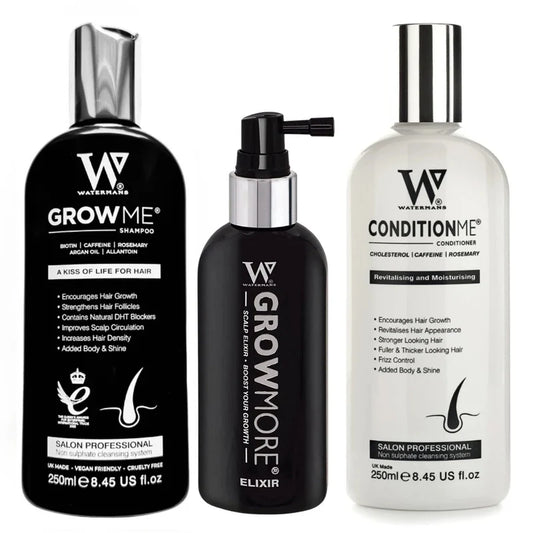
A good match is the Watermans Hair Survival Kit. This kit includes:
• Grow Me Shampoo,
• A conditioner that adds softness and strength,
• A leave‑in treatment to keep the scalp active between washes.
This set helps you stay with one routine instead of using products that may not work well together.
Step 3: Adjust for your HRT type and hair needs
• If you use menopausal HRT and feel dry overall:
– Wash every 2–3 days
– Pick conditioners that give moisture and use a hair mask once in a while on mid‑lengths and ends.
• If you use masculinising HRT and see early thinning:
– Focus on waking up the scalp with actives such as caffeine and rosemary.
– Avoid tight hats that press hard on your scalp.
• If you use feminising HRT and shedding slows while hair seems fragile:
– Work with proteins in your products and treat your hair gently.
– Keep using a growth shampoo to help follicles shift to a stronger phase.
Protecting hair strands: simple steps to stop breakage on HRT
Hormones may change how your hair feels. Skin experts see:
• Hair that snaps more easily
• Less natural shine
• More frizz and split ends
This makes it key to protect hair from heat and rough handling.
Daily habits skin experts advise
• Limit high-heat styling
– Keep straighteners and curlers around 185°C at most.
– Use a heat guard spray every time before heat.
• Be gentle when hair is wet
– Use a wide-tooth comb or fingers to comb.
– Pat with a microfiber towel or soft cotton T-shirt. Rubbing hard can hurt hair.
• Choose loose hair styles
– Buns, braids or ponytails that are not tight are better.
– Skip rubber bands; pick soft, snag‑free ties.
• Sleep on a smooth case
– Silk or satin pillowcases cut down friction and breakage.
• Do small, regular trims
– Cutting 3–5 mm off now and then can stop splits from growing longer.
When your hair follicles feel hormonal stress, each strand you save adds to a fuller look.
Nutrition and lifestyle: small but strong supports for HRT hair care
Nutrients skin experts check
While many claims exist, some nutrients matter when hair thins more than expected. A doctor or skin expert may check:
• Iron and ferritin – Low stores may lead to extra shedding, especially for women.
• Vitamin D – Low levels link to some hair loss issues.
• Zinc – Helps keep follicles strong.
• Enough protein – Hair is made mostly of keratin; very low protein can slow growth.
It is best to ask your doctor for a blood test and add only what you need.
Lifestyle habits that back fuller hair
Skin experts point to these habits:
• Lower stress – High stress can push more hair into the shedding phase.
• Good sleep – It aids many hormone systems that affect hair.
• Regular exercise – Boosts blood flow and overall health, which helps follicles.
• Avoid very strict diets – Quick calorie cuts often lead to more shedding months later.
Link your HRT hair care to your overall health habits. This gives hair follicles a better chance to work well.
When skin experts think of medical treatments (and why they keep your routine)
If you stick to non-medical HRT hair care (including a special shampoo like Watermans Grow Me), improve your lifestyle and give it 3–6 months, yet you still see thinning, a skin expert may talk about:
• Topical minoxidil – A well-studied medicine that can help grow hair longer.
• Medicines that block androgens (based on your birth sex and HRT plan)
• Prescription scalp treatments for issues like inflammation or dandruff.
Skin experts rarely drop your gentle haircare when they add medicines. They layer treatments:
• Medical treatments work directly on the hair cycle and androgens.
• Everyday scalp care (like Watermans Grow Me Shampoo and the Hair Survival Kit) keeps your scalp clear, protects hair and helps hair look fuller while medicines work.
HRT hair care through different stages
Early HRT: months 0–6
What you may see:
• Your body adjusts to new hormone levels.
• You might see more shedding for a short time as follicles settle.
• Texture and oil levels may start to change.
Skin expert focus:
• Set up a steady HRT hair care routine from the start.
• Hold off on big changes week by week; give each change time.
• Use a growth shampoo like Watermans Grow Me a few times each week and stick with it.
Mid HRT: months 6–24
What you may see:
• Hormone levels start to stay stable.
• You may notice new patterns in hair growth, thickness and feel.
• You might see if you are prone to androgenic thinning.
Skin expert focus:
• Watch patterns: Is shedding steady, getting better or worse?
• Keep on with scalp care and fiber protection.
• Ask your doctor or skin expert if thinning continues, especially with a family history.
Long-term HRT: 2+ years
What you may see:
• Hair may settle into a new normal under the long-term hormone change.
• Age-related thinning may join with HRT-driven shifts.
Skin expert focus:
• Fine-tune your haircare products for the look you want.
• Keep using a supportive product like Watermans Grow Me Shampoo over time.
• Recheck with your doctor if thinning turns worse or speeds up.
A simple HRT hair care routine to start this week
Here is a clear routine built on non-medical, scalp-first care.
Morning or shower days:
-
Shampoo – Use Watermans Grow Me Shampoo
– Massage it into your scalp for 2–3 minutes; let it sit briefly, then rinse. -
Conditioner – Apply a matching conditioner on the mid-lengths and ends
– Do not put too much on your scalp if it is oily. -
Scalp tonic (optional but good)
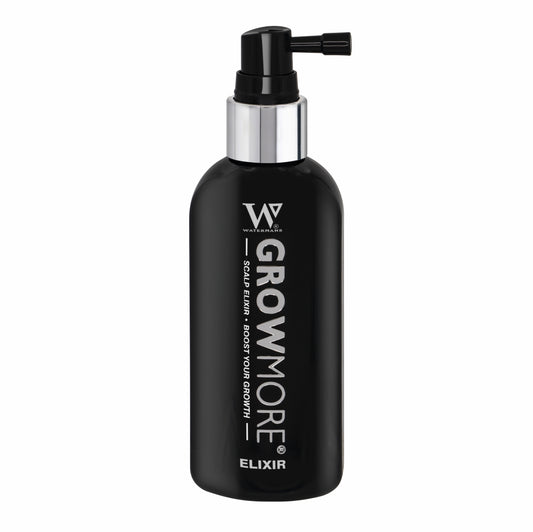
– Use the scalp treatment from the Watermans Hair Survival Kit on a clean scalp to keep active benefits. -
Styling
– Use a heat guard spray if you blow-dry.
– Keep heat tools low and avoid daily use if possible.
On non-wash days:
• Gently massage your scalp with your fingertips for a few minutes.
• Do not use too many heavy products or too much dry shampoo.
• If needed, freshen roots with a light styling product that does not leave residue.
Weekly or every two weeks:
• Use a hydrating hair mask on lengths and ends (not the scalp) if hair feels dry.
• Check your scalp in good light for signs of irritation, redness or scaling. Adjust your routine or see an expert if needed.
Quick checklist: skin expert-backed HRT hair care
• [ ] Use a shampoo that wakes up the scalp, such as Watermans Grow Me, a few times a week.
• [ ] Massage lightly and do not scrub too hard.
• [ ] Condition the mid-lengths and ends at every wash to cut down breakage.
• [ ] Use a scalp treatment or tonic to keep benefits between washes.
• [ ] Protect your hair from heat and friction (use a heat spray, dry gently, sleep on a silk or satin pillowcase).
• [ ] Avoid tight hairstyles and harsh chemical treatments when shedding happens.
• [ ] Check key nutrients (iron, vitamin D, zinc, protein) with your doctor if shedding increases.
• [ ] Give changes at least 3 months before you judge.
• [ ] Talk with a skin expert if thinning continues or gets worse fast.
FAQ: HRT hair care questions experts hear daily
-
Does HRT always cause hair loss, and can HRT hair care products help?
HRT does not always cause hair loss. Many people on menopause HRT see hair that grows fuller compared to untreated menopause. Masculinising HRT can speed up thinning in people who are prone to it, while feminising HRT may slow androgen-driven loss.
Topical HRT hair care products do not change your genes and do not replace medicines. They can support scalp health, back the hair follicle with active ingredients and lower breakage so hair looks full. This is why many skin experts suggest testing a targeted shampoo like Watermans Grow Me before trying stronger medicines. -
What is the best shampoo routine for HRT hair care if my hair thins?
For many who see thinning on HRT, skin experts advise:
• Washing every 1–3 days (depending on oil levels).
• Using a shampoo with growth actives such as caffeine, rosemary, niacinamide and proteins.
• Massaging your scalp lightly and often.
A simple method is to use Watermans Grow Me Shampoo consistently, add its matching conditioner and scalp tonic from the Hair Survival Kit, and protect hair from heat and rough handling. After several months, if thinning remains, see your skin expert. -
Can natural HRT hair care products replace medicines like minoxidil?
They do not replace medical treatments for significant androgenetic hair loss. They work as a first, low-risk step while you keep an eye on your hair. They also work with prescription treatments by keeping your scalp healthy and hair strands strong. Many skin experts use both:
• Medicines (like minoxidil or anti-androgens) act on hair follicles.
• Supportive products like Watermans Grow Me Shampoo keep the scalp clear, protect hair and help hair appear fuller.
Take charge of your HRT hair care today
HRT can change your overall well-being and the way hair behaves. You do not have to live with thinner, weaker hair as a side effect. By focusing on scalp health, follicle support and fiber care, you can help your hair stay full and strong during HRT.
A smart, low-risk start is to upgrade your shampoo to one that skin experts back for hormonally stressed hair. Watermans Grow Me Shampoo, with its blend of biotin, rosemary, caffeine, niacinamide, argan oil, allantoin and lupin protein, is a strong non-medical choice for waking up the scalp and building volume from the root. The Watermans Hair Survival Kit wraps all you need into one simple routine you can start this week.
Give your hair three steady months of supportive HRT hair care. Then, check your progress. If hair loss still worries you, bring your routine and results to a skin expert. With a mix of daily care and professional advice, you can move through HRT with hair that feels as strong and clear as you do.