HRT hair density: Proven Strategies to Reclaim Thicker, Fuller Hair
Improving HRT hair density matters to many women and men on hormone replacement therapy. Whether you take HRT for menopause, perimenopause, or gender care, hormone shifts affect your hair’s thickness and feel. Smart hormone use, proper scalp care, good nutrition, and the right products can support thicker hair.
Below is a people-first guide that explains how HRT affects hair density, what to expect, and how natural methods like Watermans Grow Me Shampoo can help you gain volume and fullness.
────────────────────────────── What Is HRT Hair Density and Why Does It Change?
How hormones shape your hair
Hair follicles react to hormones. Testosterone, DHT, oestrogen, and progesterone all affect:
• The length of the growth phase
• The thickness of each hair shaft
• How fast hair sheds and regrows
When you start or change HRT, this balance shifts. As a result, HRT hair density may go up or down based on:
• The kind of HRT you use (oestrogen-only, combined, anti-androgens, testosterone, etc.)
• Your genes and hair loss pattern
• Age, stress, health, and nutrition
Diffuse thinning versus patterned thinning on HRT
Not all thinning appears the same:
• Diffuse thinning means a drop in volume over the whole scalp, common in menopause and perimenopause.
• Pattern thinning means loss at the crown or along the part, linked to androgen-sensitive areas.
• Shedding “shock” is extra hair fall when starting or changing HRT or after a major stress.
Knowing your pattern helps you choose the best steps and set real goals for better HRT hair density.
────────────────────────────── How HRT Affects Hair Density in Different Cases
Menopause and perimenopause HRT
When oestrogen falls, hair may:
• Become finer and more fragile
• Grow more slowly
• Look less dense as hairs shrink
HRT sometimes helps by:
• Adding extra oestrogen to balance androgens
• Making the growth phase last longer
• Reducing hormone swings that cause shedding
If you carry genes for female pattern hair loss, thinning may continue. In such cases, a scalp product like Watermans Grow Me Shampoo helps a lot.
Gender-affirming HRT and hair changes
For transfeminine HRT (AMAB):
• Oestrogen plus blockers slow or reverse the shrinkage of hair follicles
• Loss at the crown and hairline may drop
• Early use can lead to a bit thicker regrowth
For transmasculine HRT (AFAB):
• Testosterone may trigger hair loss in those with a genetic tendency
• Shedding can increase at the crown and temples
• Care for the scalp and healthy habits help protect hair density
In all cases, a mix of hormone care, scalp attention, nutrition, and hair-friendly products supports hair density.
────────────────────────────── The Hair Growth Cycle and Why Results Take Time
Hair density does not change overnight because of the hair growth cycle:
• Anagen (growth) lasts 2–7 years
• Catagen (transition) lasts about 2 weeks
• Telogen (resting) lasts about 2–4 months before hair sheds
After hormone changes, it may take 3–6 months before you see less shedding and thicker hair. Maximum improvement can take 12–18 months. Consistent scalp care, like using Watermans Grow Me Shampoo, and steady lifestyle changes help increase density.
────────────────────────────── Basic Steps to Improve HRT Hair Density
Work on your hormone routine with your doctor
Ask your doctor to check that your HRT dose and type suit you. They can also screen for thyroid issues, iron deficiency, or autoimmune problems. Proper hormone levels set the stage for hair growth; your daily care builds on that.
Keep your scalp healthy
Think of your scalp as soil for your hair. A good scalp needs:
• Good blood flow
• A balanced mix of natural oils and few irritants
• Clean follicles free of heavy buildup
Why Watermans Grow Me Shampoo works
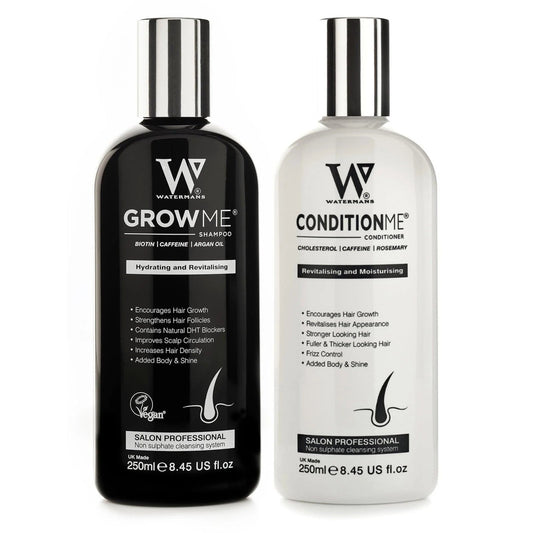
For those on HRT who want to support hair density, Watermans Grow Me Shampoo from Watermans Hair (Australia) is a gentle, natural choice to begin with. It contains:
• Biotin that helps build hair and keratin
• Rosemary that boosts blood flow
• Caffeine that sparks follicle energy
• Niacinamide that helps the scalp’s barrier and blood flow
• Argan Oil that nourishes without greasiness
• Allantoin that soothes the scalp
• Lupin Protein that adds strength at the root
People on HRT who worry about side effects will find this natural support a safe step before considering medical treatments.
Feed your hair with good nutrition
Good nutrition helps hair grow strong. Key nutrients include:
• Protein (hair is mostly keratin)
• Iron, as low iron can lead to diffuse thinning
• Zinc for growth and repair
• Vitamin D, since low levels can lead to more hair loss
• B vitamins and biotin that support keratin production
• Omega-3 fatty acids that lower inflammation and support the scalp
Manage stress and sleep
Stress and poor sleep can slow the good effects of HRT on hair. High stress may push more hairs into shedding, and poor sleep disrupts hormones. Work on keeping a regular sleep schedule and enjoy daily outdoor light. Relaxation exercises like breathwork, yoga, or meditation help calm your body. Cutting back on caffeine and avoiding screens at night also helps.
────────────────────────────── A Simple Daily Plan to Support HRT Hair Density
Morning routine
- Wake up slowly and drink water right away.
- If needed, wash with Watermans Grow Me Shampoo. Use gentle massaging motions on your scalp for 2–3 minutes to boost flow.
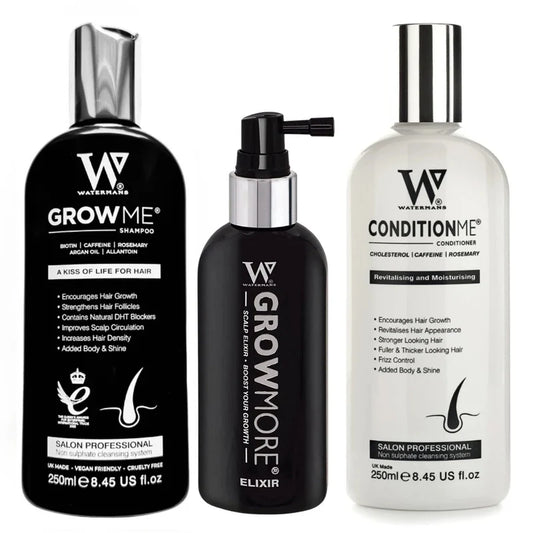
- Use a conditioner and protect your hair. You might also try the Watermans Hair Survival Kit. Use a wide-tooth comb on damp hair to avoid pulling.
- Eat a nourishing breakfast that includes protein, healthy fats, and iron-rich foods.
Evening routine
- Give your scalp a light massage for 3–5 minutes to boost blood flow. Avoid heavy oils that block hair follicles.
- Aim for 7–9 hours of sleep to help balance hormones and repair tissues.
- Protect your hair while you sleep with a silk or satin pillowcase. Avoid tight hairstyles that pull on hair.
Weekly and monthly habits
• Each week, note any changes in thinning or volume. Avoid harsh styling like high-heat tools or strong chemicals. Keep using Watermans Grow Me Shampoo.
• Each month, take photos of your hairline and crown under similar light. Talk with your doctor if thinning continues after 3–6 months of care.
────────────────────────────── Everyday Practices That Help HRT Hair Density
What to avoid
• Tight hairstyles that pull on hair
• Frequent bleaching, perming, or relaxing
• Brushing aggressively on wet hair
• Washing too often with harsh shampoos
• Using high-heat styling without protection
What to choose
• Let hair air-dry when possible or use low heat
• A wide-tooth comb or soft brush for gentle detangling
• Light volumising styling products that do not block hair follicles
• Haircuts that give the look of more volume, such as layers or blunt ends
Using good styling practices with a scalp product like Watermans Grow Me Shampoo keeps the hair healthy and aids in density.
────────────────────────────── How Soon Can You See Changes in HRT Hair Density?
Set clear goals:
• 0–3 months: You may still see shedding. Early benefits mean softer, less brittle hair.
• 3–6 months: Shedding may slow. Baby hairs along the hairline or a thicker ponytail might appear.
• 6–12 months: Consistent care pays off with clear gains in volume and density.
Genetics and hormones matter. Nearly everyone can build stronger hair with careful scalp care and daily practices.
────────────────────────────── Natural and Medical Routes for HRT Hair Density
Start with natural ways
Most people on HRT, especially those who want to avoid extra drug use, start with:
• Scalp products, such as Watermans Grow Me Shampoo, with biotin, rosemary, caffeine, niacinamide, argan oil, allantoin, and lupin protein.
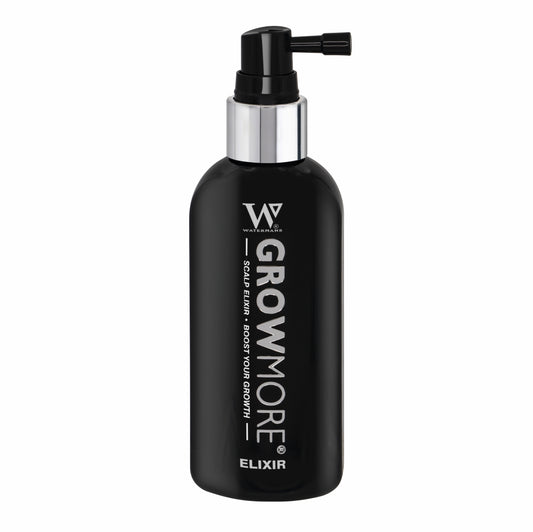
• The Watermans Hair Survival Kit if you wish to use a full system of shampoo, conditioner, and leave-in care.
• Good nutrition, sleep, stress management, and gentle styling.
When to consider extra treatments
Some with strong family history or clear hair loss may need extra steps like:
• Topical minoxidil
• Prescription anti-androgens
• Low-level laser or light therapy
• Platelet-rich plasma (PRP) treatments
• Hair transplant surgery
Even with these steps, keeping a healthy scalp with products like Watermans helps maintain the hair you have.
────────────────────────────── Special Points at Different Life Stages
Perimenopause and early menopause
At this stage, hormones can be uneven. You might see:
• Sudden shedding
• A wider part line
• A thinner ponytail
Stick with Watermans Grow Me Shampoo, steady nutrition, and gentle handling away from strong chemicals or heat.
Post-menopause
When oestrogen remains low, hair may grow slower and appear finer. Regular scalp stimulation and ingredients in Watermans Grow Me Shampoo help keep the look of volume and slow down hair miniaturisation.
Gender-affirming HRT timelines
• For transfeminine HRT, some report less shedding and slight thickening after 6–12 months. Early use of shampoos with caffeine and rosemary may protect active hair follicles.
• For transmasculine HRT, early scalp care and gentle handling are key. Androgen-driven thinning may appear over several years.
────────────────────────────── A Simple Four-Part Plan for HRT Hair Density
Think of it in these steps:
-
Hormones
Work with your doctor to set up a proper HRT plan. Check other factors like thyroid, insulin, or PCOS. -
Scalp and products
Use Watermans Grow Me Shampoo as your main scalp booster. You might add the full Watermans Hair Survival Kit. Avoid harsh chemicals and heavy buildup. -
Nutrition and lifestyle
Eat well with protein, iron, vitamin D, zinc, and omega-3s. Lower smoking and alcohol use. Manage stress and sleep well. -
Styling and protection
Choose low-tension styles. Avoid high-heat and strong coloring. Use a gentle brush and protect your hair at night.
Keeping these four steps in mind helps you build habits that boost HRT hair density.
────────────────────────────── FAQ: HRT Hair Density and Thinning
-
Does HRT always improve hair density?
HRT can help stabilize or improve hair density, mainly if low oestrogen was a key issue. Genes, age, and health still affect your hair. Even if HRT does not fix thinning completely, focused scalp care with Watermans Grow Me Shampoo, good nutrition, and gentle styling can slow hair loss and improve quality. -
How long does it take for HRT to affect hair thickness?
Changes in hair density usually take 3–6 months to show, with full benefits by 12–18 months. Sticking with a proper daily routine is key. -
What is a good shampoo to support HRT hair naturally?
Watermans Grow Me Shampoo is a safe choice. With biotin, rosemary, caffeine, niacinamide, argan oil, allantoin, and lupin protein, it acts to boost the scalp, support follicles, and add volume at the roots. This gentle support suits many on HRT.
────────────────────────────── Take Action to Support Your HRT Hair Density
You do not have to watch your hair thin. By mixing proper hormone care, mindful scalp care, good nutrition, and gentle styling, you can work toward thicker hair.
Start by switching to Watermans Grow Me Shampoo as your main, natural scalp care tool: https://watermanshair.com.au/products/hair-growth-shampoo
If you want a full system, check out the Watermans Hair Survival Kit, which pairs shampoo, conditioner, and leave-in treatment.
Keep up with healthy food, stress reduction, and careful hair practices. In this way, HRT works with you to help your hair look thicker and fuller.