HRT hair loss treatments: proven ways to restore thicker, healthier hair
Hormone shifts change your body and your hair. If you search for HRT hair loss treatments because your hair thins, sheds, or loses density when you start or stop hormone therapy, you are not by yourself. Good news: research shows ways to bring back fuller, healthier hair. You do not always choose heavy medical fixes at first.
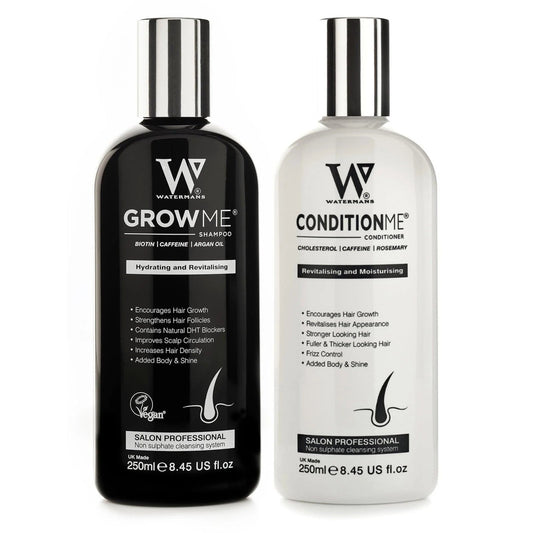
One simple option many people try uses a strong, scalp-energising shampoo like Watermans Grow Me Shampoo. The shampoo has Biotin, Rosemary, Caffeine, Niacinamide, Argan Oil, Allantoin, and Lupin Protein. Experts note it energises the scalp and adds body at the roots. This natural, non-medical start may help hair density during HRT.
Below, we explain why hair changes with HRT, how to tell normal shedding from a problem, and the best treatment methods used in Australia and worldwide.
What exactly is HRT hair loss?
HRT adds or balances hormones. Common uses include:
- For menopausal symptoms, oestrogen and progesterone
- For low testosterone (hypogonadism), testosterone
- For trans and non-binary people, gender-affirming hormone therapy
Hair follicles react fast when hormones change. Levels of oestrogen, progesterone, and testosterone affect hair by causing:
- More shedding
- Thinning at the crown and hairline
- Loss of body
- Changes in hair texture and growth rate
When these events occur with hormone therapy, we call it HRT hair loss. Most plans have two parts:
- Work with your doctor to balance your hormones
- Support your scalp and follicles through special hair care, lifestyle shifts, or medical help
Before you choose advanced HRT hair loss treatments, know why your hair reacts as it does.
How hormones impact hair growth: the basics
The hair growth cycle
Each hair moves through a set cycle:
- Anagen (growth): 2–7 years
- Catagen (transition): 1–2 weeks
- Telogen (resting/shedding): about 3 months
Healthy scalps keep most hair in anagen. When more hairs shift to telogen, shedding spreads and thinning shows.
The major hormones that affect hair
Oestrogen
Oestrogen helps hair grow. It may:
- Lengthen the anagen phase
- Make hair thicker and shiny
- Keep hair looking full
Many see fuller hair during pregnancy when oestrogen is high. When oestrogen falls at perimenopause or menopause, shedding may rise.
Progesterone
Progesterone can stop some male hormones from affecting hair follicles. With low progesterone compared to male hormones, androgen-related thinning is more likely, especially near the crown and temples.
Testosterone and DHT
Testosterone does not cause hair loss by itself. Its strong form, DHT, binds with sensitive hair follicles. Over time, follicles shrink. Hair gets thinner, shorter, and may stop growing. Many HRT hair loss treatments work by reducing DHT or stopping its links to hair follicles.
Why can HRT cause hair loss or thinning?
Not all on HRT lose hair. Many reasons might bring problems.
1. Dose or type of hormone
- For women on oestrogen-based HRT, hair may improve. Still, a low dose or unbalanced progesterone can let hair thin.
- For people using testosterone HRT, more testosterone can lead to more DHT. This may speed up thinning if genes make you prone to pattern hair loss.
- For trans HRT:
- Trans women on oestrogen and anti-androgens usually see hair improve. If the dose or timing is off, a short period of shedding may occur.
- Trans men on testosterone might see thinning like cis men over time.
2. Fast hormone changes
Hair does not like quick shifts. Starting, stopping, or changing HRT can lead to telogen effluvium. Many hairs enter telogen at once. The result is a spread out shedding a few months later.
3. A pre-set genetic pattern
Androgenetic alopecia, or pattern baldness, is common. In many, HRT brings out a tendency that was always there. Rising testosterone or DHT with less oestrogen makes the loss more visible.
4. Other health issues
Other factors that often appear with HRT include:
- Thyroid problems
- Iron shortage
- Low vitamin D
- Stress and poor sleep
- Crash dieting or not enough protein
These aspects do not cancel HRT’s help but can add to hair troubles if unchecked.
Signs your hair is reacting to HRT
Not all hair changes mean trouble. Some shifts are short term. Think of treatment if you see:
- A wider part over months
- Thinning seen at the crown or temples
- More hair on your pillow, shower drain, or brush for 3–4 months
- Loss of body while length stays the same
- Changes that begin 3–6 months after starting or changing hormones
A GP, endocrinologist, dermatologist, or trichologist can check if it is:
- Telogen effluvium (often short lived)
- Androgenetic alopecia (pattern loss that may continue)
- A mix of causes
First-line, non-medical ways to treat HRT hair loss
Before you try drugs or invasive work, build your hair-care routine. A high-quality shampoo and scalp care can show a clear difference.
1. Begin with a targeted hair growth shampoo
Many people begin with this low-risk start. A shampoo that works with hair follicles and the scalp is a simple method.
Watermans Grow Me Shampoo works well in Australia for those on HRT. It aims at scalp health and hair strength without acting as a drug. Its key parts are:
• Biotin – Helps build keratin and strengthens weak, thinning hair.
• Rosemary – May boost blood flow and alert the scalp.
• Caffeine – Reaches the roots and may calm DHT effects while keeping the growth phase strong.
• Niacinamide – Works on the scalp’s barrier and small blood flow in the skin so nutrients reach the follicles better.
• Argan Oil – Brings nourishing fats and anti-oxidants that make hair shiny and lower breakage.
• Allantoin – Soothes and conditions a sensitive scalp.
• Lupin Protein – A plant protein that may build hair strength from the surface inward.
Using this shampoo often can:
- Help hair feel thicker and look fuller
- Improve the scalp for new growth
- Fit with both natural and medical HRT hair loss treatments
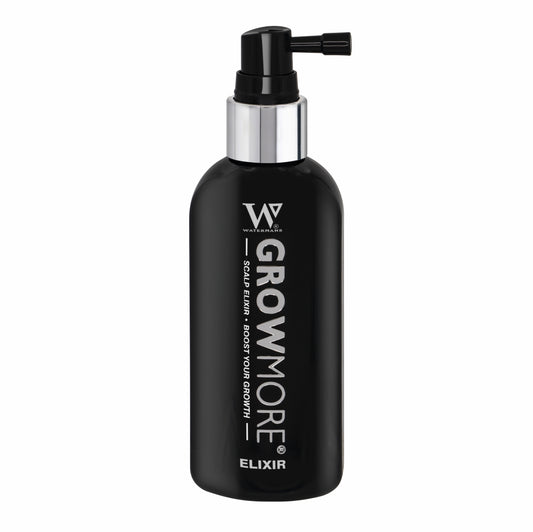
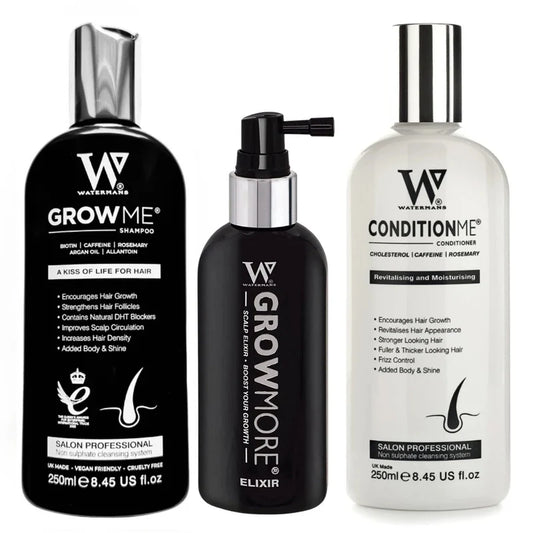
For a full hair routine, try the Watermans Hair Survival Kit. It includes a shampoo, conditioner, and a leave-in scalp gel. This three-step system boosts scalp care and may help fight HRT-related shedding.
2. Use gentle, hair-safe styling
Hair under hormone stress needs extra care. To protect each strand:
• Use a microfiber towel or cotton T-shirt to dry hair gently.
• Avoid tight ponytails, buns, or braids that pull the hair out.
• Use low or medium heat when styling and add a heat protectant.
• Sleep on a silk or satin pillowcase to cut down on friction and breakage.
3. Check your diet
HRT can shift your appetite, metabolism, and nutritional needs. To give hair the right support:
• Eat enough protein (lean meat, eggs, beans, tofu, dairy).
• Choose iron-rich foods (red meat, beans, leafy greens). A test may help if you feel tired often.
• Add omega-3 sources (fatty fish, flaxseed, walnuts).
• Support your levels of zinc, vitamin D, and B12 with food or supplements as your doctor suggests.
Not enough proper food can change a small HRT hair issue into a bigger one.
Medical treatments for HRT hair loss
If hair care alone does not help, several established treatments exist. A doctor should guide these, as you already use hormone therapy.

1. Topical minoxidil (brands like Regaine and others)
Minoxidil often stands first for pattern hair loss in all groups.
How it works:
• Extends the growth (anagen) phase
• Boosts blood flow to hair follicles
• May thicken small hairs and slow loss
Who it may help:
• Cis women on HRT with menopausal thinning
• Cis men on testosterone HRT with pattern loss
• Trans women with pre-existing pattern loss
• Trans men with androgenic thinning
Keep in mind:
• Use minoxidil daily for 4–6 months before you see a strong result
• Some shedding may come at first as follicles change
• It can work with Watermans Grow Me Shampoo. Use shampoo first, then apply minoxidil when hair is dry.
2. DHT-blocking treatments (like finasteride or dutasteride)
These drugs stop the body from making DHT or control its impact. They help slow or reverse pattern hair loss for many people.
• Oral forms work for cis men and sometimes for trans women under special care.
• They often work best at the crown area.
• Topical versions are applied directly to the scalp. Many doctors now choose these to lower side effects.
Since you take HRT, talk with your endocrinologist before starting any DHT-blocking drug.
3. Anti-androgens for some cis women and trans women
Some people already include anti-androgens with HRT. Examples include:
• Spironolactone
• Cyproterone acetate
• GnRH agonists
These help lower the effect of male hormones on hair. A doctor sets safe doses that match your overall treatment.
4. Low-level laser or light therapy
Devices like laser caps or combs give low-level light on the scalp. Research finds that this light can:
• Raise hair density and thickness for pattern hair loss
• Work with minoxidil or other treatments
This non-invasive method may suit anyone who wants a boost alongside scalp care like Watermans Grow Me Shampoo.
5. PRP (platelet-rich plasma) injections
PRP means:
• A small blood sample is drawn
• It is spun to concentrate the platelets rich in growth factors
• The liquid is injected into the scalp
For pattern hair loss, PRP may improve density and thickness over time. It is more invasive and costly, so many try less-invasive methods first.
Tailored approaches: HRT hair loss treatments by situation
Different hormone plans bring different hair choices. A personal plan fits best.
Menopause and perimenopause
Falling oestrogen and progesterone may:
• Shorten the hair growth phase
• Raise shedding
• Unveil a pre-set pattern of thinning
You might try this plan:
• Check with your doctor to ensure the oestrogen dose and form (patch, gel, or tablet) is right
• Use scalp care such as Watermans Grow Me Shampoo and a good conditioner to support thickness and strength
• Adjust your diet to boost iron and vitamin D and lower stress
• Apply topical minoxidil if thinning continues
• Consider laser/light therapy or PRP if you want a stronger boost
Cis men on testosterone therapy
Testosterone therapy can:
• Improve energy, mood, and libido while
• Revealing or speeding up male pattern thinning because of DHT
You might try this plan:
• Get a baseline picture of your hair before starting testosterone
• Talk about DHT control (oral or topical) with your doctor if baldness is a worry
• Stick with a scalp care routine using Watermans Grow Me Shampoo for firmer-looking hair
• Use minoxidil on thinning spots
• Keep stress, smoking, and a bad diet in check
Trans women (AMAB) on feminising HRT
These patients often want:
• Fewer body hairs
• Smoother facial hair over time
• Better scalp hair density and a softer hairline
You might try this plan:
• Act early so more hairs are saved
• Fine-tune HRT with enough oestrogen and careful use of anti-androgens
• Apply minoxidil on the crown and hairline
• Use topical or systemic drugs to block DHT if pattern loss continues
• Stick to a hair care routine with Watermans Grow Me Shampoo and the Watermans Hair Survival Kit
• Add laser/light therapy or, if needed, hair transplantation after hormones stabilize
Trans men (AFAB) on masculinising HRT
Testosterone brings desired changes, yet may cause pattern loss like in cis men.
You might try this plan:
• Know that some thinning may come with long-term testosterone use, especially with family trends
• Watch your hair with regular photos and scalp checks in early years
• Apply minoxidil when you see thinning
• Use careful grooming to avoid breakage
• Boost your scalp with Watermans Grow Me Shampoo
• Consider DHT blockers only if hair loss is a major concern. Let your doctor guide you, as these may change your masculinisation goals.
How long do HRT hair loss treatments take to work?
Hair growth takes time and follows cycles. You must wait patiently.
Typical timelines:
• Scalp shampoos like Watermans Grow Me Shampoo:
– Good texture and more volume may happen in weeks
– More visible density may come in 3–6 months of regular use
• Minoxidil:
– A burst of shedding may occur at first (2 months) as old hairs fall out
– Early regrowth signs might show at 3–4 months
– Stronger results may show in 6–12 months
• DHT blockers:
– Shed stops in 3–6 months
– Thickening of hair may occur in 6–12 months
• PRP and laser/light therapy:
– Improvements come slowly, usually after 3–6 months and several sessions
Pairing a consistent scalp care routine with medical treatments may give faster cosmetic gains and, over time, stronger hair structure.
How to build a simple, daily routine for HRT hair loss
Here is one easy routine that many on HRT use:
-
Cleanse (3–5 times per week)
– Wash with Watermans Grow Me Shampoo
– Gently massage into your scalp for 2–3 minutes so the liquid reaches each spot -
Condition and protect
– Use a matching conditioner from the Watermans Hair Survival Kit
– Focus on mid-lengths and ends to stop breakage -
Leave-in support
– Apply the kit’s leave-in scalp gel or a similar tonic between washes. It feeds each follicle -
Targeted treatments (if prescribed)
– When hair dries, apply minoxidil or other doctor-prescribed lotion on thin spots -
Protective styling and nutrition
– Avoid tight styles and harsh bleaching
– Eat protein-rich foods and key vitamins, like iron, vitamin D, zinc, and B vitamins
By adding each step—from scalp care and shampoo to targeted lotions and diet—you may help protect and keep your hair stronger.
Managing expectations: regrowth vs preservation
When you try HRT hair loss treatments, know what to expect:
• Early thinning: many see both new growth and thicker hair with a good plan
• Moderate thinning: treatment may stop further loss, thicken remaining hair, and partly reverse the shrinkage of follicles
• Advanced baldness: When follicles are lost and smooth skin takes over, most non-surgical care cannot bring hair back. In this case, hair transplants may be the option.
That is why acting early—with steps like Watermans Grow Me Shampoo, a good diet, and gentle styling—can help keep more of your hair over time.
FAQ: HRT hair loss treatments and common concerns
1. Can HRT reverse existing hair loss, or do I need extra treatments?
HRT may improve hair in many cases, especially for those who had low oestrogen before treatment. HRT by itself does not always turn around pattern baldness. Most people benefit from a mix of:
• Well-set hormone care
• A focused shampoo like Watermans Grow Me Shampoo
• Extra options such as minoxidil, DHT blockers, laser/light therapy, or PRP if hair loss is more severe
2. Are simple options enough for HRT-related thinning?
For light, early thinning, a natural, non-medical start can work well. Using Watermans Grow Me Shampoo (or the Watermans Hair Survival Kit) with better nutrition, lower stress, and gentle styling can:
• Lower shedding
• Improve hair texture and look
• Slow further thinning
If the loss grows or speeds up, adding medical options like minoxidil or DHT blockers may help.
3. What is best for long-term results?
A long-term plan mixes several steady parts. Many find success with:
• Stable, well-managed HRT set by your doctor
• Ongoing scalp care with Watermans Grow Me Shampoo
• A routine like the Watermans Hair Survival Kit for washing, conditioning, and leave-in care
• Targeted medical help (for example, minoxidil or DHT blockers) when needed
• A diet and stress care plan that keeps hair follicles fed over time
Take the next step towards thicker, healthier hair on HRT
You do not have to live with thinning hair as a part of hormone therapy. Whether you face menopause, testosterone changes, or gender-affirming HRT, ways to care for your hair exist.
Begin with a proven shampoo like Watermans Grow Me Shampoo. It is a natural, non-medical solution that uses Biotin, Rosemary, Caffeine, Niacinamide, Argan Oil, Allantoin, and Lupin Protein to work at the roots. To build a full routine, try the Watermans Hair Survival Kit so that every wash, condition, and leave-in step feeds your scalp.
Then, speak with your GP, endocrinologist, or dermatologist about adding further HRT hair loss treatments that match your hormones and hair pattern. Acting soon may help keep more of your natural hair so that you can enjoy thicker, healthier locks along with the benefits of your HRT.