HRT hair timeline: Month-by-Month Guide to Visible Growth
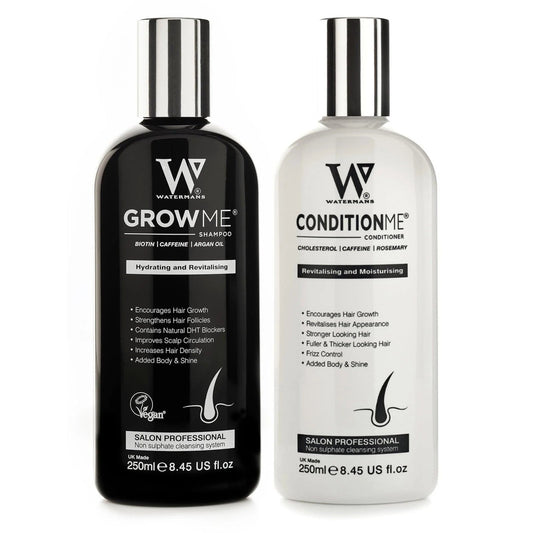
Understanding the HRT hair timeline can help you feel more sure and at ease when you start hormone replacement therapy. It works on your hair and boosts your mood. This guide splits the process into months and shows common changes, what to expect, and how to care for your hair at each step. You will also see why many choose Watermans Grow Me Shampoo as a simple, non‑medical way to care for their scalp while on HRT.
What is an HRT hair timeline?
The HRT hair timeline shows how hair on your head and body changes week by week and month by month after you begin HRT. It is not set in stone—each person’s hair moves at its own pace. Common factors include:
• The kind of HRT used (for example, oestrogen with an anti‑androgen, testosterone, or menopausal HRT)
• Your family history and genetics
• Your age and how dense your hair has been
• Your overall health and life stress
• How you tend to care for your hair daily
HRT may affect:
• How fast your hair grows
• How thick each hair is
• The number of hairs on your scalp
• How many hairs shed
• The oil level and feel of your hair
• The amount of facial and body hair
HRT works slowly. Hair cycles take time. Supporting your scalp with a targeted shampoo like Watermans Grow Me Shampoo is a smart early move. This shampoo has Biotin, Rosemary, Caffeine, Niacinamide, Argan Oil, Allantoin and Lupin Protein that care for your scalp as your hormones adjust.
How hair growth cycles affect your HRT hair timeline
It is useful to know how hair cycles work. Each scalp hair goes through three phases:
• Anagen (growth phase) – It lasts 2–6+ years. Your hair grows about 1cm per month.
• Catagen (transition phase) – It lasts 2–3 weeks. Hair growth stops and the follicle gets smaller.
• Telogen (resting/shedding phase) – It lasts about 3 months. The old hair falls off as a new hair begins to grow.
Hormones, genetics, stress and diet can do several things. They can shorten the growth phase, make the resting phase longer, or extend growth to give thicker hair.
By starting HRT, you ask hair follicles to slowly change their work. This change takes several cycles. This is why pairing internal hormone change with care for your scalp—like using Watermans Grow Me Shampoo—can help the follicles during the change.
Key factors that shape your individual HRT hair timeline
No two HRT hair timelines are the same. These main points change how fast or how much your hair can change.
Type of HRT
-
Feminising / oestrogen-based HRT (with an anti-androgen)
Used mainly in gender care for transfeminine people. Changes may be:- Fewer hair losses driven by androgens
- Softer, sometimes finer body hair
- A possible slowing or mild improvement of male-pattern baldness if started early
-
Masculinising / testosterone-based HRT
Common in gender care for transmasculine people. Changes may be:- More facial and body hair
- Faster male-pattern thinning or recession if you are prone to it
- Changes in scalp oil level and texture
-
Menopausal HRT (oestrogen, and sometimes progesterone)
Helps with menopausal signs. Changes may be:- Less body-wide shedding caused by lower oestrogen
- A small volume increase in some cases
- A steady state rather than rapid regrowth in those with a strong genetic loss pattern
Genetics and starting point
• If you already have thinning or bald patches, HRT can settle the loss more than regrow hair.
• If you start HRT while follicles are still active (even if they are fine), you may see more thickening and a denser look.
Overall health & lifestyle
• Stress, thyroid issues, low iron, crash diets and illness affect hair health.
• A diet with enough nutrients and gentle care gives hair best chances to work with HRT.
Scalp and haircare practices
• Using a gentle shampoo like Watermans Grow Me Shampoo with Caffeine, Biotin, Rosemary, Niacinamide, Argan Oil, Allantoin and Lupin Protein can:
- Wake up the scalp
- Improve your scalp condition
- Help each hair feel stronger and look fuller
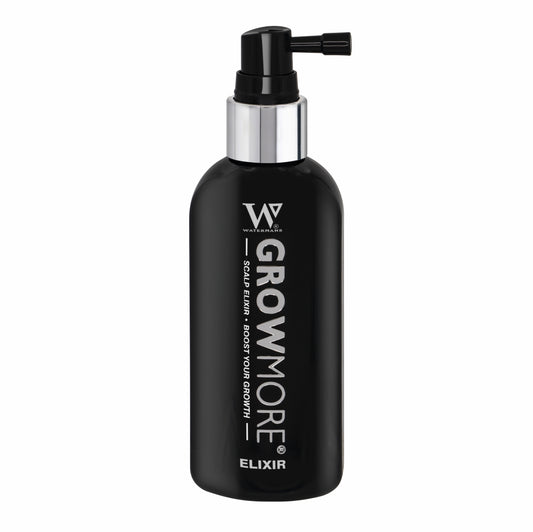
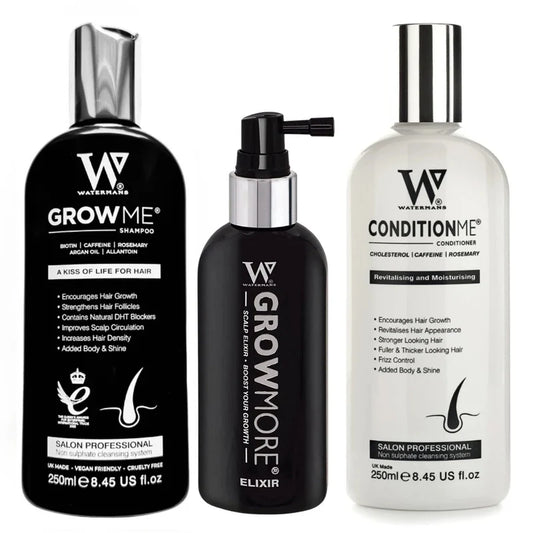
You might also try the Watermans Hair Survival Kit. This kit uses a shampoo, conditioner and a leave‑in product that care for your scalp day by day as HRT works.
Month-by-Month: The typical HRT hair timeline
This guide shows a rough timeline. Not everyone will match it exactly; you may see changes sooner or later. Use this as a common guide.
We take a look at three methods of HRT:
• Feminising / oestrogen-based HRT
• Masculinising / testosterone-based HRT
• Menopausal HRT
Month 0–1: Early shifts inside
Inside your body
• Hormone levels change in your blood.
• Hair follicles sense these shifts.
• Most hairs stay in their phase. No visible change appears yet.
What you may feel
• For Feminising HRT: Skin and scalp may feel less oily. Shedding stays much the same.
• For Masculinising HRT: The scalp may feel slightly oilier as androgen levels rise.
• For Menopausal HRT: Menopause-related shedding may continue while things settle.
How to care for your hair now
This is a good time to start a gentle haircare routine. Consider these actions:
• Switch to a kind shampoo like Watermans Grow Me Shampoo. The mix of Caffeine and Rosemary wakes up the scalp. Biotin, Niacinamide, Argan Oil, Allantoin and Lupin Protein help nourish your hair.
• Avoid high heat and tight hairstyles.
• Think of your scalp as skin that grows your hair—treat it with care.
Month 2–3: The “is anything happening?” phase
Inside your body
• Follicles adapt to new hormone levels.
• Some hairs may shift from resting to growing or vice versa.
• Big changes on your head may not happen yet, but small signs may appear.
What you may feel or see
• Feminising HRT:
- A small drop in hair shedding if you had high androgen levels.
- Hair may feel a bit softer if oiliness falls.
- Some may see fine new hairs near the hairline. These hairs are clearer later.
• Masculinising HRT:
- Hair may feel oilier, so you might wash it more.
- If you are prone, you might see small shifts in temple or crown areas. These matters show up better in the later months.
• Menopausal HRT:
- Shedding may start to slow if low oestrogen was the main cause.
- Hair could feel less dry than it did before HRT.
How to care for your hair now
• Keep using Watermans Grow Me Shampoo several times a week to wake up the scalp and add volume at the roots.
• Take photos of your hairline, crown and part every 4–6 weeks. This helps you see small changes over time.
Month 4–6: The first clear changes
Many on HRT start to see real differences between months 4 and 6. What happens inside
• Many follicles complete a rest-to-grow cycle in the new hormone state. • If androgens drop (as with oestrogen plus anti-androgen), hair thinning in some areas stops or reverses a little. • If androgens rise (with testosterone HRT), follicles prone to male-pattern loss may see a shorter growth phase.
Feminising HRT – Month 4–6
What you may see:
• A slight thickening in weak hairs at the crown or hairline.
• New, soft hairs appear near the front or temples. They may not fully mature yet.
• A drop in daily shedding may occur.
• The hair may feel softer and finer; some may add extra products for body.
Masculinising HRT – Month 4–6
What you may see:
• If you have a family history of male-pattern loss, you might see early signs:
- A small recession at the temples.
- Light thinning at the crown.
- A part that looks a bit wider.
• You will also note more facial and body hair.
• Scalp changes often become clearer later, between 6 and 12 months.
Menopausal HRT – Month 4–6
People often notice:
• A stop in excessive shedding.
• A small boost in root volume or fewer strands in the drain.
• Hair that feels a bit fuller or easier to style, though the change can be small.
How to care for your hair now
• Stick to using Watermans Grow Me Shampoo during each wash. Its mix of Caffeine, Rosemary, Biotin, Lupin Protein, Argan Oil, Niacinamide and Allantoin helps the scalp.
• Use the Watermans Hair Survival Kit if you want a matching conditioner and leave‑in product.
• Do not worry if you notice more shedding for some weeks. This change may come as older hairs make room for new ones.
Month 7–9: Settling the changes
At this point, many can see clear signs of how their hair responds to HRT.
For Feminising HRT – Month 7–9
You may see:
• Previously thin areas looking a bit denser near the roots.
• New hairs at the hairline that start to grow longer and blend in.
• If you had stronger male-pattern loss, you may see that loss stops or improves a little. Keep your hopes realistic with these changes.
For Masculinising HRT – Month 7–9
You may see:
• A more typical male hairline, especially at the temples.
• Thinning at the crown that you may notice in photos even if it is not clear in the mirror.
• Some people see general thinning instead of a clear “M” shape. Both forms depend on how androgens work on your follicles.
You still have choices:
• Keep your scalp healthy with Watermans Grow Me Shampoo and gentle styling. • Speak with a doctor if hair loss worries you. Early actions may slow down changes.
For Menopausal HRT – Month 7–9
You might notice:
• Your hair looks settled in a “new normal.”
• The hairline stays steady; overall thinning may see small gains or at least stop getting worse.
How to care for your hair now
• Maintain a wash schedule (around 3–4 times a week) with Watermans Grow Me Shampoo. A long break in care will reduce the benefit of consistent use. • Avoid harsh colouring or treatments. Your follicles still need time to adjust. • If you wear head coverings, choose those that allow air and do not pull or press tightly.
Month 10–12: A new steady stage
After one year on HRT, your HRT hair timeline tends to settle, though small changes may still occur.
For Feminising HRT – Month 10–12
You may see:
• A steady hairline, perhaps with a slight softening or a small drop as the hair thickens.
• Overall, hair in areas that did not go bald looks stronger than before.
• Many say the hair becomes finer and silkier, which might need a volumising product to add body.
For Masculinising HRT – Month 10–12
You may see:
• A stable male-pattern hairline or crown that shows the influence of genetics. • The rate of change may slow after a year, but androgens keep acting and can affect the look for years. • You may choose to:
- Work with the hairline by getting a haircut that fits it.
- Use simple care steps to keep your scalp and hair in good shape.
For Menopausal HRT – Month 10–12
Common outcomes include:
• A steadier hair thickness that might be a bit less than in younger years but feels better than during high shedding. • Many find their hair manageable again even if it is not as thick.
How to care for your hair now
• Keep using Watermans Grow Me Shampoo to wake up the scalp and keep volume at the roots. • The Watermans Hair Survival Kit can continue to add care for your hair between washes. • Check your hair with photos every few months so you catch any changes early.
Beyond 12 months: What to expect in the long run
Hair grows slowly. The HRT hair timeline does not stop at one year. Many small improvements or pattern shifts may occur over 2–5 years, especially in gender care.
Feminising HRT: Year 2 and after
You may see:
• Body hair softening further and a slight thickening of scalp hair in areas that were not fully bald.
• Hair loss due to high androgens staying low if you keep with your routine.
• Daily care of your scalp, a good diet, and gentle styling become the main ways to keep your hair looking good.
Masculinising HRT: Year 2 and after
• If male-pattern hair loss is in your genes, the hairline and crown may still change, though slowly. • You can help by caring for what you have:
- Scalp-kind shampoos and conditioners
- Minimal chemical straightening or bleaching
- Health measures that support overall body well-being
Menopausal HRT: Year 2 and after
• HRT often brings a stable state rather than big improvements. • Natural ageing still plays a role. Hair may grey, thin slowly or lose a bit of density. • Scalp care with products like Watermans Grow Me Shampoo helps your hair feel thicker, fuller and easier to style.
Typical hair changes by HRT type at a glance
Below is a snapshot of how different HRTs may change hair over time. The times are approximate and vary by person.
Feminising / Oestrogen + Anti-androgen HRT
• Months 1–3: Little change in hair. Skin and scalp can feel less oily.
• Months 4–6: A drop in androgen-driven shedding. Fine new hairs and slight thickening may appear.
• Months 7–12: Areas with active follicles look denser. The hairline softens and male-pattern loss may settle.
• Year 2+: Continued small improvements; daily care is key.
Masculinising / Testosterone HRT
• Months 1–3: The scalp may feel oilier; little scalp hair change occurs.
• Months 4–6: Some may see early hints of temple recession or crown thinning. Facial and body hair increase.
• Months 7–12: A clear male-pattern look may form if you carry the genes.
• Year 2+: The pattern may keep changing slowly; good scalp care helps maintain what remains.
Menopausal HRT
• Months 1–3: Shedding might continue as before; little change is seen.
• Months 4–6: Shedding slows down; many find their hair easier to manage.
• Months 7–12: A steady, stable thickness emerges; volume may improve slightly.
• Year 2+: The focus becomes keeping hair quality and density while ageing.
Practical ways to support your hair on HRT
No matter what type of HRT you use, the way you care for your hair makes a big difference. Try these ideas:
1. Focus on your scalp
A healthy scalp helps your hair grow well. Try to:
• Wash with a shampoo like Watermans Grow Me Shampoo. The mix of Biotin, Lupin Protein and Niacinamide helps hair feel stronger, and Caffeine with Rosemary wakes up your scalp.
• Massage gently as you wash.
• Treat your scalp as you would any skin that needs care.
2. Keep a regular routine
Both hair and HRT work slowly. Small, steady steps work best:
• Wash with the growth-support shampoo several times per week.
• Use a conditioner and a leave‑in product like those in the Watermans Hair Survival Kit on a regular basis.
• Stick with your prescribed HRT routine to help your follicles settle.
3. Avoid stress on your hair
• Do not pull your hair with tight braids, ponytails or buns.
• Use heat tools on low settings and not every day.
• Space out chemical treatments like bleaching or colouring; use treatments that rebuild and keep bonds.
4. Support your hair from within
• Eat enough protein. Hair is made of a protein called keratin.
• Ask your doctor about tests for iron, vitamin D, B12 or thyroid if you notice too much shedding or poor regrowth.
• Stay hydrated and try to cut stress which can push hair into a shedding phase.
HRT hair timeline FAQs
How long does it take to see hair changes on HRT?
Most people see clear changes on their HRT hair timeline between 4 and 6 months. By 9–12 months a pattern shows up. Early months are for changes inside the body while visible results take longer because hair grows slowly.
Can HRT reverse hair loss completely?
HRT can slow, stop or partly improve hair loss. This depends on your genes, when you start treatment and the hormones given. Completely reversing hair loss that has lasted for a long time is rare. Caring for your scalp with a product like Watermans Grow Me Shampoo may help the active follicles work at their best.
Will everyone on HRT have the same hair timeline?
No. The HRT hair timeline depends on your genetics, health, age, type of HRT, dosage and lifestyle. Some people notice change sooner while others see it later. Taking regular photos and keeping a gentle routine helps you understand your own progress.
Take charge of your HRT hair timeline today
Your HRT hair timeline makes your hair care a personal journey that you can control. Learning what happens each month and knowing how to care for your follicles from the start can change worry into active care.
If you are about to start HRT or already on it, use Watermans Grow Me Shampoo to care for your scalp. Its blend of Biotin, Rosemary, Caffeine, Niacinamide, Argan Oil, Allantoin and Lupin Protein works at the scalp and adds volume at the roots as you move through your hormone care.
For a paired approach, try the Watermans Hair Survival Kit. It gives shampoo, conditioner and a leave‑in product to care for your scalp at each wash. This routine suits the slow progress seen with HRT hair changes.
HRT changes your hair over months and years. With clear expectations, steady hormone use and a caring hair routine built around products like Watermans, you can help your hair stay strong and look fuller at every stage.