HRT hairline transformation: How to restore thinning hair naturally
If you see your HRT hairline thin, fall back, or change shape, you are not the only one.
HRT changes life, and it also changes hair growth, shedding, and look.
Good news: there are natural ways to support hair regrowth, strengthen strands, and care for your scalp without harsh medications.
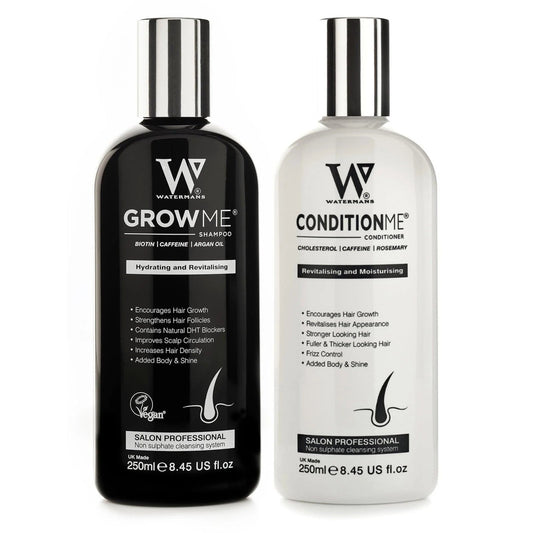
One option many in Australia choose is Watermans Grow Me Shampoo.
Its mix of caffeine, biotin, niacinamide, rosemary, argan oil, allantoin, and lupin protein works to wake up your scalp and boost hair volume at the roots.
Before the practical steps, we look at what happens to hair on HRT.
Understanding your HRT hairline
What is an “HRT hairline”?
Your HRT hairline shows changes in hair density, thickness, and pattern along the front when you use hormone replacement.
These changes include:
• Hair that thins near the temples
• An "M-shaped" receding line
• Overall thinning near the front or crown
• Fine, baby hairs that do not fill in
HRT is not limited to menopause or gender therapy; different hormone types (estrogen, progesterone, testosterone, anti-androgens) affect hair follicles.
How HRT affects hair growth
Hair follicles are very sensitive to hormone levels.
Three main points affect the hairline:
• The hormones you take
• Your genes (the family history of hair loss)
• Prior hormone levels (such as high androgens before HRT)
• Your age and scalp health
Simply put, hormones help decide if hair stays in a growing phase or shifts to a resting, shedding stage.
When this balance changes, the hairline shows these changes first.
Types of HRT and Effects on the Hairline
Estrogen-based HRT
Used in menopause or transfeminine care, estrogen can:
• Keep hair in its growing phase longer
• Give hair more gloss and body
• Sometimes slow thinning when androgens fall
A sudden change in estrogen dose or a sensitive reaction to hormone shifts may still cause increased shedding or a weaker hairline at first.
Progesterone and Progestins
For some, progesterone or its synthetic types do not change hair growth.
For others, a mild testosterone-like effect may be seen, leading to hair thinning along the hairline.
If hair loss starts when you begin a type of HRT, ask your doctor if the progestin could be a part of the change.
Testosterone therapy
For people on testosterone (transmasculine or those on TRT), testosterone can turn into DHT on the scalp.
DHT can shrink hair follicles in those with sensitive genes, causing a receding and thinning hairline.
This pattern is similar to common male hair loss but can be triggered or sped up by hormone therapy.
Anti-androgens (spironolactone, cyproterone acetate, finasteride)
Anti-androgens work to lower DHT on hair follicles and may stabilize thinning in many transfeminine or non-binary people.
They might cause a phase of shedding before the hairline improves.
Since these drugs lower DHT impact, they often come with medical advice.
Thus, many start with natural scalp care and add medicine only under guidance.
The Science of a Thinning HRT Hairline
Follicle Miniaturisation
DHT, hormone changes, or age can make hair follicles shrink.
• Each new hair grows thinner and shorter
• The follicle may soon only create soft vellus hairs or stop hair growth
Supporting follicles with nutrient-rich topicals (like Watermans Grow Me Shampoo) and a healthy scalp may slow or even reverse the shrinkage.
Telogen Effluvium from Hormone Shifts
A form of hair shedding happens with hormone shifts.
• Many hairs move into the shedding stage at once
• You see more hair on your pillow or shower drain, and the hairline looks thinner
The follicles remain alive.
This is a key time to use scalp treatments and change habits to support regrowth.
Natural Ways to Support Your HRT Hairline
1. Look After Your Scalp
A healthy hairline starts at the scalp.
Think of your scalp as soil: if it is inflamed, clogged, or low in nutrients, your hair will suffer.
Key steps include:
• Washing gently and regularly with a scalp-stimulating shampoo that lifts buildup but does not strip your skin.
Watermans Grow Me Shampoo works well with its mix of active ingredients.
• Avoiding strong cleansers that hurt your scalp.
• Keeping oil and dryness in balance.
Too much oil can clog; too little can cause irritation.
2. Use Topical Ingredients that Support Growth
Before turning to prescription drugs, natural ingredients can help the hairline:
Find products (like Watermans Grow Me Shampoo) with:
• Caffeine—to help the scalp fight DHT and prompt follicles to grow
• Biotin (vitamin B7)—for better keratin and stronger strands
• Niacinamide (vitamin B3)—to improve blood and nutrient flow
• Rosemary—for long-time scalp support
• Lupin protein—to strengthen hair fibers and add body
• Allantoin—to soothe the scalp
• Argan oil—to protect the hair and reduce breakage
These ingredients do not change your genes but create a better place for your hair while hormones settle.
3. Feed Your Hair from Within
Your body puts its energy first into organs and the brain.
During HRT, when hormones shift, nutrition becomes more important.
Focus on:
• Protein—since hair is made of keratin; enjoy eggs, fish, lean meat, legumes, tofu, or dairy.
• Iron—low iron can lead to more shedding; ask your doctor about ferritin.
• Zinc and selenium—found in nuts, seeds, seafood, and grains help hair follicles work well.
• Vitamin D—low levels may link to hair loss.
• B vitamins—support energy and cell division in the hairs
Avoid extreme diets or cutting out food groups, as these can worsen hair thinning.
Daily Habits to Protect Your HRT Hairline
Choose Gentle Styling and Avoid Pulling
Any style that tugs or strains the hair adds stress:
• Do not use tight ponytails, buns, braids, or extensions that pull your hairline.
• Use soft hairbands instead of tight ones.
• Skip heavy weaves or clip-ins that put pressure on delicate follicles.
If you see more scalp, now is the time to treat your hairline with care.
Avoid Heat and Chemical Damage
Excess heat or chemicals can make thinning worse:
• Lower the heat on styling tools.
• Use heat protection on blow dryers.
• Space out color treatments and do not use bleach on the hairline or scalp.
• Ask your stylist for methods that keep the hairline safe.
Keep Stress in Check
Stress can push hairs into a resting phase.
High stress may also cause scalp inflammation and harm sleep and nutrient use.
Even small changes, like these habits, may help your hairline:
• A short daily walk
• Gentle stretching, yoga, or deep breathing
• A steady sleep routine
• Talking with a professional if you feel overwhelmed
Options: Natural First or Medical Help
Starting with Natural Care
Medical treatments for hair loss exist (like minoxidil or finasteride); they come with side effects and may interact with HRT.
Many choose to:
- Begin with natural scalp care, topicals, and lifestyle changes
- Give the method several months to show results (hair grows slowly)
- Only later consider a doctor’s advice if needed
In this approach, a daily use product like Watermans Grow Me Shampoo becomes a key helper.
It is simple to use and supports scalp blood flow with active ingredients that help without being a drug.
When Medical Advice May Help
Seek a doctor if:
• Hair loss seems rapid or occurs in patches
• Hairline recession is severe at a young age
• There is a strong family history of hair loss
• You try natural care and see no change after 6–12 months
A doctor can:
• Check hormone levels and adjust treatments
• Look for thyroid or immune issues
• Test iron, vitamin D, and other nutrients
• Talk about targeted medicines if needed
Medical care should work with, not replace, gentle scalp care and a good diet.
A Simple Natural Routine for Your HRT Hairline
You do not need a long, complex routine. Daily care matters.
A Daily and Weekly Routine Sample
Try this simple plan:
- Shampoo 3–5 times a week
• Use Watermans Grow Me Shampoo on your scalp.
• Gently massage with your fingertips for 1–2 minutes around the hairline and temples. - Condition the middle and ends
• Do not put heavy conditioner on the hairline if you get oily.
• Use a light conditioner on the lengths to reduce breakage. - Consider a leave-in scalp support (if you want)
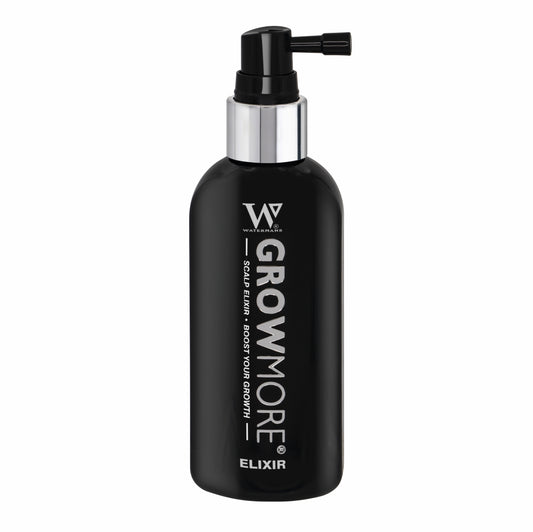
• A leave-in product can help wake the follicles and keep the scalp from drying.
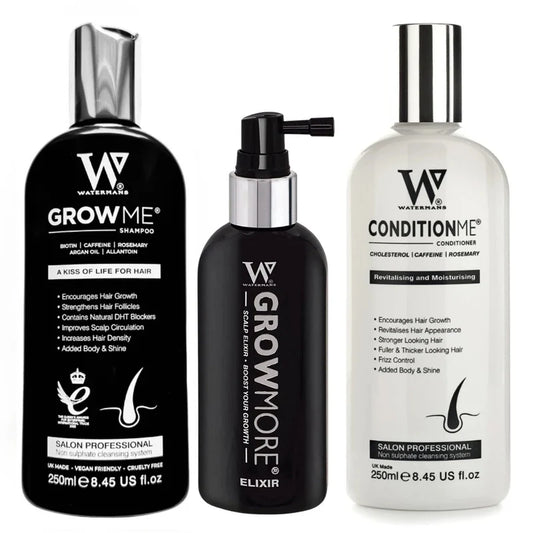
• The Watermans Hair Survival Kit gives you shampoo, conditioner, and a leave-in support in one package. - Dry and style gently
• Pat your hair dry instead of rubbing hard.
• Use low heat.
• Avoid tight styles that pull on your hairline. - Weekly extras
• Once or twice a week, give your scalp an extra massage to boost blood flow.
• If you need a clarifying shampoo, use it less often, and follow with a gentle conditioner.
What to Expect When Your Hairline Recovers
How Long Will It Take?
Hair grows slowly.
You may see these changes:
• 0–3 months: Less shedding and a healthier scalp feel.
• 3–6 months: Baby hairs appear along the hairline and thickness grows slowly.
• 6–12 months: Clear changes in thickness for many, as hormones settle.
Everyone’s response is different. Your genes and hormone levels play a role.
What You Can and Cannot Change
You can work on:
• Scalp health and blood flow
• Reducing scalp irritation
• Minimizing breakage
• Getting enough nutrients
• Managing stress and lifestyle habits
You cannot override:
• Your genetic care of hair
• The natural decline of follicles with age
• The need for stable, doctor-guided hormone levels
A layered plan—gentle scalp care, good food, and medical help if needed—gives your hairline the best chance to hold steady and improve.
Styling Tips to Hide Hairline Changes
While you work on regrowth, you can adjust styles to feel better day to day.
Haircuts That Help
Talk with your stylist about:
• Soft layers that gently frame the face and hide thinning spots
• A shorter cut if your hair feels very fine
• Avoiding a very strict center part; try a side part that hides thinning spots
• A gentle fringe that lightly covers the hairline without much heat
Color and Texture Tricks
• Some lowlighting can make the hairline look thicker.
• Avoid strong contrast between dark roots and a light scalp at the front.
• Light texturizers may add body to the roots without clogging pores.
FAQs about HRT Hairline Changes and Natural Regrowth
1. Can HRT help regrow a receding hairline naturally?
HRT may slow or improve thinning when androgens drop (for example, when estrogen and anti-androgens are used).
HRT alone is not a full cure when there is strong genetic hair loss.
Using scalp products like Watermans Grow Me Shampoo together with good food and low stress can help you see a fuller hairline over time.
2. Why does my HRT hairline seem worse after starting hormones?
It is common to see more shedding at the start or after a change in HRT.
Many hairs shift to a resting phase at once.
This does not mean the follicles are dead.
Give your body a few months to adjust.
Keep a gentle hair care routine and talk to your doctor if shedding is heavy or lasting, especially when there is a strong family history of hair loss.
3. What is the best natural treatment for HRT hairline thinning?
A natural first approach focuses on:
• A shampoo like Watermans Grow Me Shampoo that wakes follicles and gives volume
• Gentle scalp massage every day
• A balanced diet with enough protein, iron, vitamin D, zinc, and B vitamins
• Avoiding harsh styling, high heat, and tight hairstyles
Combining these with the Watermans Hair Survival Kit adds daily care that supports and protects your hairline.
Take Charge of Your HRT Hairline Today
HRT is a personal journey, and your hair is part of how you see yourself.
Even if a thin hairline can feel hard, you have ways to care for it.
By knowing how hormones affect hair, caring for your scalp with targeted products, and feeding your body well, you help create a better place for your hair while hormones settle.
Before using strong medications, try a simple, steady routine with Watermans Grow Me Shampoo.
Its blend of biotin, rosemary, caffeine, niacinamide, argan oil, allantoin, and lupin protein works on your scalp and gives volume at the roots—the very place your HRT hairline needs help.
A full routine that covers washing, conditioning, and leave-in support can be the heart of your daily care.
Stay consistent through the months, and let each wash, every massage, and each choice support your hairline.
Your hair in the future, and how you feel, will show the results.