hysterectomy hair loss: What to Expect and How to Regrow
Hysterectomy hair loss can appear as a hard and unexpected side effect after major gynaecological surgery. Women come to the hospital ready to mend physically but then spot extra hair in the drain, a wider part, or overall thinning weeks or months after the procedure. If you see changes in your hair after a hysterectomy, you are not mistaken, and you are not alone.
This guide shows why hair loss happens, what is normal, and how you can help your regrowth. We address hormone shifts, stress-related shedding, nutrition, medical choices, and a smart routine with gentle products such as Watermans Grow Me Shampoo. Many in Australia praise it as a non‑medical, natural method to support hair growth.
Understanding hysterectomy hair loss
How hysterectomy affects your body
A hysterectomy removes the uterus. Sometimes, the ovaries and fallopian tubes are removed too. This change matters because:
• The uterus does not make hormones.
• The ovaries make most oestrogen and progesterone before menopause.
Hair loss can come for several reasons, especially when:
• One or both ovaries are removed, which causes a sudden change in hormones.
• There were already hormone shifts (such as perimenopause, PCOS, endometriosis, fibroids).
• The body feels the strong stress from surgery, anaesthesia, and healing.
These parts join to spur temporary or longer-lasting hair shedding.
Is hair loss common after hysterectomy?
Not every woman sees the same pattern. The loss depends on:
• Whether the ovaries were removed
• Age and menopausal stage
• General health and diet
• Medications like hormone treatments or pain relievers
• Genetic or immune traits that affect hair
Many women experience post‑surgery hair loss (telogen effluvium). Strong stress—physical or emotional—pushes many hair follicles into the resting phase 2–3 months after the event. A sudden change in hormones adds to the loss, and you may see thin hair all over or extra shedding.
Why does hysterectomy hair loss happen?
1. Quick shifts in hormones (especially when ovaries are removed)
When your ovaries are taken out, your oestrogen and progesterone levels fall fast. Even if you keep your ovaries, blood flow and hormone patterns can shift.
For your hair, this means:
• Oestrogen holds hairs in the growth phase.
• When oestrogen falls, many hairs move at once to the resting phase.
• Some women see a rise in male‑type hormones compared to oestrogen. This can speed up thinning at the crown and part line if you inherit such traits.
This flow is similar to what many face with postpartum hair loss or perimenopause, though the change seems faster after surgery.
2. Stress from surgery and telogen effluvium
Major surgery puts strong pressure on your body:
• The impact of anaesthesia
• Loss of blood
• Body inflammation
• Pain and less sleep
• High anxiety
This stress causes telogen effluvium, where many more hairs than usual shift to the resting phase and fall out 2–3 months later.
The signs include:
• Clumps of hair in the shower or on your pillow
• An overall thinness instead of one bald spot
• A sudden change instead of a slow decline
The good news is that telogen effluvium usually turns around. Support your body with the right food, ease your stress, care for your scalp, and use gentle, growth‑friendly products.
3. Nutrient shortfalls during recovery
After surgery, what you eat or how you digest changes:
• You may feel less hungry
• Pain meds can upset your stomach
• You might face gut upset or constipation
• Food choices can be limited in hospital
Your body sees hair as less urgent. With few nutrients, the body gives them first to organs, not hair.
Nutrients that carry hair growth include:
• Iron and ferritin
• Vitamin D
• B‑vitamins (especially biotin and B12)
• Zinc
• Protein
If you already had low levels before surgery (from heavy periods, fibroids, or endometriosis), the extra strain can trigger hair shedding.
4. Medicines and hormone treatments
After surgery, many women start or change their use of:
• Hormone Replacement Therapy
• Oral contraceptives (sometimes)
• Pain relievers
• Anti‑inflammatories
• Other drugs for their condition
Some of these medicines affect hair loss patterns or change scalp oil. Each person reacts in their own way. Often, the mix of hormone shifts, surgery stress, and pills prompts hair loss.
What does hysterectomy hair loss look like?
Women may see different signs. Many report:
Diffuse thinning
• Hair feels less dense overall.
• The circumference of your ponytail may shrink.
• Bald patches may not appear, but your scalp shows in bright light.
Widening part line
• The central part looks wider over time.
• This change fits a common pattern that can show after hormone shifts.
Excess shedding
• More hair on your brush, pillow, or floor.
• The “tug test” – pulling a small hair bundle – may bring out multiple strands.
Texture changes
• Hair may feel drier, more frizzy, or brittle.
• Curls may drop, or straight hair may feel coarse.
• These shifts come from hormone changes or thinner hair fibers.
How long does hysterectomy hair loss last?
The time depends on the reason:
• Stress-related telogen effluvium often appears 2–3 months after surgery and improves over 6–12 months as the body settles.
• Hormone shifts or surgical menopause may stabilize with time when hormones are managed and the scalp is cared for.
• A pre‑existing condition may keep hair loss active unless the root issue is treated.
A common pattern is:
- More shedding appears a few months post-surgery.
- You feel upset for 3–6 months as hair falls out.
- New, thin hairs start along the hairline and crown when the resting phase wanes.
Supporting your scalp now may cut the shedding phase and boost new hair growth.
First line of defence: a scalp‑focused hair routine
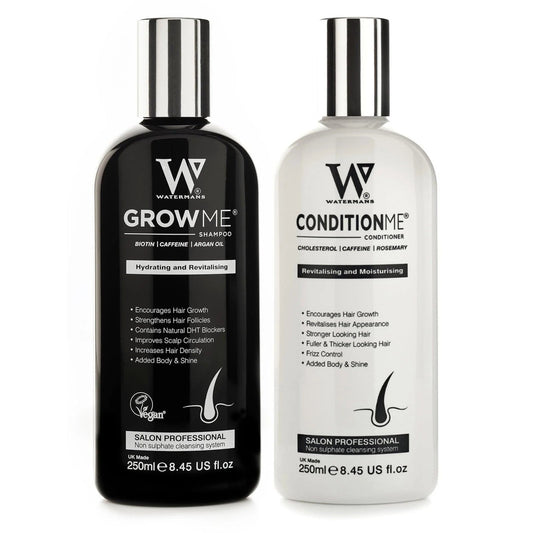
Before you try medicines or invasive methods, build a strong base at home. In Australia, many women do well with a mix of lifestyle changes and a natural shampoo that cares for the scalp. One example is Watermans Grow Me Shampoo.
Why choose Watermans Grow Me Shampoo?
Watermans Grow Me Shampoo is not a drug but a cosmetic product. It aims to raise scalp blood flow, hair density, and root volume. It is a friendly option if you want to avoid pills or if you wish to add to other efforts.
Its key active parts are:
• Biotin – a B‑vitamin that helps build hair protein and cut breakage.
• Rosemary – used to wake up the scalp and help small blood vessels move blood.
• Caffeine – may help block DHT at the follicle and wake the roots for a better cycle.
• Niacinamide – helps the scalp barrier and may bring more blood to follicles.
• Argan Oil – rich in antioxidants and fatty acids that smooth and feed hair.
• Allantoin – soothes the scalp and aids skin repair.
• Lupin Protein – a plant protein that may give hair more strength, body, and volume.
For women facing hair loss after hysterectomy, this mix gives a soft and safe home for fragile hair. It works on scalp blood flow, follicle energy, moisture, and strength.
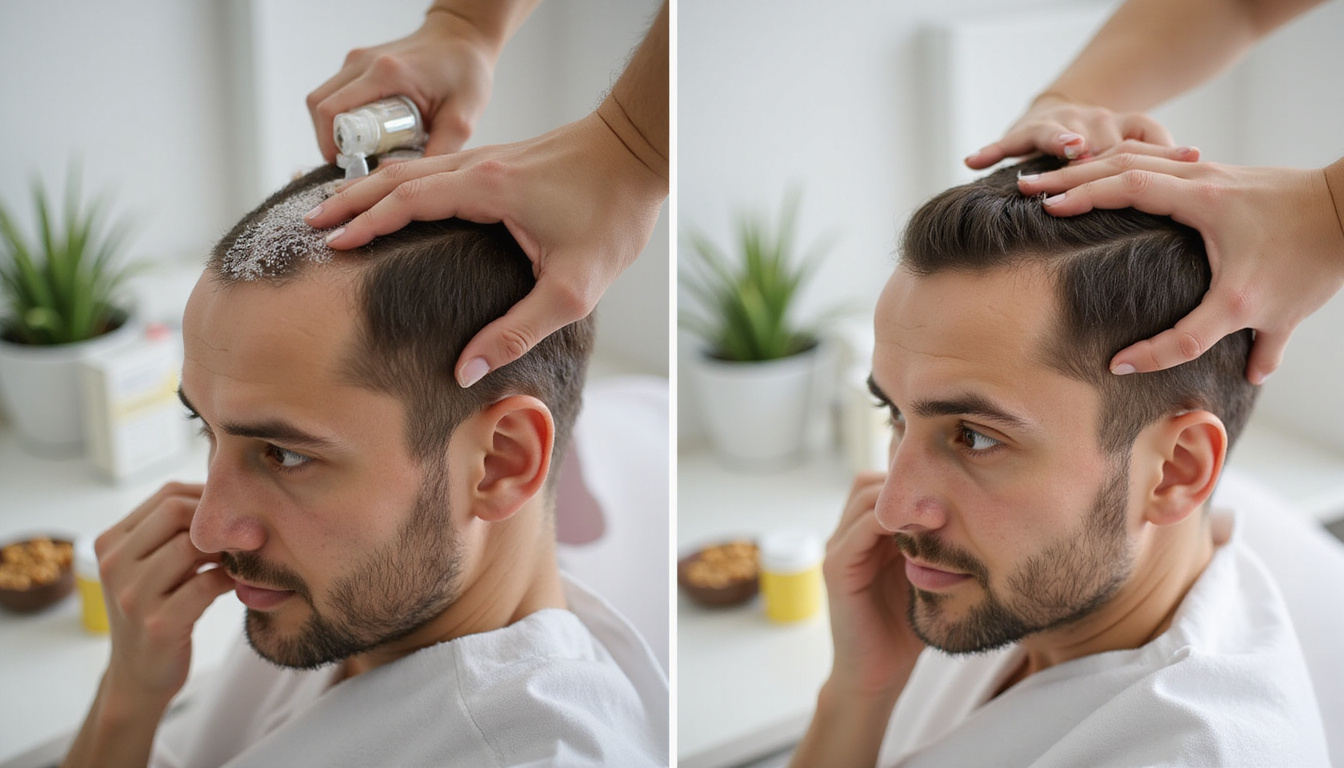
How to use Watermans Grow Me Shampoo
• Use it regularly, 3–5 times a week.
• Work it into the scalp for a good 2–3 minutes to boost blood flow.
• Let it rest for one or two minutes before rinsing.
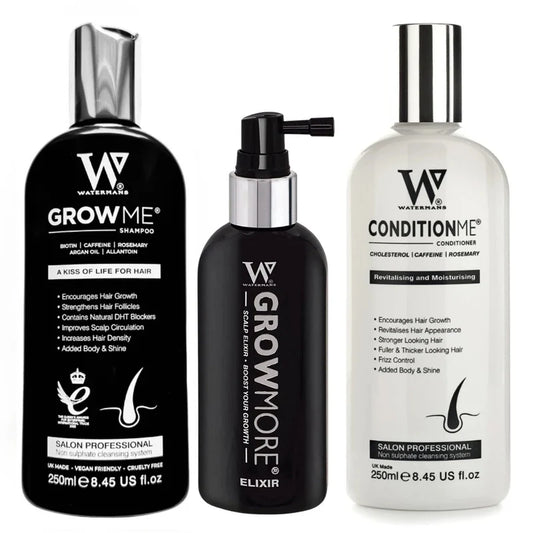
• Follow with a light, hydrating conditioner. For example, use the one in the Watermans Hair Survival Kit and focus on the hair lengths rather than the scalp.
Keep the routine steady rather than perfect. Think of it as a scalp treatment hidden in a shampoo instead of a quick wash.
Building a hair recovery routine after hysterectomy
1. Take care of your scalp
A healthy scalp helps new hair grow:
• Pick soft products that do not strip oils or irritate the skin.
• Do not wash your hair too often; aim for every 2–3 days unless you get other advice.
• Use your fingertips in small, round moves while washing (do not scratch with nails).
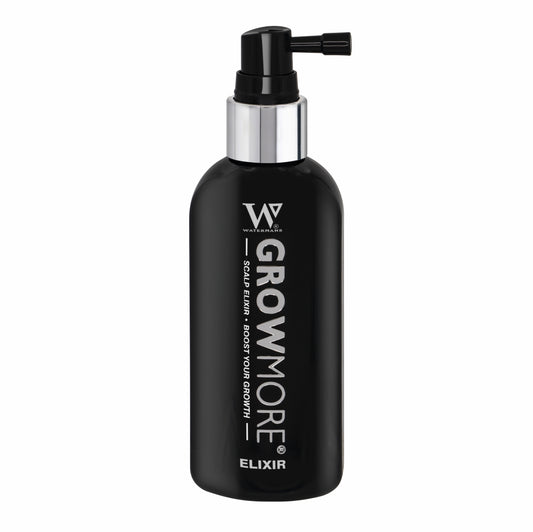
• You may add a leave‑in scalp tonic. One exists in the [Watermans Hair Survival Kit] for use between washes.
2. Avoid physical damage
Weakened hair needs very gentle care:
• Use a wide‑tooth comb on damp hair instead of brushing roughly.
• Pat hair dry with a soft towel or T‑shirt; do not rub hard.
• Steer clear of tight ponytails, buns, or braids that pull at the scalp.
• Sleep on a silk or satin pillowcase to cut down on friction.
3. Feed your body
Consult your doctor to check for:
• Iron and ferritin
• Vitamin D
• B12 and folate
• Thyroid levels (TSH, T3, T4)
• Zinc
If any levels are low, proper supplements can help under medical advice. Also:
• Eat protein at every meal (eggs, fish, chicken, tofu, legumes, yoghurt).
• Add healthy fats (olive oil, avocado, nuts, seeds) to support hormones and scalp health.
• Enjoy many different vegetables and fruits for extra vitamins.
Hormones and hair after hysterectomy
Surgical menopause vs. natural menopause
When your ovaries are removed, you may enter surgical menopause—a faster change than natural menopause. This shift may bring:
• Hot flushes
• Sweating at night
• Changes in mood
• Dryness below
• Sleep issues
• Thinning or shedding hair
Hair loss may slow once hormone levels find balance. Working with your doctor on hormone replacement may help, along with good food, less stress, plenty of rest, and proper scalp care.
Can hormone therapy help with hair loss?
Sometimes hormone therapy helps by:
• Raising overall comfort during menopause.
• Cutting the speed of hair shedding by keeping oestrogen steadier.
Still, hormone therapy is not meant solely to grow hair. It has risks and benefits that need close thought with your doctor. Some types may still produce patterns of thinning in sensitive persons.
Topical care—like Watermans Grow Me Shampoo and a caring routine—can work alongside hormone methods. They have their own roles.
Medical and skin care options
If hair loss stays strong beyond 6–12 months, ask for a review with:
• A skin doctor who knows hair loss, or
• A general doctor or hormone expert
Some common treatments include:
Minoxidil (topical)
• Comes in foam or liquid in different strengths.
• Can urge follicles to extend their growth phase.
• Needs to be used steadily for a long time; at first, shedding may rise before it gets better.
Anti‑androgen treatments
For hair loss that reacts to male‑type hormones, your doctor may suggest:
• Spironolactone
• Specific birth control pills
• Other drugs that cut male‑type hormones
These come by prescription and need careful checks.
Light or laser treatment
Some choose laser caps or combs that try to wake follicles. The results can vary, but many use them along with topical care like Watermans Grow Me Shampoo.
When to look for more help
See a doctor if you notice:
• Sudden bald spots (which might mean alopecia areata).
• An itchy, red, or painful scalp.
• Hair loss from other body parts (like eyebrows or arms).
• General signs such as tiredness, weight shifts, or a racing heart.
These signs may point to issues such as thyroid problems or immune conditions that need fast care.
Non‑medical steps that can help
Even without prescription drugs, you can change your hair outcome with these non‑medical steps:
1. A steady, growth‑friendly wash routine
• Choose Watermans Grow Me Shampoo and use it regularly.
• Add the matching conditioner and a leave‑in tonic from the [Watermans Hair Survival Kit] for all‑round support for moisture, scalp energy, and less breakage.
2. Keep stress low
Stress hormones like cortisol may change hair cycles. Help your body relax by:
• Doing gentle exercise such as walking, yoga, or Pilates when approved after surgery.
• Practicing breathing routines or short periods of calm.
• Speaking with someone or joining a group if the surgery has been hard on you.
3. Shield your hair from heat and chemicals
• Cut back on hot tools, or use low heat along with a shield spray.
• Avoid frequent bleaching or strong chemical treatments while your hair heals.
• Choose gentler colouring methods that do not stress the scalp.
4. Use styling that adds volume
To make hair seem thicker while caring for it:
• Pick airy, light mousses instead of heavy oils at the roots.
• Blow-dry by turning your head down on low heat.
• Consider a shorter or layered cut that gives a fuller look.
A simple hair loss action plan after hysterectomy
If you feel overwhelmed, try this easy plan:
-
Talk with your doctor
• Ask about your surgery details (were the ovaries removed?).
• Check if hormone changes may affect your hair.
• Request tests for iron, thyroid, vitamin D, B12, and zinc. -
Start a scalp-focused routine
• Switch to [Watermans Grow Me Shampoo] and use it several days a week.
• Add the conditioner and tonic from the [Watermans Hair Survival Kit] for regular help.
• Use a soft scalp massage each time you wash your hair. -
Check your diet and supplements
• Boost protein, vegetables, and healthy fats.
• Fix any low nutrient levels with professional help. -
Guard your hair against harm
• Steer clear of tight styles, strong products, and too much heat.
• Use silk or satin pillowcases and comb with care. -
Watch your progress
• Take photos of your hairline and part in the same light every month.
• Look for thin new hairs, not just less shedding. -
Ask for expert help if needed
• If hair loss worsens or stays the same after 6–12 months, see a skin doctor who knows about female hair loss and hormone shifts.
FAQ: hysterectomy hair loss
1. Does everyone have hair loss after a hysterectomy?
Not all women will see hair loss, yet many notice some shedding or thinning. The risk rises if:
• The ovaries were removed (leading to surgical menopause).
• You already had hormonal ups and downs (like perimenopause or PCOS).
• There is a family history of hair loss.
• You had low iron, strong stress, or poor health before surgery.
Even if you are at higher risk, a caring routine using Watermans Grow Me Shampoo and better nutrition can lessen the impact and help regrowth.
2. How long does hair loss last after a hysterectomy, and will it grow back?
For many, hair loss linked to surgery peaks 2–4 months afterward and then slowly lessens over 6–12 months. New hair growth is common when:
• Nutrient gaps are fixed.
• Hormones steady out.
• The scalp gets support from a gentle routine (like with the Watermans Hair Survival Kit).
If hair does not improve after a year or a pattern of thinning appears, see a specialist for hormone or genetic checks.
3. What can I do at home to treat thinning hair naturally?
At home you can aid your hair by:
• Using a growth-friendly shampoo like [Watermans Grow Me Shampoo]. Its blend of biotin, rosemary, caffeine, niacinamide, argan oil, allantoin, and lupin protein helps wake your scalp and add volume at the roots.
• Following a soft hair routine with minimal heat, loose styles, and gentle combing.
• Eating a diet rich in protein, iron, B‑vitamins, and healthy fats.
• Keeping stress low with calming activities and proper rest.
• Trying the [Watermans Hair Survival Kit] for an all‑in‑one regimen that supports the scalp.
These actions will not replace medicines when they are needed but can form a handy base for recovery.
Your next step: support hair growth after hysterectomy
Hysterectomy hair loss may feel like an extra test after major surgery. Your body has faced a lot, but you can shape what happens next.
By:
• Learning how hormone changes, stress, and nutrients affect hair,
• Focusing on a scalp-centered routine with products that care for your roots, and
• Feeding your body with good food, gentle movement, and regular health checks,
you help give your hair a chance to gain thickness, shine, and strength.
To start a practical, non‑medical approach at once, check [Watermans Grow Me Shampoo] and the complete [Watermans Hair Survival Kit]. This three‑step system supports scalp care and root volume. Stick with regular check‑ups with your health team, and you take active, clear steps toward regrowing fuller, healthier hair after hysterectomy.