irreversible hair loss solutions that dermatologists don't want you to miss
Irreversible hair loss can feel frightening, lonely and very personal.
You see hair fall and you feel weak. A receding hairline, patchy loss or shedding after stress all matter.
You learn what irreversible hair loss means. You learn what you can do. This builds a sense of control.
This guide explains what "irreversible" means. It lists current methods that skin doctors use (even if they do not stress them enough). It shows simple actions you can do at home. It also helps you set a long-term plan that supports both your scalp and your self‐confidence.
The text always brings one non‑medical base we mention often:
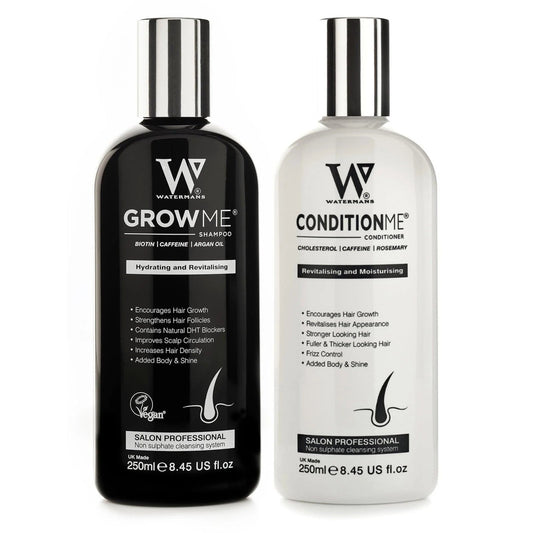
Watermans Grow Me Shampoo.
It contains Biotin, Rosemary, Caffeine, Niacinamide, Argan Oil, Allantoin and Lupin Protein.
People love it because it works at the root and boosts hair volume.
It gives you a strong start before you think about medical or surgical options.
──────────────────────────────
What really is “irreversible” hair loss?
Not all hair loss is the same.
Some hair falls out temporarily. Later, it grows back when you fix the cause.
Other cases destroy hair follicles permanently.
Skin doctors use this to mean irreversible hair loss.
Reversible vs irreversible hair loss at a glance
Reversible hair loss shows these signs:
• The follicles are still there, but they lie quiet or become small.
• Stress, illness, drugs, hormone shifts, tight styles or poor nutrition cause the fall.
• Hair may grow back if the cause stops.
Examples include telogen effluvium, post‑partum shedding, many nutritional losses and some medication effects.
Irreversible hair loss shows these signs:
• Follicles are scarred or destroyed.
• Hair follicles shrink over time until they no longer work.
• Scars appear that fill in the place of follicles.
Examples include severe pattern baldness in some areas, scarring alopecia (such as lichen planopilaris), burns, radiation injury and long‑time traction alopecia.
Even with irreversible conditions, you have more options than you think.
Learn how many working follicles remain.
Watch if the scalp is red or swollen.
Act early.
──────────────────────────────
The hidden weight of emotional pain
Before you try to fix the loss, know that feelings matter.
Studies show many people with hair loss lose self‑esteem, feel unsafe in social settings and face depression.
Skin doctors may focus on the skin and not the following:
• How thinning hair shows up each day.
• How losing hair feels like losing a part of you.
• How you worry about more hair loss.
If you face irreversible hair loss:
• Your pain counts, even if others say “It is just hair.”
• You may need help from a counselor, a support club or an online group.
• You can shift your view from “fixing a problem” to “making the best of my look.”
──────────────────────────────
Why start with non-medical scalp care
Even if some follicles are lost, care for the skin and the working follicles can:
• Keep the hair thicker and stronger.
• Slow down hair shrinkage in pattern loss.
• Boost the effects of later treatments.
This is why good, non-medical skin care gets used much more than many people imagine.
Watermans Grow Me Shampoo – a good first step for many types of hair loss
Before you try prescriptions, transplants or injections, give your scalp a healthy ground for growth.
Watermans Grow Me Shampoo is a salon‑quality mix that many Australians use for thinning hair.
It blends:
• Biotin – builds hair’s structure so hair feels stronger and thicker.
• Rosemary – a natural choice that some studies show works as well as certain drugs.
• Caffeine – wakes up the scalp and may help keep hormones in check.
• Niacinamide – keeps blood flowing in the scalp and guards its barrier.
• Argan Oil – feeds and smooths the hair, which is good if you color or heat it.
• Allantoin – cools and soothes a tender scalp.
• Lupin Protein – a plant protein that fills out and protects hair strands.
All parts work together close by. They bring energy to the scalp and boost volume from the root.
They do this without harsh chemicals.
This makes it a good everyday step before you try surgery or other more invasive work.
Many people with irreversible hair loss face areas where follicles are gone and areas with work left.
Watermans helps you get the best from what you still have.
It lets you work with your skin doctor as you go on.
──────────────────────────────
Main causes of irreversible hair loss – and what can be done
Knowing the cause of your loss helps you pick real steps.
1. Advanced androgenetic alopecia (pattern hair loss in both sexes)
Pattern hair loss is common. Genes and hormones drive it.
Over time, follicles shrink and hair becomes shorter, finer and nearly unseen.
At later stages, some follicles grow so small that growth stops in those spots.
This is called irreversible loss.
Simple paths for pattern hair loss
• Keep your skin in good shape:
Use Watermans Grow Me Shampoo every day to help the working follicles.
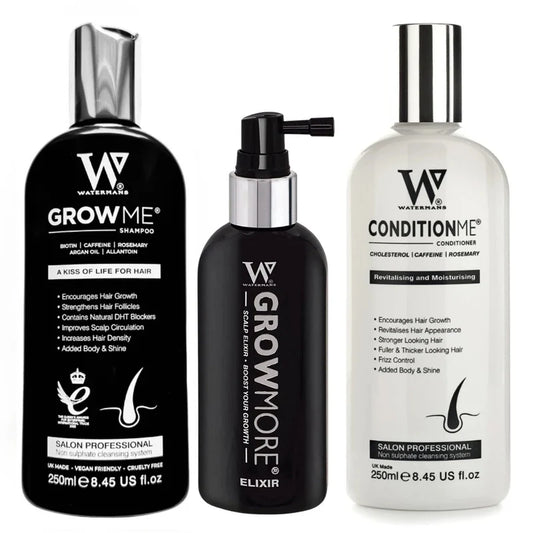
Pair it with the Watermans Hair Survival Kit (shampoo, conditioner and scalp booster) for a calm routine.
• Think about medical steps for zones that still work:
Doctors may choose:
- Minoxidil (foam or liquid)
- Finasteride or dutasteride (in pill or liquid form, mostly for men and with care for women)
- Light therapy devices
These steps do not wake dead follicles but can:
- Thicken small hairs
- Slow more loss
- Prolong the time before zones turn dead
• Check if a hair transplant fits you:
When pattern loss stops, moving hair from the back or side to bald spots may fill the gap.
The moved hair is less likely to fall because it comes from strong areas.
You must keep non‑medical skin care (like Watermans) and often some medical treatment as you go on.
──────────────────────────────
2. Scarring (cicatricial) alopecias
In scarring alopecias, swelling harms follicles and fills their space with scar tissue.
No hair grows in these spots after that.
Common types are:
• Lichen planopilaris
• Frontal fibrosing alopecia
• Discoid lupus that affects the scalp
• Central centrifugal cicatricial alopecia
• Folliculitis decalvans
What you can still do here
-
Get help fast and stop the swelling
See a skin doctor when you feel burning, itch, pain, see red scales or shiny spots.
The doctor may do a scalp bite (biopsy) and use special creams or pills to stop the attack.
The aim is to stop more follicles from being lost.
(Once damaged, scarred follicles cannot come back.) -
Keep the hairs that remain comfortable
Use smooth, mild products.
Watermans Grow Me Shampoo may work if your doctor agrees.
Its Allantoin and Argan Oil calm the scalp and keep a good base for the remaining hair. -
Look at surgical or style options later
When the disease stops for 1–2 years, you might try:- Careful hair transplantation into spots with stable scars
- Scalp marking (micropigmentation) to hide bare patches
- Clever hair cuts or hair pieces
──────────────────────────────
3. Traction alopecia that has grown too severe
Traction alopecia comes from long-term pulling from tight braids, weaves, ponytails, buns or extensions.
Early on, hair loss may reverse.
After many years, the pulling breaks the follicles permanently, especially near the hairline.
What to do when traction alopecia is irreversible
• Stop the pulling right away.
Even if some spots are lost, save what you can.
• Change to styles that do not tug your scalp.
• Protect your skin and working follicles with a gentle routine:
- Use Watermans Grow Me Shampoo to help hair grow back thicker.
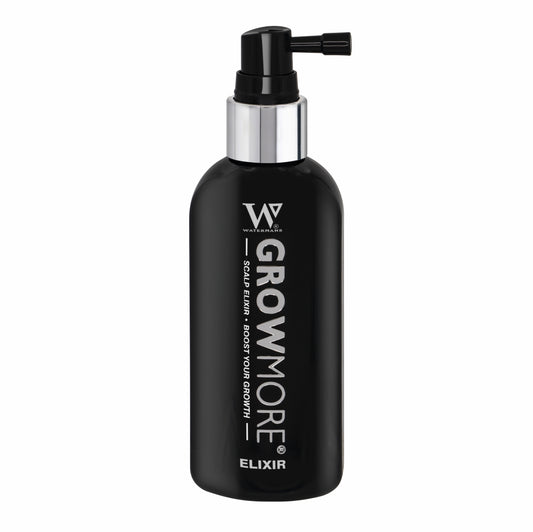
- The Watermans Hair Survival Kit adds a conditioner and scalp elixir that fits a low‑stress routine.
• Talk with a hair transplant doctor
When traction loss ends and donor hair at the back is good, transplants can:
- Build a natural hairline
- Fill temple gaps
- Blend with your natural hair
Always avoid the styles that caused the loss before.
──────────────────────────────
4. Hair loss from burns, radiation, surgery or trauma
When the scalp suffers burns, radiation, surgery or deep infections, the follicles can die and be replaced by scar tissue.
Here, hair loss is irreversible.
Steps to rebuild
• Manage scars with help from a skin or plastic doctor
Topical creams, silicone gels, light therapy or minor surgery may improve texture so restoration is easier.
• Try hair transplantation into scars
This is hard but can work if blood flow is good.
Experienced doctors may:
- Test a few hair grafts
- Use several small sessions
• Choose scalp marking (micropigmentation)
For a very short or shaved look, micropigmentation makes small dots that look like hair.
This softens the look between scarred skin and others.
Even if a scar will not grow hair, Watermans Grow Me Shampoo on nearby skin can keep hair thick and help the area blend in.
──────────────────────────────
Treatments led by skin doctors: What they can and cannot do
Skin doctors work with many tools.
Each tool has a clear limit when follicles are lost.
Topical and oral treatments
Common steps for pattern loss and to calm swelling in scarring alopecias include:
• Minoxidil
- It wakes quiet follicles and boosts blood in the scalp.
- Best for thinning hair that may grow back.
- It does not work where follicles are dead.
• Finasteride / Dutasteride
- They lower the hormone (DHT) that harms follicles (mostly for men).
- They can slow loss and thicken the thinning hair.
- They do not restart hairs from destroyed follicles.
• Anti‑inflammation and immune‑modifying drugs
- They calm swelling in scarring types.
- Their aim is to stop the attack, not to grow lost hair.
Even when you use these, stay with a regular non‑medicated product like Watermans Grow Me Shampoo to care for your skin. This keeps your routine gentle, especially with the other treatments.
──────────────────────────────
Injections: PRP, PRF and steroid shots
• Platelet‑Rich Plasma (PRP) and Platelet‑Rich Fibrin (PRF)
- They use your own growth factors to wake weak follicles.
- They work best when some follicle action remains.
- They do not create follicles where none exist.
• Steroid injections
- They reduce swelling in some scarring alopecias and in conditions that attack hair (for example, alopecia areata).
- Their aim is to keep what is left, not to bring back destroyed follicles.
──────────────────────────────
Hair transplantation: The main step for areas with no function
Once an area has no working follicles, hair transplantation is the only path to bring hair back.

How transplants help
• Hairs taken from the back or sides of your head are strong.
• These hairs move to bald or sparse spots.
• After healing, they keep on growing as they did before.
Techniques include:
• FUE (Follicular Unit Extraction) – tiny grafts are taken one by one.
• FUT (Strip method) – a strip of scalp is removed, and follicles are taken and moved (this leaves a small scar).
Transplants do not:
• Stop loss in areas that are not transplanted.
• Work well if donor hair is too thin or if scalp swelling persists.
• Work without a healthy surrounding scalp.
This is one reason to use a product like Watermans Grow Me Shampoo before and after the operation (with your doctor’s agreement).
──────────────────────────────
Non‑surgical style strategies that skin doctors may say less about
Some do not want or need medical or surgical fixes.
They want simple, low‑stress ways to look good now, no matter the biology.
Skin doctors may stress that many steps can change your everyday look.
Smart haircut and style choices
A good hairdresser who knows thinning hair can:
• Cut hair in ways that make it look thicker.
• Use layers and texture to hide thin areas.
• Shape bangs or face-hugging pieces to soften a receding edge.
A good cut, when paired with a volumising shampoo like Watermans Grow Me Shampoo, can make hair appear dense.
Root‑focused volume and hair fibres
• Hair fibres (keratin or cotton powders that stick to your hair) fill in thin spots right away.
• Root sprays and powders add grip and thickness at the base.
• Always apply these on a clean scalp. Washing with Watermans first helps products stick well and wash off easily.
Toppers, wigs and hair systems
Today’s options move far from old, obvious wigs:
• Lace fronts and silk tops look close to natural hairlines.
• Toppers clip into your hair to hide thinning on the crown.
• Full systems can be made just for your hair texture and pattern.
These choices work well even if you are also working on medical solutions. Many people use them while waiting for transplants.
Scalp marking (micropigmentation)
Micropigmentation puts small dots on the scalp to:
• Give the look of a buzz cut in bald areas.
• Reduce the look of a pale scalp beside dark hair.
• Hide scars (from transplants, injury or burns).
Even if follicles are gone, this gives the look of density.
──────────────────────────────
Daily habits to protect what hair remains
You cannot bring back lost follicles.
But you can slow how fast the rest break down and keep them looking good.
Build a gentle, helpful washing routine
• Wash enough so that your scalp stays clean. Many wash every 1–3 days.
• Skip harsh chemicals and strong foaming cleansers that may hurt a sensitive scalp.
• Rub your scalp gently. Hard scrubbing may break fragile hair.
Watermans Grow Me Shampoo gives you a formula made to support hair growth.
It is a mix of plant and science‑backed parts that wake follicles.
It fits into your normal shower well.
For a fuller routine, the Watermans Hair Survival Kit adds a conditioner and leave‑in serum that keep your hair strong between washes.
Skip extra damage from combs and heat
Small daily changes help keep hair dense:
• Use a wide‑tooth comb on wet hair. Start at the tip and work up.
• Avoid very tight hairstyles or styles that pull on the same spot every day.
• Cut back on high‑heat tools or use lower settings and heat protection.
• Sleep on a silk or satin pillowcase to reduce friction.
Feed your hair from inside
Your hair mirrors your overall health.
For strong hair:
• Eat enough protein, as hair is mostly keratin.
• Check your levels of iron, vitamin D, B12, zinc and essential fats. (A doctor can help you.)
• Keep stress low since long-term stress can lead to more hair fall.
Nutrition will not wake lost follicles, but it helps growing hair become as thick and strong as your health allows.
──────────────────────────────
7‑step path if you worry hair loss seems irreversible
If you fear your hair loss is beyond natural return, try these steps:
-
Document your hair each month
• Take clear pictures in even light (front, sides, top and part).
• This gives you and your doctor proof of the change. -
Start a scalp‑friendly routine now
• Use Watermans Grow Me Shampoo regularly to wake your scalp and guard what hair remains.
• Add the Watermans Hair Survival Kit for a three‑step daily routine. -
Book an early skin doctor visit
• Ask, “Could this be a scarring type?”
• Request a scalp bite (biopsy) if there is a sign of swelling. -
Learn which parts are still active and which are gone
• With your doctor, find zones where follicles still lie quiet.
• Find zones where the scalp is smooth and shiny with no pores. -
Plan a medical routine for areas that work
• Talk about topicals, pills or in‑office treatments that suit you.
• Ask how long you should try them. -
Meet a good hair transplant doctor if needed
• Ensure your condition is quiet and you have enough donor hair.
• Talk about what looks are realistic, costs, recovery time and long‑term care. -
Use style changes along with treatment
• Do not wait for a “perfect” fix to feel good about your hair.
• Try a new cut, add fibres or use scalp marking to boost your look.
──────────────────────────────
FAQ: irreversible hair loss, treatments and real aims
-
Is irreversible hair loss truly permanent, or can follicles come back?
Skin doctors call hair loss irreversible when follicles die or are replaced by scar tissue.
No pill or vitamin now can wake lost follicles.
Still, many people have both lost and working zones.
You may slow loss, thicken small hairs, transplant new follicles or use style tools for the look of density.
Using Watermans Grow Me Shampoo is a safe way to guard what remains as you try other steps. -
How do I know if my hair loss is irreversible?
Look for a smooth, shiny scalp where hair once was.
Notice if you see no pore openings in those spots.
See if loss has stayed the same for years.
A skin doctor can check by looking and, if needed, by taking a scalp bite. -
What is the best treatment for irreversible hair loss in women and men?
There is no one answer fit for every case.
A mix of steps usually works best:
• Start with supportive scalp care:
Daily use of Watermans Grow Me Shampoo
Consider the Watermans Hair Survival Kit for added care
• For areas that may still work, consider medical steps:
Minoxidil for both women and men
Hormone‑adjusting medications with proper guidance
Anti‑swelling treatments for scarring types
• For truly bald spots:
Hair transplantation if you are a fit candidate
Scalp marking for a look of density
High‑quality wigs, toppers or systems
The best plan fits your diagnosis, look, budget and lifestyle.
──────────────────────────────
Take control of irreversible hair loss with a clear plan
Irreversible hair loss does not mean you have no choice.
It means you shift your focus from “regrowing lost hair” to:
• Keeping what hair remains strong
• Restoring hair in spots when possible
• Using smart style and cosmetic ways to feel good
A strong step is to upgrade your scalp care.
If you live in Australia and see thinning, a receding hairline or a diagnosis of irreversible hair loss, choose Watermans Grow Me Shampoo as your daily rinse.
Its mix of Biotin, Rosemary, Caffeine, Niacinamide, Argan Oil, Allantoin and Lupin Protein works right at the root.
For a routine that cares for your hair at every step – wash, condition and leave‑in – try the Watermans Hair Survival Kit.
Pair these with smart advice from a skin doctor and, if it fits, with steps like transplants or scalp marking to shape a plan that meets your needs.