menopause hair treatment: Proven Solutions for Thinning, Fragile Locks
Menopause feels like a wild ride. Your hormones rise and fall. Hair loss and thinning can feel harsh. You are not the only one to worry about these changes. In Australia, many women report more shedding, a wider part, and hair that feels weak or brittle.
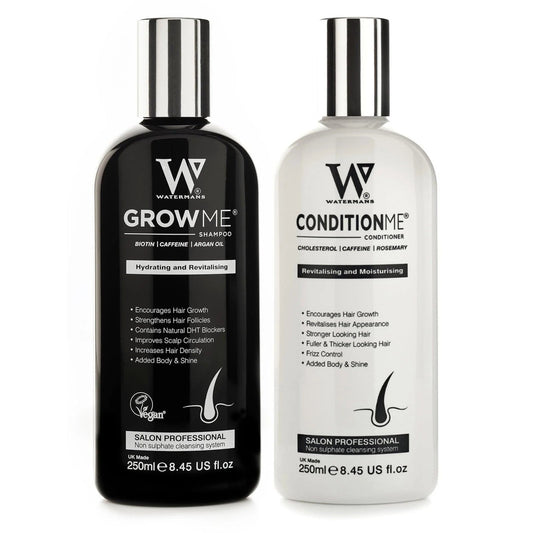
This guide shows what happens to your hair during menopause. It explains what works and what wastes your money. You will learn to build a simple care routine for daily life. We place natural solutions first. Many women start with Watermans Grow Me Shampoo as a non‑medical fix. Next, we discuss medical care and everyday steps if you need more help.
Understanding Menopause Hair Loss: What’s Really Going On?
Understanding why your hair changes can guide your treatment.
How Hormones Affect Your Hair Follicles
Your hair grows in three parts:
- The growth stage, when hair shines from the follicle
- The transition stage, when hair loses its supply
- The resting stage, when hair falls out
Before menopause, oestrogen holds hair in the growth stage. In your 20s and 30s, this keeps hair thick. Around menopause, hormones change:
- Oestrogen falls and the growth stage shortens
- Progesterone drops, failing to balance other hormones
- Androgens, like DHT, rise and shrink hair follicles
Thus, more hair moves into rest and shedding. New hairs may come out finer and more fragile.
Common Signs of Menopause-Related Hair Changes
Women notice these changes between 40 and 60 years old:
- Thinning at the crown or along the part line
- A wider part that shows more scalp
- More hair on brushes, drains, or pillows
- Hair that feels dry or frizzy and is hard to style
- Slower hair growth or a thinner ponytail
These signs may feel hard. They are common and often can be improved with a steady care routine.
Where to Start: A Non-Medical Menopause Hair Treatment Foundation
Many women try non‑medical care first. Such care is gentle and natural. A shampoo that works on your scalp is a key start. Your shampoo touches your scalp for several minutes. Using that time well can change your hair’s health.
Why Watermans Grow Me Shampoo Is a Strong First Step
When you build a care routine, begin with Watermans Grow Me Shampoo from Watermans Hair. Its mix fits both beauty and science:
- Biotin helps your hair build strong fibres
- Rosemary works on your scalp’s blood flow
- Caffeine wakes up the hair follicles
- Niacinamide supports the skin on your scalp
- Argan Oil feeds dry, weak hair
- Allantoin soothes scalp touchpoints
- Lupin Protein adds volume at the root
This mix works to wake up your scalp and boost hair from the roots. In many cases, using Watermans for 3–6 months can show you how much improvement can come from topical care before you add drugs.
Building a Complete Menopause Hair Treatment Routine
Think of your treatment in layers:
- Topical care for scalp and hair
- Internal steps with food and daily life
- Medical treatments if needed
Starting with the first step gives you a strong base.
1. Scalp-Focused Shampoo and Conditioner
Your scalp is living skin. Healthy skin here helps strong hair grow.
A simple routine can be:
- Shampoo 2–4 times per week with Watermans Grow Me Shampoo
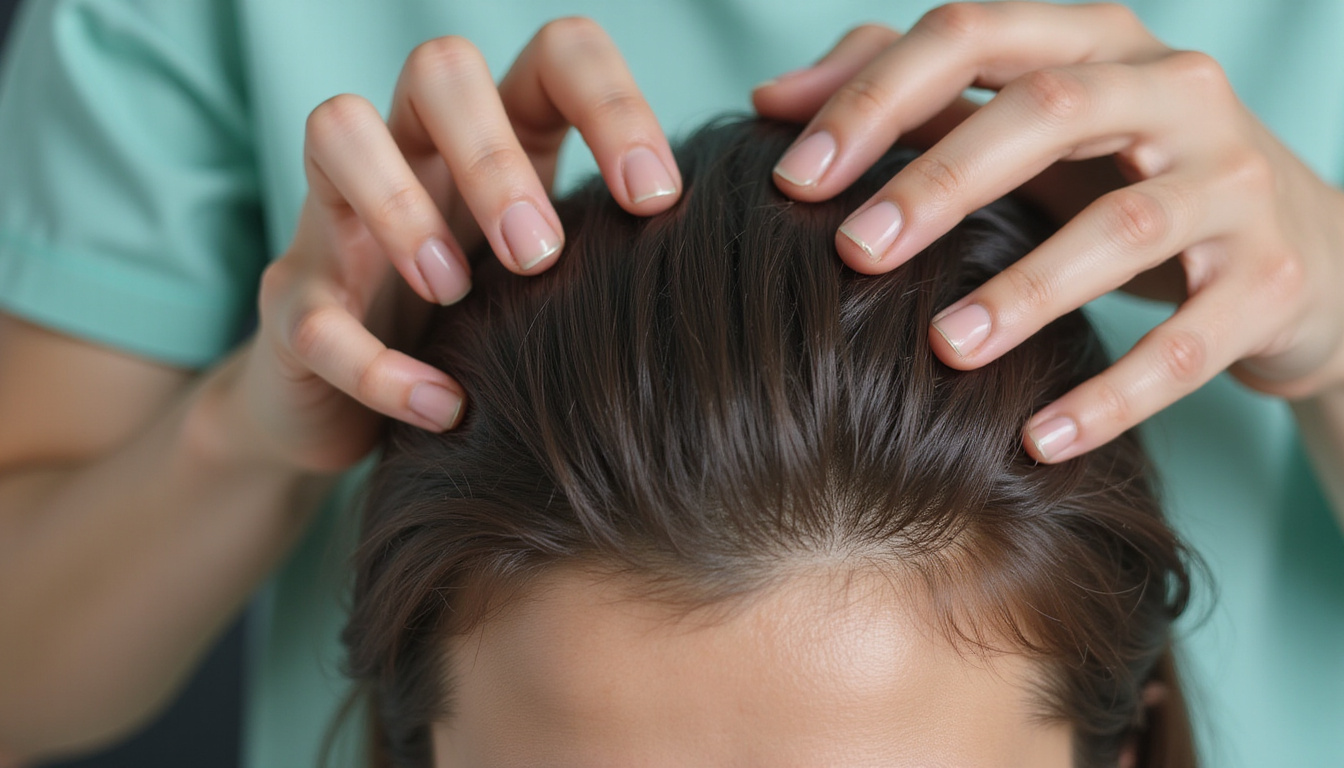
- Gently massage for 2–3 minutes to let the good parts work
- Focus on the scalp rather than the mid-lengths
- Use conditioner only on the mid-lengths and ends to keep roots light
- Rinse with lukewarm water, not hot, to avoid dryness
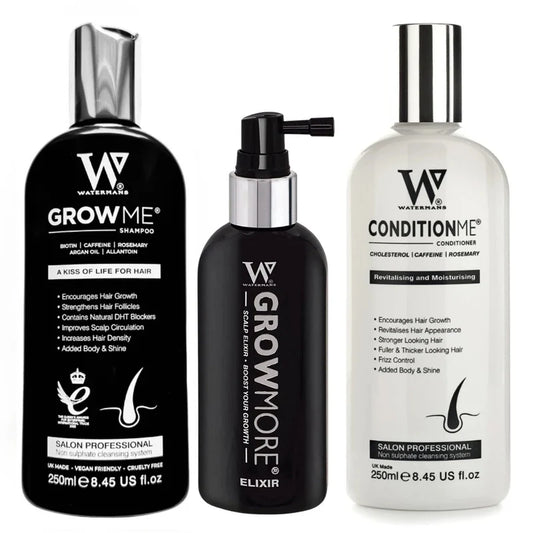
If you want an all‑in‑one system, try the
Watermans Hair Survival Kit.
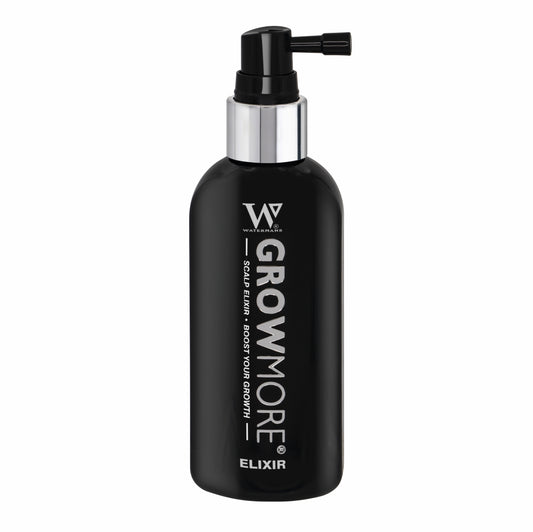
It has shampoo, conditioner, and a leave‑in scalp formula that keeps your scalp in good shape.
2. Weekly Treatment: Masks or Scalp Exfoliation
Menopause can make your scalp drier and hair cuticles more fragile. Once a week, do one of these:
- Use a hydrating mask on the mid-lengths and ends
- Use a mild scalp scrub if you suffer from build-ups
These steps help remove unwanted oils and products from the scalp. They let active ingredients work better and keep hair soft to fight breakage.
Evidence-Based Topical Ingredients for Menopause Hair Treatment
When you check a label, some ingredients stand out.
Caffeine: A Follicle-Energising Ally
Caffeine does more than wake you up. Research finds that it can:
- Enter through the scalp
- Stimulate hair shafts directly
- Possibly work against DHT locally
This is why Watermans Grow Me Shampoo includes caffeine. It aims to boost the hair follicles.
Rosemary and Scalp Circulation
Rosemary extract and oil are known to:
- Open up blood vessels to improve flow
- Guard the scalp with antioxidant action
Better blood flow means that follicles get oxygen and nutrients. This is important when hair’s growth stage is shorter.
Niacinamide for the Scalp Barrier
Niacinamide (Vitamin B3) works on your scalp by:
- Supporting a healthy skin barrier
- Lessening irritation and dryness
- Helping the scalp resist stress
A clear scalp is less likely to itch or lose hair.
Biotin and Protein Support
Biotin helps form keratin. Proteins like Lupin Protein can:
- Patch and firm up weak cuticles
- Add bulk to each strand
- Improve the look of density even if hair number stays the same
These parts aid both new hair and the strength of the hair you have.
Medical and Clinical Menopause Hair Treatments
If your hair thins quickly after months of care, you may need medical help along with topical care.
Minoxidil (Topical)
Minoxidil is approved for some hair loss. In post‑menopause, it can:
- Help the growth stage last longer
- Increase the size of small follicles
- Grow denser hair over several months
Notes on minoxidil:
- It must be used every day, many months
- Results take 3–6 months to show
- There may be initial shedding as hair resets
- It works well with care routines like Watermans Grow Me Shampoo
Talk to your GP or skin expert before using minoxidil.
Hormone Replacement Therapy (HRT) and Hair
Since oestrogen and progesterone help hair grow, some women see better density on HRT.
However:
- HRT is for overall symptoms, not just hair
- It has both benefits and risks
- Not every woman sees hair gains on HRT
If you take HRT, mention your hair goals to your doctor.
Oral Medications for Androgen-Related Thinning
After menopause, higher levels of androgens can thin hair. A skin expert may suggest:
- Anti-androgen pills (such as spironolactone)
- Low‑dose oral minoxidil
These need regular checks and are best for more severe cases. Even then, you can keep using Watermans Grow Me Shampoo as a daily base.
Nutrition and Lifestyle: Internal Menopause Hair Treatment Support
Your hair mirrors your overall health. The best topical products cannot fix a lack of key nutrients inside your body.
Key Nutrients for Menopausal Hair Health
Some nutrients matter a lot:
- Protein gives hair its structure. Aim for 1.0–1.2 g per kg of body weight a day (if your doctor agrees).
- Iron is needed since low iron can cause shedding.
- Vitamin D is linked to strong hair.
- B vitamins, including Biotin, help energy and keratin production.
- Zinc and Selenium support a strong scalp.
Try to get these from food when you can:
- Lean meats, chicken, eggs, and legumes
- Fish and nuts provide other good fats
- Whole grains and leafy greens support overall health
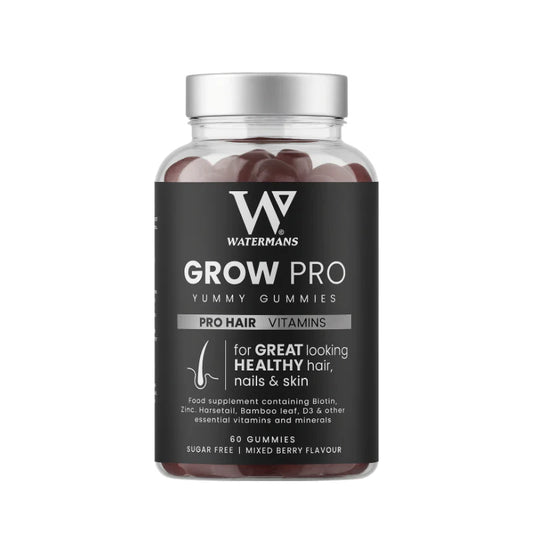
Supplements can help if tests show a need. Always ask a health expert first.
Stress, Sleep and Cortisol
Menopause often comes with life changes and stress. Stress raises cortisol, which makes more hair fall out. Help your hair by caring for your body:
- Get 7–9 hours of sleep
- Enjoy light exercise like walking or yoga
- Practice calm activities like deep breathing or a quiet walk
- Cut down on too much caffeine and alcohol, which harm sleep
Small, steady changes work for your hair over 6–12 months.
Gentle Styling: Protecting Thinning, Fragile Menopausal Hair
Your care routine is not just about products. It also covers daily styling.
Minimise Breakage and Mechanical Damage
Thin and dry hair can break easily. To guard your strands:
- Use a wide‑tooth comb on damp hair, starting at the ends
- Do not rub hair hard with a towel. Instead, gently squeeze with a microfibre towel
- Keep heat styling under 180°C and use heat protection
- Avoid styles that pull tightly, like severe ponytails
These simple steps can cut down breakage and help your hair look thicker.
Choose Styles That Enhance Volume
A few changes in your style can add instant fullness:
- Ask for soft layers around the crown to lift the hair
- Try a shorter, blunt cut if ends are wispy
- Dry hair with your head upside down or use a round brush to lift roots
- Use light volumising products near the scalp instead of heavy oils
Paired with products like Watermans Grow Me Shampoo, smart styling can make hair look fuller.
How Long Does Menopause Hair Treatment Take to Work?
Hair grows slowly and follows its own cycle. All treatments, natural or medical, need steady care.
A likely timeline is:
- 0–4 weeks: The scalp may feel clean and less itchy. You might see less shedding.
- 1–3 months: Early signs of thicker texture appear. Tiny new hairs may show up along the hairline.
- 3–6 months: Many see clear changes in density when the routine is followed well.
- 6–12+ months: This period helps you see if your combined steps work best over a full growth cycle.
Every follicle has its own time. That is why many stick with products like the Watermans Hair Survival Kit for 6–12 months before judging progress.
Choosing the Right Menopause Hair Treatment Path for You
Your choice depends on your needs. Match your approach to your hair goals.
If Your Hair Is Just Starting to Thin
Begin with:
- A shampoo that wakes up your scalp, such as Watermans Grow Me Shampoo
- A nourishing conditioner and one weekly mask treatment
- Gentle styling and a balanced diet
Watch your shedding and ponytail size over 3–6 months.
If Thinning Is Noticeable and Ongoing
Add more steps:
- Try the Watermans Hair Survival Kit for a full care system
- Ask your GP for blood tests (iron, vitamin D, thyroid, B12, etc.)
- Check if a topical medical treatment like minoxidil may help
Keep practicing good hair care. Do not depend on only one product or pill.
If You Have Advanced Thinning or Patchy Loss
At this point, see a skin expert:
- Talk with a dermatologist or hair specialist about your scalp
- Discuss medical options like HRT, anti‑androgens, or oral minoxidil if needed
- Consider extra methods such as low‑level laser therapy if recommended by a professional
Even then, non‑medical products like Watermans Grow Me Shampoo can support your care routine.
Common Mistakes in Menopause Hair Treatment
Many women make errors when treating thinning hair. To protect progress, avoid these issues:
Overwashing or Underwashing
- Overwashing with strong shampoos can strip skin oils and cause irritation.
- Underwashing lets oil and product pile up and block follicles.
Aim for 2–4 washes per week with a gentle, active shampoo like Watermans Grow Me Shampoo.
Heavy Products on the Scalp
Heavy oils and creams near the roots may:
- Flatten your hair and show thinning
- Cause build-up and irritation
Use heavier creams on mid‑lengths and ends, and keep light formulas on the scalp.
Chasing Quick Fixes
Treatments that promise fast change often:
- Irritate the scalp
- Do not suit sensitive skin
- Fail over time
Stick to a steady routine that gives your scalp time to recover and grow.
Simple Step‑By‑Step Menopause Hair Treatment Routine
Here is a sample routine you can follow:
-
Morning (2–4 days per week)
- Wash with Watermans Grow Me Shampoo and massage your scalp for 2–3 minutes.
- Apply a light conditioner to mid‑lengths and ends only.
- Rinse with lukewarm water.
- Blot dry with a microfibre towel and comb gently. -
Evening (most days)
- If you use a leave‑in scalp treatment (such as the elixir from the Watermans Hair Survival Kit), apply it to sections of your scalp.
- Give yourself a 2–3 minute fingertip massage to boost circulation. -
Weekly
- Use a hydrating mask on the ends OR a gentle scalp scrub based on your needs.
- Take a moment to check your hair shedding and its feel. -
Ongoing Lifestyle
- Choose enough protein, iron, vitamin D, and B vitamins in your meals.
- Get proper sleep, move daily, and manage stress well.
- Trim your hair regularly to keep ends healthy.
This routine blends hair science with your busy life.
FAQ: Menopause Hair Treatment Questions Answered
1. What is the best natural menopause hair treatment for thinning hair?
A strong natural start is to use a scalp-focused shampoo and care system. In Australia, many choose Watermans Grow Me Shampoo. It blends biotin, rosemary, caffeine, niacinamide, argan oil, allantoin, and lupin protein. These parts work together to boost the scalp and hair volume. A healthy diet, gentle styling, and regular trims also help support this treatment.
2. How long does a menopause hair treatment routine take to show results?
Most women see changes after at least 3 months of steady use. More clear improvement often takes 6–12 months. Hair grows slowly, and every follicle has its own pace. Whether you use a non‑medical routine like Watermans Grow Me Shampoo or add medical care such as minoxidil, steady daily care is key.
3. Can menopause hair treatment really reverse hair thinning, or only slow it down?
Results differ from one person to the next. Many women see better thickness, volume, and less shedding with a well-planned routine. Some hair follicles that are only partly shrunk may grow stronger, thicker hair with combined care. If a follicle is inactive, full regrowth is less likely. This is why early, steady action helps.
Take Charge of Your Menopause Hair Treatment Journey
Losing hair during menopause can add to the challenges of mid‑life. But hair loss does not have to mean defeat. You can learn what happens at the follicle level and choose a care routine focused on real support. With steady use, you may gain volume, strength, and new confidence.
A simple first step is to change your everyday products to a targeted system. Start with Watermans Grow Me Shampoo and, if you want a complete approach, try the Watermans Hair Survival Kit. From there, add good food, gentle styling, and medical advice as needed. Begin early to keep your options open and build the hair care routine you want in your 40s, 50s, 60s, and beyond.