saw palmetto for Hair Loss: Scientific Tips to Regrow Faster
Saw palmetto gets attention as a natural aid for thinning hair. It shows up in beard oils, hair supplements, and shampoos. Saw palmetto stands as a plant-based match for many hair loss drugs. What does the science say? Can it help hair grow back faster? And how should you use it well?
This guide breaks down the evidence, the best routines, and what to expect. It keeps the focus on gentle, scalp-friendly care. You will see why many in Australia choose a strong scalp solution like Watermans Grow Me Shampoo as the first step before they try supplements.
What Is Saw Palmetto?
A brief look
Saw palmetto (Serenoa repens) grows as a small palm tree in the southeast United States. Researchers extract its active parts from the berries. People once used it in herbal medicine for urinary and prostate issues. Over time, scientists found that it works with hormones that affect male pattern baldness.
Why hair loss fans care
Saw palmetto is used for hair loss because it affects the same hormone path as finasteride—a common hair loss drug—but in a milder way. In simple terms, it helps cut down the conversion of testosterone into dihydrotestosterone (DHT). DHT is a key hormone in pattern baldness in both men and women.
How Hair Loss Happens: The DHT Link
Understanding hair loss starts with the role of DHT. Androgenetic alopecia, or pattern baldness, happens in two steps.
- Hair goes through cycles: growing (anagen), changing (catagen), resting (telogen), and then shedding.
- In people with a genetic risk, DHT attaches to hair follicle cells (commonly seen on the temples and crown in men, and the part-line in women).
- Over time, the hair follicle shrinks and the hair becomes thinner. In time, the follicles may stop making visible hair.
An enzyme called 5‑alpha‑reductase makes DHT from testosterone. Two main types exist in the body:
• Type I appears in the skin and oil glands (including the scalp).
• Type II mostly shows in hair follicles and the prostate.
Standard hair loss drugs target type II more. Natural actives like saw palmetto seem to affect both types in a gentler way.
How Saw Palmetto Helps with Hair Loss
1. Blocking 5‑alpha‑reductase
Saw palmetto stops 5‑alpha‑reductase from turning much testosterone into DHT near the hair follicle. With less DHT, the follicles face less shrinkage. This may help:
• Keep hair shafts thicker.
• Extend the growing phase of hair.
• Slow the shedding of hair in pattern baldness.
2. Stopping DHT from attaching
Some studies find that saw palmetto extracts stop DHT from locking onto the hair follicle cells. Think of it as putting a small cover on the cell. In this way, DHT cannot make a full mark.
3. Calming scalp inflammation
Mild, ongoing inflammation might add to hair loss. Lab tests show that saw palmetto may cut down on this inflammation. It also fights free radicals. This action can help keep the scalp in a better state. Even though this step alone will not regrow hair, it supports a healthy scalp.
What Does the Science Say About Saw Palmetto for Hair Growth?
The proof for saw palmetto in hair loss is positive yet still new. It has not been studied as much as finasteride or minoxidil. It is best seen as a careful option.
Human studies: evidence so far
Some small trials show that:
• Men with mild to moderate pattern baldness saw less hair loss and small boosts in hair density after taking saw palmetto by mouth.
• A few small studies of lotions or shampoos with saw palmetto showed more hairs and thicker strands when used with other ingredients.
• The results vary and tend to be softer than those with drugs, but side effects are also fewer.
Standard treatments like minoxidil and finasteride still have the strongest proof for hair regrowth. In this light, saw palmetto fits in as:
• A support part of a routine, or
• A gentler choice for those who skip prescription drugs,
not a magic cure.
Saw Palmetto Compared to Drug Treatments
Finasteride versus saw palmetto
Finasteride is a tablet for men that stops type II 5‑alpha‑reductase strongly. It has more supporting study data. Yet, it can cause side effects like sexual or mood changes. Many people thus look to natural choices.
Saw palmetto: • Works as a gentler blocker of 5‑AR. • Affects both type I and II enzymes. • Is taken in small doses, with milder side effects.
Minoxidil versus saw palmetto
Minoxidil, used as a foam or solution, does not stop DHT. It works by opening blood vessels and boosting blood flow to the hair follicle. Saw palmetto acts higher up on hormone activity. Some people mix a DHT blocker with a product that helps the scalp. An example of such a product is Watermans Grow Me Shampoo. This shampoo has caffeine, biotin, niacinamide and rosemary to work on several fronts.
Why Many Start with Topical Choices
Before adding any supplements, many skin experts advise using targeted scalp solutions. These work only on the scalp and have few body-wide effects.
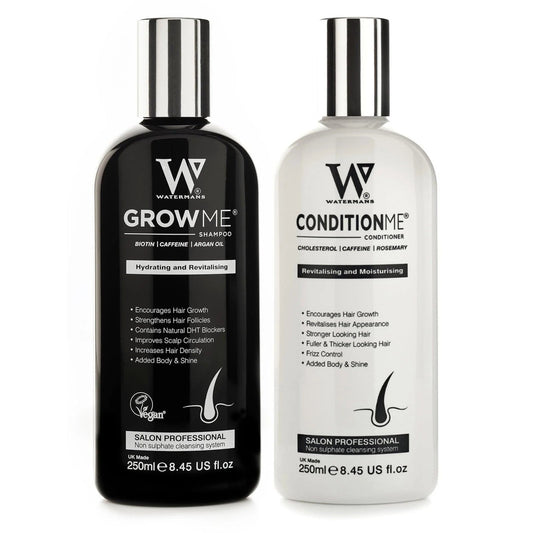
A key product in this area is Watermans Grow Me Shampoo. It is a UK-made range sold in Australia at watermanshair.com.au. Even though it does not contain saw palmetto, it works to boost hair and scalp health by:
• Caffeine – helps wake up hair roots and may counter some DHT effects.
• Biotin – helps keep hair structure strong.
• Rosemary – a plant used for blood flow and hair health.
• Niacinamide (Vitamin B3) – supports the skin barrier and small blood vessels.
• Argan Oil – nourishes and conditions without weighing hair down.
• Allantoin – soothes and keeps the scalp calm and moist.
• Lupin Protein – helps bulk up hair from the roots and makes strands tougher.
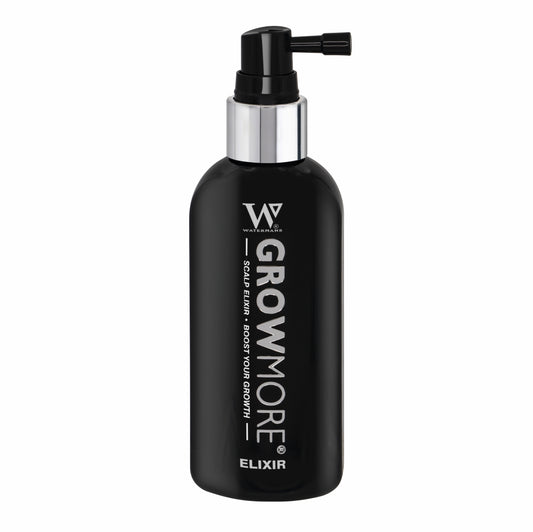
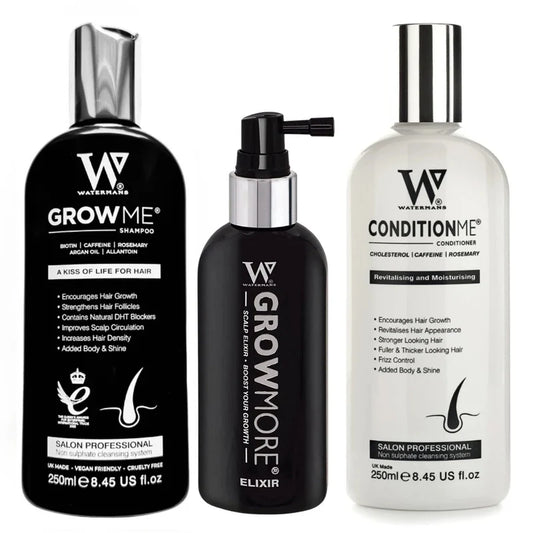
Because it acts on the scalp and is free of harsh drugs, Grow Me Shampoo is seen as a strong, natural first step when hair feels thin or sheds more than usual. For a full routine, the Watermans Hair Survival Kit gives shampoo, conditioner, and a leave-in scalp liquid. This kit makes scalp care a daily act.
Forms of Saw Palmetto for Hair Loss
If you choose to add saw palmetto to your routine, you can find it in two main forms:
1. Oral supplements
• Seen as capsules or tablets.
• Studies use doses between 160 mg and 320 mg a day of a standard extract.
• Often mixed with pumpkin seed oil, beta‑sitosterol, biotin, zinc, or vitamins.
Because oral saw palmetto works on the entire body, talk with your doctor or pharmacist first—especially if you use other medicines or have health issues.
2. Topical products
Less common, but they are on the rise: • Lotions, serums, or shampoos show saw palmetto extract. • They work on the scalp area, reducing body-wide exposure. • They often mix with other ingredients that support hair growth, such as caffeine or peptides.
Topical forms match the growing trend of multi-task scalp care, much like how Watermans mixes natural and active parts to boost and protect hair follicles.
Time Frame for Saw Palmetto to Work on Hair
Hair grows slowly. Any treatment, whether natural or drug, needs time. With saw palmetto, patience is key.

Typical timelines
• 0–3 months: Many will see no dramatic change. Some may feel less shedding or a calmer scalp.
• 3–6 months: Some may notice fewer hairs in the drain and a slight thickening near the roots.
• 6–12 months: Visible improvement in hair density, coverage, or thickness may show if saw palmetto works.
It helps to stick to good scalp care. This means a gentle massage when washing, using a high-quality shampoo like Grow Me Shampoo, avoiding harsh styling, and keeping a healthy diet with low stress.
Who May Gain the Most from Saw Palmetto
Before you switch to any supplement, talk with a professional. Saw palmetto may work best for:
• Men who see early signs of male pattern baldness (receding hairline, thinning crown).
• Women with hair thinning linked to hormones, when guided by a doctor.
• Those with a family history of baldness who want to support early hair health.
• People who already use a strong topical routine like Watermans and want a gentle, full-body boost.
It may not help in cases such as:
• Scarring alopecia (when follicles are permanently damaged).
• Hair loss from chemotherapy, radiation, or a sudden shock.
• Losing hair mainly due to a severe lack of nutrition or an autoimmune disease unless the root problem is fixed.
Side Effects and Safety of Saw Palmetto
Natural does not always mean free from risk. Many take saw palmetto without problems, but some side effects can occur.
Common side effects
These problems are usually light and short-lived:
• Upset stomach (nausea, diarrhea, stomach pain).
• Headaches.
• A feeling of dizziness.
• Mild tiredness.
Hormone concerns
Because saw palmetto works with hormones, keep these in mind:
• It may mix with other hormone-related medicines (for example, some contraceptive pills or hormone therapy).
• Do not use it if you are pregnant or breastfeeding.
• It might change the results on PSA tests in men.
Always ask your doctor before starting saw palmetto, especially if you: • Have issues with your prostate. • Try to get pregnant, or are pregnant or breastfeeding. • Use blood thinners or hormone treatments, or deal with a bleeding issue.
How to Use Saw Palmetto for Faster Hair Regrowth
If your doctor says saw palmetto is safe for you, use it as part of a broader hair care routine.
Step 1: Build a strong top layer for your scalp
Begin with a steady scalp routine using products made for hair health.
• Wash with Watermans Grow Me Shampoo. Its mix of biotin, caffeine, niacinamide, rosemary, argan oil, allantoin, and lupin protein works to freshen the scalp and bulk up hair from the roots.
• Use the Watermans Hair Survival Kit to add a conditioner and leave‑in liquid.
• Gently massage your scalp while washing to spread the product and boost blood flow.
This base can work well on its own, especially when hair loss is just starting.
Step 2: Add saw palmetto (if advised)
• If you take pills, opt for a standard extract and follow the label and your doctor’s advice.
• Take it with food to ease stomach discomfort.
• If you use a saw palmetto serum or lotion, follow the instructions on the bottle and apply it on thin areas.
Step 3: Boost internal hair health
Hair follicles live and need good support. Along with saw palmetto and your shampoo:
• Eat enough protein, iron, zinc, vitamin D, and B‑vitamins.
• Keep stress low. Good sleep, light exercise, or calm moments can help.
• Avoid severe diets, as rapid weight loss may first show by more hair falling out.
Step 4: Check your progress
• Snap photos every 1–2 months in the same light and from the same view.
• Watch how much you shed, the fullness of your hair, and its texture.
• Give your plan 6–12 months to see if it works before you change it.
Easy Tips for Better Results with Saw Palmetto
Here is a simple list to get the most from saw palmetto and support hair regrowth:
• Start early; acting sooner usually gets better results in pattern baldness.
• Mix saw palmetto with strong scalp treatments, like Watermans Grow Me Shampoo, and a good diet.
• Be steady; treating the hair rarely works with random use.
• Fix any issues in the body—like low iron, thyroid problems, high stress, or hormone shifts—with help from a professional.
• Protect the hair you have by cutting down on heat styling, tight hairstyles, or harsh chemicals.
• Keep your aims real; slow down hair loss and add thickness more than you expect an overnight fix.
Frequently Asked Questions About Saw Palmetto and Hair
1. Does saw palmetto work for hair loss?
Saw palmetto shows small gains in many studies for pattern baldness. Some people see less shedding and improved hair density, especially when hair loss is mild. It usually works best when combined with a strong scalp routine like using Watermans Grow Me Shampoo and a healthy lifestyle.
2. Is saw palmetto better than biotin for hair growth?
They play different roles. Saw palmetto works on DHT-related thinning. Biotin helps keep hair structure strong, especially if you lack it. Many shampoos, such as Grow Me Shampoo, mix biotin with other ingredients. You may add both in a full routine.
3. Can women use saw palmetto for thinning hair?
Yes, some women with hormone-related hair thinning use saw palmetto. However, it is wise to talk with a doctor first because female hair loss covers more factors. Women who are pregnant, nursing, or planning a family should avoid it. In these cases, a topical product like Watermans Grow Me Shampoo can safely support scalp health and hair fullness.
Take Charge of Thinning Hair with a Smart, Natural-First Plan
If you see more strands in the shower or your part grows wider, early care makes a big mark. Saw palmetto can become part of your plan, especially if hair loss links to hormones and you seek a plant-based add-on to common choices. Yet the strongest results come from a full and steady routine—not from one pill alone.
A focused, scalp-only product like Watermans Grow Me Shampoo builds a strong, natural start. Its mix of caffeine, biotin, rosemary, niacinamide, argan oil, allantoin, and lupin protein works to wake up the scalp, boost the hair from the roots, and support a look of thicker, fuller hair.
If you need an even stronger plan, the Watermans Hair Survival Kit makes every wash, condition, and leave‑in product count. Once your doctor agrees that saw palmetto fits your needs, you can add it as a supporting step in your routine.
Your hair will not change in one night. But with a clear, science-backed plan and regular use of trusted products, you give your hair the chance to stay stronger, fuller, and healthier for longer.