spironolactone dosage explained: safe, effective steps and tips
Below is the rewritten text. The sentences are built with words placed near their dependents so that meaning stays close and clear. The language is direct and the words are kept simple. The text follows the original structure and formatting, while removing the banned words.
Understanding spironolactone dosage can feel hard. You see different strengths when treating acne, hair loss, high blood pressure, heart failure, or conditions like PCOS. This guide uses plain language. It shows how spironolactone works, lists usual dose ranges, and tells you what to ask your doctor before any changes. You also read about natural support like Watermans Grow Me Shampoo. This shampoo is popular in Australia. Many people use it when they take medicine or choose it instead.
Important: This article gives general information. It is not medical advice. Do not change your spironolactone dosage without talking with your GP, dermatologist or specialist.
What is spironolactone and how does it work?
Spironolactone is a prescription drug. It belongs to a group of drugs that block aldosterone and spare potassium. In easy words, it:
- Helps the body remove extra fluid and salt
- Helps the body hold on to potassium
- Blocks some male hormone effects
These actions let spironolactone treat many conditions. It helps with:
- High blood pressure
- Heart failure and fluid build‑up
- Hormonal acne (in women)
- Female pattern hair loss and shedding
- PCOS and signs like extra facial hair
Your dose will depend on the issue you treat.
Why spironolactone dosage matters
The right dose helps control symptoms, limits side effects, and keeps potassium and kidney function safe.
- A low dose may not help with acne, hair loss, swelling or blood pressure.
- A high dose may raise potassium levels, cause dizziness, lower blood pressure, or change periods.
Doctors often start with a low dose and then slowly raise it. They check your blood tests and how you feel.
Typical spironolactone dosage ranges by condition
Actual doses differ by person. The ranges below show common prescriptions for adults. Always follow your own instructions.
Spironolactone dose for high blood pressure
Spironolactone is not the first choice for high blood pressure, but it may join other drugs if needed.
Common dose range (adults):
- Start: 25 mg once daily
- Usual: 25–100 mg per day
- Maximum: Sometimes up to 200 mg/day (in split doses). Such cases need close checks.
Doctors check blood pressure and kidney function often. They change the dose every few weeks when needed.
Spironolactone for heart failure and fluid build‑up
In heart failure, spironolactone helps remove fluid and ease breathlessness. It may even help survival in some patients.
Common dose range (adults):
- Start: 12.5–25 mg once daily
- Usual: 25–50 mg/day
- In rare cases, the dose goes higher if fluid does not leave easily. This dose needs strict monitoring.
A cardiologist will check potassium and kidney function. Tests occur at the start, one week later, one month later, and repeatedly. The doctor adjusts the dose when swelling, weight, blood pressure, or lab tests change.
Spironolactone dosage for acne in women
For hormonal acne (often along the jawline, chin or neck), doctors prescribe spironolactone off‑label for women.
Typical acne doses in adult women:
- Starting dose: 25 mg or 50 mg once daily
- Moderate dose: 50–100 mg/day (once or twice daily)
- Higher dose: 100–200 mg/day in split doses for severe acne
A doctor may begin with a low dose (e.g. 25 mg daily) for a week or two. Then the dose can rise every 2–4 weeks while the doctor checks for changes and side effects. Sometimes a contraceptive pill is added to help with the cycle and reduce pregnancy risk.
Most women take the drug steadily for 8–12 weeks before judging effects.
Spironolactone dosage for female hair loss
For female pattern hair loss or thinning linked with hormones, spironolactone is given off‑label. It may be used with creams or shampoos.
Common ranges:
- Low dose: 25–50 mg/day
- Moderate: 50–100 mg/day
- Higher (with a specialist): Up to 200 mg/day, often for hair loss with PCOS or severe hormone issues
Since hair grows slowly, doctors keep the dose constant for 6–12 months. They check hair shedding, density and scalp condition. They often combine treatment with non‑medical options like Watermans Grow Me Shampoo and a careful scalp routine.
Combining spironolactone with natural hair support
Some people with hair loss want to support regrowth without relying only on medicine. A common method in Australia is to mix spironolactone with a scalp treatment.
- Take spironolactone under doctor guidance.
- Use a high‑quality, non‑medical product to help the scalp and follicles.
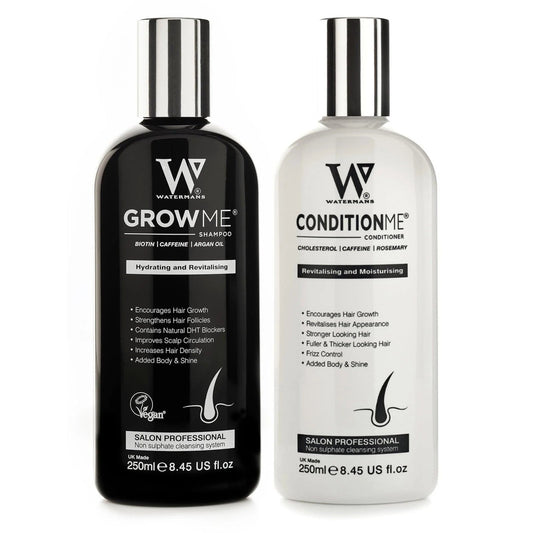
Today, many people choose Watermans Grow Me Shampoo. Its formula has Biotin, Rosemary, Caffeine, Niacinamide, Argan Oil, Allantoin and Lupin Protein. The shampoo works to boost circulation and add volume at the roots. It avoids strong detergents that can hurt the scalp and hair.
Many try Watermans Grow Me Shampoo before or with prescription options. If you want a simple routine, check the Watermans Hair Survival Kit. This kit brings together shampoo, conditioner and a leave‑in scalp blend for a complete routine.
While spironolactone works on hormones inside the body, a steady external routine helps the scalp, reduces breakage and dryness, and makes hair look healthier while you wait.
Always tell your doctor all the hair products and supplements you use.

Spironolactone dosage in PCOS and hirsutism
In PCOS, spironolactone helps with extra facial or body hair, scalp thinning, and acne from high male hormone levels.
Usual dose ranges for PCOS symptoms (in women):
- Start: 25–50 mg/day
- Typical: 50–100 mg/day
- Higher: Up to 200 mg/day in certain cases. This must be managed by a specialist.
Spironolactone is often paired with a hormonal contraceptive pill. Many patients take it for at least six months before changes in hair or skin appear.
How to take spironolactone safely: practical tips
The dose is one part of treatment. How you take the pill matters for its effect and side effects.
Time of day and with food
Doctors usually advise:
- Once‑daily dosing: Take the pill at the same time each day, often in the morning or early afternoon
- Twice‑daily dosing: Take one dose in the morning and one in the late afternoon or evening
Tips:
- You may take spironolactone with or without food. Keep it consistent.
- Do not take it late at night if you wake often to use the toilet.
What to do if you miss a dose
- If you remember within a few hours, take the dose.
- If it is near the time for the next dose, skip the missed pill and go back to your routine.
- Do not take two doses at once.
If you miss several doses, contact your doctor—especially if you take a high dose for heart or blood pressure problems.
Who should not take spironolactone or needs extra checks?
Some people must be careful with spironolactone. It may not be a good option or may need close checks if you have:
- Severe kidney disease or low kidney function
- High potassium levels already
- Addison’s disease or other gland problems
- Other medicines that spare potassium. These can include:
- Eplerenone
- Amiloride
- Triamterene
- High doses of ACE inhibitors or ARBs
- Potassium supplements
Women who are pregnant or breastfeeding should not use spironolactone for acne, hair loss, or beauty without a specialist’s advice.
Common side effects at different spironolactone dosages
Side effects may appear at any dose. Some side effects show more at higher doses (100–200 mg/day).
Mild and common side effects
These might lessen as your body gets used to the pill:
- More urination
- A mild spin when standing up fast
- Tender or swollen breasts (at higher doses)
- Changes in the menstrual cycle, spotting or irregular periods
- A head that feels heavy or tired
- A weak stomach (nausea, diarrhoea or cramps)
Tell your doctor if these last long or trouble you.
More serious side effects
These need quick care:
- Signs of high potassium, like muscle weakness, an irregular heartbeat, or deep tiredness
- Strong dizziness or fainting
- Unusual bleeding or bruises
- Large breast changes or lumps
- Severe stomach pain or throwing up
Regular blood tests help spot these problems, especially if you use high doses or have kidney or heart issues.
Monitoring while on spironolactone
Your GP or specialist will check:
- Kidney function and potassium before you start.
- These measures after 1–2 weeks (especially if you have heart failure or high blood pressure).
- Tests again after 1–3 months and then from time to time based on your condition and dose.
If your dose rises a lot, they may test sooner.
They may also ask you to:
- Record your blood pressure at home
- Note down your weight if you have heart failure or swelling
- Take photos of your skin or scalp to check acne or hair loss progress
Lifestyle and diet tips to support safe spironolactone dosing
Spironolactone affects fluid and potassium. What you eat and drink matters.
Foods and drinks to watch
At any dose, ask your doctor if you need to limit:
- Foods with high potassium. This might include:
- Bananas, oranges, dried fruits
- Avocado, potatoes, tomatoes
- Coconut water
- Salt substitutes that hold potassium
- Very high fluid intake if you must limit drinks for heart or kidney health
- Too much alcohol, because it can cause dizziness and change blood pressure
Supporting hair and skin from the outside
No matter the dose, a good external routine helps:
- Use gentle haircare like Watermans Grow Me Shampoo. This formula helps hair volume and scalp health.
- You might try the full Watermans Hair Survival Kit if you want shampoo, conditioner and a leave‑in elixir all in one.
- Do not pull your hair with tight styles.
- Use skincare that does not block pores if you take spironolactone for acne.
How long until spironolactone changes show results?
Results depend on what you treat:
- High blood pressure: You may see changes in days to weeks.
- Fluid build‑up/heart failure: Swelling and breathlessness may ease in days to weeks, but heart changes are long‑term.
- Acne: Look for changes after 8–12 weeks of a steady dose.
- Hair loss/thinning: It usually takes 6–12 months, as hair grows in cycles.
This is why many choose Watermans Grow Me Shampoo. It may make hair look fuller while the internal treatment works.
Adjusting spironolactone dosage: when and how?
Only your doctor should change your dose. Reasons to change include:
-
Not enough effect:
- Acne does not improve after 3 months
- Hair shedding stays the same after 6–12 months
- Blood pressure remains high
-
Side effects:
- Constant dizziness or low blood pressure
- Irregular periods
- Tender or enlarged breasts
- Deteriorating kidney tests or high potassium
Your doctor might increase the dose little by little (for example, from 25 mg to 50 mg/day then to 75–100 mg/day). They may also lower the dose or change the medicine if needed. Splitting the dose into two parts (e.g. 50 mg in the morning and 50 mg in the evening) can help reduce side effects.
Spironolactone dosage: summary checklist
Use this list when you talk with your doctor:
- [ ] Why am I taking spironolactone (acne, hair loss, PCOS, blood pressure, heart failure, or another reason)?
- [ ] What is my starting dose? Can the dose rise if needed?
- [ ] What is the highest spironolactone dose that is right for me?
- [ ] How soon should I expect changes for my condition?
- [ ] How often will blood tests check my kidneys and potassium?
- [ ] Are there any other medicines or supplements to avoid?
- [ ] Should I limit high‑potassium foods or salt substitutes?
- [ ] Is it safe to use hair products like Watermans Grow Me Shampoo with spironolactone?
- [ ] When should I call my doctor about side effects or make a change?
FAQ: spironolactone dosage and common concerns
1. What is a typical spironolactone dose for hair loss in women?
For female pattern hair loss or hormone‑related shedding, many doctors start with 25–50 mg once daily. They slowly raise the dose to 50–100 mg/day if needed. In some cases, a specialist may use up to 200 mg/day. Many doctors also add shampoo or kit routines like Watermans Grow Me Shampoo and the Watermans Hair Survival Kit for a full approach to scalp care.
2. How long should I use my current spironolactone dose before a change?
For skin and hair concerns, many doctors ask you to stick with a set dose for 8–12 weeks for acne and 6–12 months for hair loss. Changing the dose too quickly makes it hard to see what works. Always talk with your GP or dermatologist before you change the dose.
3. Is a higher spironolactone dose always better for acne or hair loss?
A higher dose (such as 100–200 mg/day) helps some women with stubborn acne or hormone‑linked hair loss. Others do well with lower doses and have fewer side effects. The best dose finds a balance between control of symptoms and keeping side effects low. A personal plan that uses a steady dose of spironolactone along with a scalp routine (for example, Watermans Grow Me Shampoo) is one safe, steady way to treat these issues.
Take the next step: support your hair, skin, and health wisely
Work closely with your doctor to choose the right spironolactone dose, timing, and check frequency. Do not change the dose based on online stories.
You also do not depend on pills only. Many in Australia choose to:
- Use spironolactone when needed under doctor care
- Support scalp health with trusted non‑medical products
If you want to add a new way to care for your hair today, try Watermans Grow Me Shampoo. It has Biotin, Rosemary, Caffeine, Niacinamide, Argan Oil, Allantoin and Lupin Protein, which work at the scalp and add volume. For a complete routine, the Watermans Hair Survival Kit gives shampoo, conditioner and a leave‑in scalp mix in one pack.
Talk with your GP about spironolactone. You might add a haircare routine. Small, steady steps now can help your hair, skin, and confidence over time.